Leptospirose et maladie de Weil
Revu par Dr Doug McKechnie, MRCGPDernière mise à jour par Dr Caroline Wiggins, MRCGP Dernière mise à jour 27 avr. 2023
Respecte les directives éditoriales
- TéléchargerTélécharger
- Partager
- Language
- Discussion
- Version audio
- Ajouter aux sources préférées sur Google
Leptospirosis is caused by infection with Leptospira germs (bacteria). The infection passes from animals (commonly rats, cattle, pigs and dogs) to humans. In most cases, leptospirosis causes a mild illness. But, in some people, a more severe illness occurs. This more severe form is commonly referred to as Weil's disease. The main treatment for leptospirosis is antibiotics and most people make a full recovery.
En un coup d'œil
La leptospirose est une infection transmise des animaux aux humains, causée par la bactérie Leptospira.
La plupart des cas provoquent une maladie bénigne semblable à la grippe, mais certaines personnes développent une forme sévère appelée maladie de Weil.
Les symptômes commencent souvent 3 à 30 jours après l'exposition et incluent fièvre, maux de tête et douleurs musculaires.
Les bactéries peuvent pénétrer par des coupures dans la peau, les muqueuses ou par inhalation.
Si vous présentez des symptômes grippaux et avez été en contact avec de l'eau contaminée ou des animaux, informez votre médecin.
Le traitement implique des antibiotiques, administrés sous forme de comprimés pour les cas légers ou par voie intraveineuse pour les cas graves.
What is leptospirosis?
Leptospirosis is caused by infection with the germs (bacteria) Leptospira. It is a type of zoonosis infection (an infection that can be passed from animals to humans).
In the majority of cases, leptospirosis causes a mild illness but, in some people, a more severe form of leptospirosis occurs. This more severe form is commonly referred to as Weil's disease.
Leptospirosis symptoms in humans
As mentioned above, there are two forms of leptospirosis:
A mild form causing a flu-like illness.
A more severe form (Weil's disease).
Around 9 out of 10 people just develop the mild form of the illness.
Symptoms of leptospirosis can start 3 to 30 days after exposure to the germs (bacteria) though most commonly people notice symptoms starting after 7 to 12 days.Some people with mild leptospirosis may develop no symptoms at all.
In both the mild and the severe forms of leptospirosis, flu-like symptoms develop first. They tend to last for between 5 and 7 days and can include:
Température élevée (fièvre) and chills.
Sensation de malaise (nausée), loss of appetite, being sick (vomiting) and diarrhoea.
Redness of the eyes that looks like conjunctivitis or hémorragie sous-conjonctivale.
Toux.
Joint and muscle pains (particularly in the calves and lower back).
Se sentir fatigué.
Conjunctivitis appearance
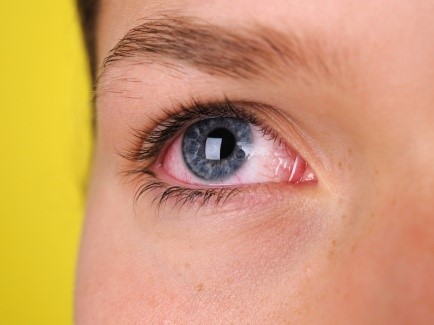
Leptospirosis can mimic the red eye appearance of conjunctivitis
The majority of people then recover as their immune system clears the infection. However, in some people, about a week after the flu-like symptoms have passed, a second stage of the illness then develops (Weil's disease). Symptoms of this second stage can include:
Douleur au ventre (abdominale).
Éruption cutanée.
Douleurs musculaires.
Passing very little urine, or a lot more urine than usual.
Essoufflement.
Swollen hands or feet.
Tousser du sang (hémoptysie).
Some people develop symptoms similar to méningite.
During this second stage, bacteria begin to infect the organs of the body, such as the kidneys, the liver, the brain, the eyes, the heart and the lungs. Different organs may be infected in different people. However, commonly the kidneys and the liver are affected and kidney or liver failure can occur.
How common is leptospirosis?
Animals in countries all over the world carry Leptospira germs (bacteria) but the infection is more common in tropical climates. In the UK, leptospirosis is not very common. Public Health England reports that there are around 50 to 80 cases in England and Wales each year. That is about one case per million people per year.
Leptospirosis has also been reported after episodes of flooding.
How is leptospirosis spread?
Both wild and domestic animals can become infected with Leptospira, including rats, mice, cattle, pigs and dogs. The germs (bacteria) can live within the animal's kidneys and can be passed out in their urine into water or soil, where they can survive for several months. Often, infected animals show no outward signs of illness.
Leptospirosis can be passed on to humans through direct contact with the bodily fluids or tissues of an infected animal (such as urine) or through contact with contaminated water or soil.
The bacteria can enter the body through a small cut or abrasion in the skin, through mucous membranes such as the skin that lines the mouth, the nose and the front of the eye. The bacteria may also be inhaled and enter the body via the lungs. Once inside the body, Leptospira have the ability to pass via the bloodstream and the lymph system to the internal organs.
Facteurs de risque
People exposed to animals or fresh water are at highest risk of being exposed to the disease. This includes:
Farmers.
Vets.
Abattoir workers.
Rodent control workers.
Sewage workers.
Those who take part in freshwater sports.
Leptospirosis diagnosis
In the early stages of leptospirosis, it may be quite difficult to tell the symptoms apart from the flu. If you know that you have been in contact with water that was possibly contaminated with animal urine, or if you work with animals, you should tell your doctor and this can help to alert them to the possibility of leptospirosis.
Tests are usually carried out to confirm the diagnosis. You may be asked to provide a urine sample to look for Leptospira in your urine. Blood testing can also confirm the diagnosis by looking for evidence of the germs (bacteria) in your bloodstream. Often, more than one test is required, as it can be difficult to diagnose leptospirosis with laboratory tests.
Other tests may also be done to assess the severity of your illness. For example, blood tests to look for anaemia, to look at the clotting of your blood and to look at how your reins et foie are functioning.
Leptospirosis treatment
Antibiotics are the main treatment. Antibiotics are usually prescribed as soon as possible after leptospirosis is diagnosed and in some cases before the diagnosis has been confirmed. In mild leptospirosis, antibiotic tablets may be all that is needed. In more severe cases, antibiotics given into your veins (intravenous antibiotics) are used.
People with mild leptospirosis may be treated at home. Those with the severe form of infection are usually admitted to hospital for treatment and monitoring.
Other supportive treatment may be needed - for example:
Medication, such as paracétamol, to help bring down high temperature (fever) and help reduce muscle pains.
Fluids, which may be given intravenously if you are unable to drink enough and are dehydrated.
How long does leptospirosis last?
As previously discussed , 9 out of 10 people have a mild form of leptospirosis and the outlook (prognosis) in such cases is very good. Most people recover fully within two to six weeks but some may take up to three months to get better.
In more severe cases (Weil's disease), the outlook depends on which organs of the body are involved and to what extent. People severely affected may die from organ failure or internal bleeding. In one study looking at people who were hospitalised with Weil's disease, 20% of people had ongoing symptoms two years after becoming unwell.
How to prevent leptospirosis
The best way to prevent leptospirosis is to avoid contact with potentially infected animals and potentially contaminated soil and water. You should avoid swimming or entering water that might be contaminated with animal urine.
Those working with animals that could be infected should wear protective clothing and equipment including thick gloves, eye protection and footwear. They should also pay strict attention to hygiene, including meticulous handwashing after exposure to animals. Rodent control can also help to prevent infection - for example, rubbish disposal and ensuring that rodents cannot get into buildings.
If there is contact with fresh, surface waters (for example, canals, ponds or rivers) then you should:
Cover any cuts, scratches or sores with a waterproof plaster. Thoroughly clean any cuts or abrasions that you may have got during the water activity.
Wear protective clothing such as dry suits, gloves or protective footwear.
Wash or shower as soon as possible after water sports.
Avoid capsize drill or rolling in stagnant or slow-moving water.
Leptospirosis vaccine
Vaccination of some animals is carried out to help to control the infection. No human vaccine against leptospirosis is currently available in the UK.
Sélections des patients pour Autres infections

Infections
Germes
Ce dépliant donne un aperçu succinct des différents types de germes (microbes) qui peuvent causer des infections.
par Dr Toni Hazell, FRCGP

Infections
Strep A
Strep A, or Group A streptococcus, is a common type of bacteria, which has been recognised as a cause of infections for many years. Most Group A streptococcus infections are mild, but in rare cases, these can cause serious illness and even death.
par Dr Colin Tidy, MRCGP
Questions fréquemment posées
La leptospirose est-elle contagieuse d'une personne à l'autre ?
L'article indique que la leptospirose est une infection zoonotique, ce qui signifie qu'elle peut être transmise des animaux aux humains. Il décrit comment les humains peuvent contracter la bactérie par contact avec des fluides corporels d'animaux infectés ou de l'eau/sol contaminé, mais il ne mentionne aucune transmission d'humain à humain.
Quelle est la différence entre la leptospirose et la maladie de Weil ?
La leptospirose est le terme général pour l'infection causée par les bactéries Leptospira. Dans la plupart des cas, elle provoque une maladie bénigne ressemblant à la grippe. La maladie de Weil est la forme plus sévère de la leptospirose, affectant un plus petit nombre de personnes après que leurs symptômes initiaux de type grippal se soient dissipés. Dans la maladie de Weil, les bactéries commencent à infecter les organes internes comme les reins et le foie.
Les animaux porteurs de la leptospirose peuvent-ils sembler en bonne santé ?
Oui, l'article mentionne que souvent, les animaux infectés ne montrent aucun signe extérieur de maladie, bien qu'ils portent la bactérie Leptospira dans leurs reins et la transmettent dans leur urine.
Quel type de protection devrais-je utiliser si je travaille dans une profession à risque ?
Si vous travaillez avec des animaux ou dans des environnements où le risque de leptospirose est élevé, vous devez porter des vêtements et équipements de protection. Cela inclut des gants épais, une protection oculaire et des chaussures appropriées. Maintenir une hygiène stricte, comme un lavage minutieux des mains après une exposition aux animaux, est également crucial.
Y a-t-il des activités spécifiques à éviter si je participe à des sports en eau douce ?
Oui, si vous pratiquez des sports nautiques dans des eaux douces de surface comme les canaux, les étangs ou les rivières, vous devriez éviter les exercices de chavirage ou de roulis dans des eaux stagnantes ou à faible courant. Il est également important de couvrir toute coupure avec des pansements imperméables et de nettoyer soigneusement toute abrasion par la suite.
Combien de temps faut-il généralement pour se rétablir de la forme légère de la leptospirose ?
La plupart des personnes atteintes de la forme bénigne de la leptospirose se rétablissent complètement en deux à six semaines. Cependant, certaines personnes peuvent mettre jusqu'à trois mois pour se rétablir complètement.
Lectures complémentaires et références
- Leptospirose; Santé publique Angleterre
- Haake DA, Levett PN; Leptospirosis in humans. Curr Top Microbiol Immunol. 2015;387:65-97. doi: 10.1007/978-3-662-45059-8_5.
À propos de l'auteurVoir la biographie complète

Dr Caroline Wiggins, MRCGP
Médecin généraliste, Auteur médical
MBBS Honours (with Distinction), MRCGP (2016), MSc.SEM (with Distinction), BSc (Hons)
Dr Caroline Wiggins est médecin généraliste remplaçante actuellement dans le sud-ouest de l'Angleterre.
À propos du critiqueVoir la biographie complète

Dr Doug McKechnie, MRCGP
Rédacteur Médical
MA, MBBS, MSc, DRCOG, MRCP(UK), MRCGP(2021), FHEA
Le Dr Doug McKechnie est un médecin généraliste du NHS travaillant à Londres. Il travaille à plein temps en clinique et est également le chef adjoint du module de Pratique Clinique et Professionnelle à l'École de Médecine de l'University College London.
Historique de l'article
Les informations sur cette page sont rédigées et examinées par des cliniciens qualifiés.
Article également disponible en Anglais, Allemand, Espagnol, Français, Italien, Portugais, Hindi, Hébreu, Arabe, and Suédois.
Next review due: 25 Apr 2028
27 avr. 2023 | Dernière version

Demandez, partagez, connectez-vous.
Parcourez les discussions, posez des questions et partagez vos expériences sur des centaines de sujets de santé.

Vous ne vous sentez pas bien ?
Évaluez vos symptômes en ligne gratuitement
Inscrivez-vous à la newsletter Patient
Votre dose hebdomadaire de conseils de santé clairs et fiables - rédigés pour vous aider à vous sentir informé, confiant et maître de la situation.
En vous abonnant, vous acceptez notre Politique de confidentialité. Vous pouvez vous désabonner à tout moment. Nous ne vendons jamais vos données.
Plus sur les infections
- Cystite chez les femmes
- Dengue
- Infection fongique de l'oreille
- Infections fongiques des poumons
- Herpès génital
- fièvre glandulaire
- Hépatite
- Impetigo
- Laryngite
- maladie de Lyme
- Vaccin méningococcique contre la méningite
- Norovirus
- Rhumatisme articulaire aigu
- Salmonella
- Gale
- Zona
- Angine
- Infection urinaire chez les personnes âgées
- Infections urinaires
- Médicaments contre les vers