Difficultés respiratoires chez les enfants
Revu par Dr Philippa Vincent, MRCGPDernière mise à jour par Dr Hayley Willacy, FRCGP Dernière mise à jour 8 juil. 2024
Respecte les directives éditoriales
- TéléchargerTélécharger
- Partager
- Language
- Discussion
- Version audio
- Ajouter aux sources préférées sur Google
Dans cette série :Gérer un enfant qui ne répond pas
Les enfants ont souvent la toux et le rhume, qui sont généralement inoffensifs et se résolvent rapidement. Parfois, les enfants peuvent également avoir des difficultés respiratoires plus graves nécessitant un traitement urgent.
En un coup d'œil
Les difficultés respiratoires chez les enfants peuvent être causées par des infections virales ou bactériennes.
D'autres causes incluent l'asthme, les allergies, le tabagisme passif et les objets inhalés.
Les symptômes peuvent inclure un nez qui coule, une toux, de la fièvre, une respiration sifflante et des douleurs.
Les signes de difficultés respiratoires graves incluent une respiration rapide, un effort accru pour respirer, ou une couleur de peau bleue.
Consultez un médecin si votre enfant semble s'aggraver, présente un symptôme persistant ou a des problèmes d'alimentation.
What causes breathing difficulties in children?
Schéma de la pneumonie
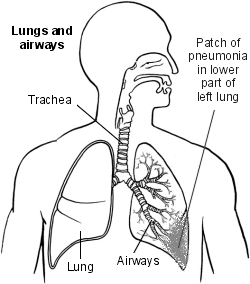
The respiratory tract can be divided into:
The upper respiratory tract: nose, mouth, throat and voice box (larynx).
The lower respiratory tract: windpipe (trachea), bronchi and lungs.
Many breathing difficulties are caused by infections but there are other causes too. The main causes of breathing difficulties include:
Viral infections.
Bacterial infections.
Passive smoking (exposure to cigarette smoke).
Exposure to other harmful gases (for example, really bad pollution).
Blockage of the airway by an inhaled object, such as food or any small object.
A genetic condition such as la fibrose kystique.
Although respiratory infections are very common, not all breathing difficulties are caused by infections. The main causes of breathing difficulties in children include the following.
Infections virales
Viral infections cause most upper respiratory infections, including les rhumes et sore throats. These infections are usually mild and get better quickly. Some viruses can cause severe symptoms which may need treatment in hospital. Examples of common viral infections include la bronchiolite et croup.
Remarque: antibiotics do not kill viruses and so are not used to treat viral infections.
Infections bactériennes
Bacterial infections, such as acute tonsillitis, are also very common in the upper respiratory tract. Bacterial infections in the lower respiratory tract, such as pneumonie, are much less common.
Antibiotics are effective against bacterial infections but mild upper respiratory tract infections often don't need any antibiotic treatment.
Examples of more serious bacterial infection include épiglottite et pneumonie.
Asthme
Asthme can start at any age but most often starts during childhood. Symptoms may include wheezing and shortness of breath (or difficulty taking deep breaths), which may particularly occur after exercise or at night. Severe asthma causes much more severe symptoms, including difficulty with breathing that may need urgent medical treatment.
Allergies
Allergies are a common cause of breathing problems. They most often affect the upper respiratory tract and cause a clear discharge from the nose, sneezing and sore eyes. Allergies may also affect the lower respiratory tract and cause asthma symptoms.
Autres causes
Other causes of breathing difficulties in children include:
Breathing in cigarette smoke.
Long-term conditions that affect the respiratory tract, such as la fibrose kystique.
Blockage of the airway by an inhaled object, such as a small piece of food or any other object.
If the child has inhaled something which is now blocking the airway - this is an emergency.
They may suddenly become upset or start to choke, or they may collapse. If the child can cough, encourage them to clear the blockage themselves. If they cannot do this and you know how to perform basic life support for choking situations, you should start immediately and ask someone else (if possible) to call the emergency services.
Heart attacks
It is very rare for a child or young person to have a heart attack but it can happen. When this occurs it is usually when they already have a congenital heart problem.
What are the symptoms of breathing difficulties in children?
The common symptoms caused by breathing (respiratory) difficulties in children include:
A runny nose, stuffy nose, blocked nose and sneezing
These symptoms are often caused by a cold but may also be caused by an allergy.
Toux
Most coughs clear up within 2-3 weeks and are caused by a viral infection.
Sometimes the cough may go on for a few weeks after the infection has gone but there are no other symptoms and this is also harmless.
If a cough is really bad, (that is, it occurs with severe breathing problems or it won't go away within the usual expected time) then there may be a more serious cause.
As well as common viral infections, a cough may be caused by other conditions such as croup, la bronchiolite ou coqueluche. These often cause particular sounds or types of cough.
A cough that won't go away may be due to asthme or another long-term condition such as la fibrose kystique.
Coloured mucus
Yellow, green or brown mucus usually means there is a respiratory tract infection.
Une température élevée (fièvre)
This can be a sign of infection. A high temperature can make the child irritable or drowsy. Often getting their temperature down will make them feel much better.
Respiration sifflante
This is a high-pitched sound that comes from the chest when the child is breathing out. This is most often caused by respiratory infections or asthma.
Aches and pains
Children with respiratory tract infections often complain of aches and pains in their arms and legs and they often have a headache. They might also have chest pains.
How do I know when my child is really unwell?
The signs that the child is very unwell with breathing (respiratory) difficulties that might need urgent medical treatment include:
Breathing rate
An increase in the rate of breathing may be the first symptom of breathing difficulty. Count the number of breaths (in and out is one breath) in one minute. The breathing rate is too fast if it is more than:
60 breaths per minute for a baby aged 0-5 months.
50 breaths per minute for an infant aged 6-12 months.
40 breaths per minute for a child aged 1-5 years.
20-30 breaths per minute for children of school age. The normal breathing rate gradually gets less as a child gets older. So, for example, a breathing rate above 30 would be too high for a child aged 6 years but a breathing rate above 20 would be too high for a teenager aged 16 years.
Increased effort of breathing
This includes the chest sinking in below the neck and below the breastbone (sternum). The ribs may also look as if they are standing out when the child is breathing in, because the muscles between them are being pulled in hard.
Flaring of the nostrils
The nostrils widen when breathing. This also shows that more effort is needed for breathing.
Grunting
A grunting sound is made when breathing out. This is the body trying to get more air into the lungs.
Colour
The skin may seem pale or a bluish colour. The lips and tongue may also appear blue. These changes mean the child isn't getting enough oxygen from breathing.
Drowsiness
Low oxygen levels (less oxygen being carried by red blood cells) may cause the child to become very tired and difficult to keep awake.
Stridor
This is a high-pitched noise when the child breathes in. It is caused by an obstruction to the flow of air in the upper airway. The causes for this include croup ou épiglottite.
When should you seek medical advice and treatment?
Many children's coughs and breathing (respiratory) problems improve after about 10 days, sometimes much sooner. You should take the child to the doctor if they:
Seem to be getting much more unwell.
Have any symptom that won't go away.
Have problems feeding and drinking.
Have signs of becoming very dry (déshydraté) such as a very dry tongue.
Are coughing up mucus that is dark brown or bloody.
Are becoming more breathless.
Already have a diagnosed lung condition such as asthme.
Have any condition that reduces their defence against infection (weak immune system).
Babies and young children can become very unwell very quickly so it is even more important to keep a close eye on them and obtain medical advice if you have any concerns.
Although most children get better quickly from respiratory infections, occasionally the infection overwhelms the body's immune defence and causes sepsis, which needs emergency treatment in hospital.
See the separate leaflet called Sepsis (Septicaemia) for further information
What are the treatments for breathing difficulties in children?
Always act quickly and get medical help if you are worried about your child, especially if they are having any trouble breathing, seem to be getting worse or aren't getting any better.
Most infections will clear up by themselves. However, there are lots of things you can do to help the child be more comfortable and to help them to feel better more quickly. These include:
Encourage them to drink as much as they can
This often means drinking little and often. Cool water is best. Drinking lots of fluid will help to:
Prevent their body becoming too dry (dehydrated).
Keep them cool.
Keep the mucus moist and easier to cough up.
Stop their throat from feeling really dry and sore.
Paracetamol or ibuprofen
Only give paracétamol ou ibuprofène if the child is distressed by a high temperature (fever). They can be used together if needed.
Make sure your child is in a comfortable and calm environment
This includes giving reassurance, keeping them cool and keeping them well away from any cigarette smoke.
Médicaments
Unless the child has asthma or any other ongoing breathing (respiratory) condition, the only medicines needed are usually paracetamol or ibuprofen.
Most infections in children are caused by viruses and so antibiotics aren't needed. Cough medicines don't work and are not recommended.
Preventing the infection spreading to other people
This is very important, especially if you have other children. Important measures to reduce the spread of infection include:
Make sure everyone washes their hands regularly.
Use clean disposable tissues to remove any infected mucus when your child has been sneezing or coughing. Then put the used tissue in a bin and wash your hands thoroughly.
Sélections des patients pour General health conditions

Santé des enfants
Obésité infantile
Si votre enfant est en surpoids ou obèse, il présente un risque accru de développer divers problèmes de santé et est plus susceptible de devenir un adulte en surpoids.
par Dr Laurence Knott

Santé des enfants
Vulvovaginite pédiatrique
La vulvovaginite pédiatrique est une cause fréquente de douleur ou d'irritation de la région génitale chez les jeunes filles avant la puberté. Elle est généralement due à une combinaison d'un manque naturel d'œstrogènes et d'une mauvaise hygiène lors de la toilette. Elle peut généralement être soulagée par quelques changements simples d'hygiène et de bain. Consultez les dépliants séparés intitulés Problèmes vulvaux et Vulvite (chez l'adulte).
par Dr Rachel Hudson, MRCGP
Questions fréquemment posées
Quel est le rythme respiratoire normal pour un enfant qui n'est ni un bébé ni un nourrisson ?
Pour les enfants âgés de 1 à 5 ans, un rythme respiratoire normal est généralement jusqu'à 40 respirations par minute. Pour les enfants d'âge scolaire, le rythme normal diminue progressivement, avec 20 à 30 respirations par minute généralement considérées comme normales. Ce rythme continue de diminuer à mesure qu'un enfant grandit ; par exemple, un rythme supérieur à 20 serait trop élevé pour un adolescent de 16 ans.
Comment puis-je savoir si la toux de mon enfant est grave ?
La plupart des toux disparaissent en 2 à 3 semaines et sont généralement causées par une infection virale. Cependant, une toux est considérée comme sérieuse si elle est extrêmement sévère, survient avec d'autres problèmes respiratoires graves, ou ne disparaît pas dans le délai prévu. Une toux persistante peut également indiquer des conditions comme l'asthme ou d'autres problèmes à long terme tels que la fibrose kystique. Des sons spécifiques, comme ceux associés au croup, à la bronchiolite ou à la coqueluche, peuvent également suggérer une cause plus sérieuse.
Que dois-je faire si mon enfant a une forte température ?
Une température élevée peut être un signe d'infection et peut rendre votre enfant irritable ou somnolent. Faire baisser sa température lui permet souvent de se sentir beaucoup mieux. Vous pouvez donner du paracétamol ou de l'ibuprofène si votre enfant est gêné par la fièvre, et ces médicaments peuvent être utilisés ensemble si nécessaire.
Est-il vrai que je ne devrais pas donner de médicament contre la toux à mon enfant ?
Oui, les médicaments contre la toux ne sont généralement pas recommandés pour les enfants car ils ne sont pas efficaces. Pour la plupart des infections, les seuls médicaments généralement nécessaires sont le paracétamol ou l'ibuprofène, principalement pour soulager l'inconfort causé par une forte fièvre.
Mon enfant a le nez qui coule et éternue. Cela pourrait-il être plus qu'un simple rhume ?
Bien qu'un nez qui coule, un nez bouché, un nez obstrué et des éternuements soient souvent causés par un rhume, ces symptômes peuvent également indiquer une allergie. Si vous êtes inquiet ou si les symptômes persistent, il est toujours préférable d'observer d'autres symptômes accompagnants.
Lectures complémentaires et références
- Smith DK, Kuckel DP, Recidoro AM; Community-Acquired Pneumonia in Children: Rapid Evidence Review. Am Fam Physician. 2021 Dec 1;104(6):618-625.
- Asthme; Résumé des Connaissances Cliniques NICE. Janvier 2025 (accès réservé au Royaume-Uni)
- Fièvre chez les moins de 5 ans : évaluation et prise en charge initiale; Directives NICE (dernière mise à jour novembre 2021)
- Dodson H, Cook J; Foreign Body Airway Obstruction. StatPearls, January 2024.
À propos de l'auteurVoir la biographie complète

Dr Colin Tidy, MRCGP
Médecin généraliste, Auteur médical
MBBS, MRCGP, MRCP (Paediatrics), DCH
Le Dr Colin Tidy est un médecin du NHS, basé dans l'Oxfordshire.
À propos du critiqueVoir la biographie complète

Dr Philippa Vincent, MRCGP
Médecin généraliste, Auteur médical
MB BS, Bsc, MRCGP (2000), DCH, DFSRH, DRCOG
Dr Philippa Vincent est un médecin généraliste du NHS travaillant dans le nord de Londres.
Historique de l'article
Les informations sur cette page sont rédigées et examinées par des cliniciens qualifiés.
Article également disponible en Anglais, Allemand, Espagnol, Français, Italien, Portugais, Hindi, Hébreu, Arabe, and Suédois.
Prochaine révision prévue : 7 juil. 2027
8 juil. 2024 | Dernière version
17 Jun 2017 | Publié à l'origine
Écrit par :
Dr Colin Tidy, MRCGP

Demandez, partagez, connectez-vous.
Parcourez les discussions, posez des questions et partagez vos expériences sur des centaines de sujets de santé.

Vous ne vous sentez pas bien ?
Évaluez vos symptômes en ligne gratuitement
Inscrivez-vous à la newsletter Patient
Votre dose hebdomadaire de conseils de santé clairs et fiables - rédigés pour vous aider à vous sentir informé, confiant et maître de la situation.
En vous abonnant, vous acceptez notre Politique de confidentialité. Vous pouvez vous désabonner à tout moment. Nous ne vendons jamais vos données.
Plus sur la santé des enfants
- Albinisme
- Déficit en alpha-1 antitrypsine
- Fente labiale et palatine
- Eczéma chez les enfants
- syndrome d'Ehlers-Danlos
- Douleurs de croissance
- Vaccin méningococcique contre la méningite
- Nausées et vomissements
- Entérocolite nécrosante
- Neuroblastome
- Vulvovaginite pédiatrique
- Maladie de Perthes
- Rhabdomyosarcome
- Douleur dans le quadrant inférieur droit chez les enfants
- Dermatite séborrhéique chez les bébés
- Trait drépanocytaire
- Symptômes de la septicémie chez l'enfant
- Obstruction du canal lacrymal chez les bébés
- Dentition