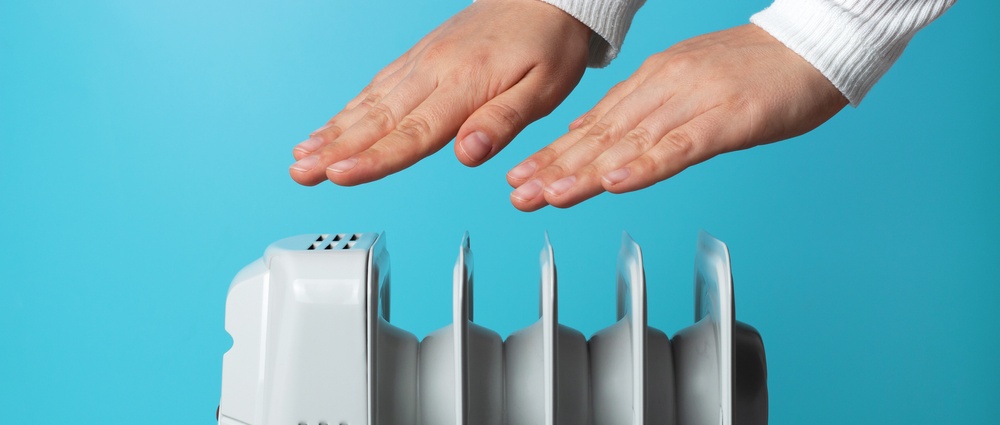
Comment gérer le phénomène de Raynaud pendant les mois d'hiver
Revu par Dr Colin Tidy, MRCGPDernière mise à jour par Lynn StephenDernière mise à jour 21 Oct 2025
Respecte les directives éditoriales
- TéléchargerTélécharger
- Partager
- Language
- Discussion
- Version audio
- Ajouter aux sources préférées sur Google
Raynaud's phenomenon is a common condition in which the blood vessels in the extremities - your fingers, toes, ears, or nose - overreact to cold or stress. During winter, how can people with Raynaud's manage their condition?
Winter is here, and that means wrapping up warm. Some people have a harder time with the cold than others.
If you've ever wondered why your hands change colour in response to cold temperatures - accompanied by tingling, pain or numbness - you could be one of the 10 million Brits who are affected by Phénomène de Raynaud.
Identifying Raynaud's
Raynaud's phenomenon - also called Raynaud's disease, Raynaud syndrome or simply Raynaud's - is a condition where the blood vessels in your extremities overreact to cold temperatures. While anyone can be affected, it's more common in women than men, and typically begins between the ages of 15 and 30 years.
Dr Adam Abbs, GP and Global Medical Director at Hurdle, explains that with Raynaud's, your blood vessels go into a temporary spasm, blocking the flow of blood.
"You can usually identify Raynaud's by a change of colour in your fingers, and less commonly, your toes," he says. "For some people, this may also affect the ears, nose, lips or nipples."
In the first stage of a Raynaud’s attack, the skin turns white or yellow in response to the limited blood supply. After a while, the blood vessels reopen and the fingers turn purplish blue.
Abbs explains: "The blood that returns has the oxygen removed from it immediately, so you see the colour of deoxygenated blood, which is blue.
"After a minute or two, normal, oxygenated blood can fill the fingers again, so the colour returns to normal. These changes in oxygenation can cause pain or pins and needles."
Comment gérer le phénomène de Raynaud pendant les mois d'hiver
Managing the symptoms
Not all people affected by Raynaud's cycle through this spectrum of colour changes, and attacks can vary greatly in severity. However, the symptoms are certainly uncomfortable, and can increase your aversion to cold weather.
In some cases, the symptoms are triggered less by the cold and more by a sudden drop in temperature - the supermarket freezer aisle may even be a trigger. Or you might notice that niveaux de stress et l'anxiété tend to exacerbate your symptoms.
Abbs says: "Stress often makes Raynaud's worse, so you should try to keep your stress levels to a minimum. You may want to consider taking up yoga or other exercises to help you relax. This will also help with your circulation."
He explains that other factors that can increase the change of Raynaud's include fumer, exercises requiring gripping - such as cycling - and using vibrating tools.
Dr Fatima Sulaiman, Raynaud's research specialist, adds that while there is currently no cure for Raynaud's, the condition can be managed with practical interventions and does not usually affect someone's quality of life.
Elle dit : "Practical tips include making sure that you wear thick gloves and many thin layers in cold weather.
"Additionally, taking up stress relief practice such as la pleine conscience has been shown to help manage the stressful conditions that can make the symptoms worse. If you are a smoker, I highly recommend that you seek help in quitting smoking through your doctor or the NHS website."
Scleroderma & Raynaud's UK (SRUK) offers guides such as Warm sleeping tips. These could be particularly useful for breastfeeding mothers, who may experience difficulties - think painful, bloodless nipples - if their Raynaud's is undiagnosed.
Lizzi tells her story
When to see your doctor
While in most cases, Raynaud's is little more than an annoyance, for some people it can spell something more serious. Around 300,000 people in the UK are affected by secondary Raynaud's, which can be related to an underlying condition or induced by certain medicines.
Abbs explains that there are two different types of Raynaud's - primary and secondary.
"Primary Raynaud's is usually mild and manageable - it is not associated with any other conditions," he says. "Secondary Raynaud’s is usually caused by autoimmune conditions such as sclérodermie ou lupus."
Abbs advises that if you are worried about your symptoms, have noticed a change in your symptoms, or have Raynaud's with any other symptoms, you should book an appointment with your doctor.
Sulaiman adds that people with secondary Raynaud's will experience more severe bouts of symptoms, and you should discuss possible treatments with your doctor.
"They may also develop finger/toe ulcers or open wounds on their fingertips, and are more likely to have Raynaud's symptoms throughout the year, rather than just during the cold weather," she says. "There are prescription treatments that are available for people with severe or secondary Raynaud's, such as nifédipine."
In most cases, though, managing your Raynaud's is simply a matter of staying cosy, heating up your home, and investing in some thick socks. The winter months may never be your favourite time of year, but simply being mindful of your triggers can be enough to keep symptoms at bay.
Sélections des patients pour Vaisseaux sanguins
Santé cardiaque et vaisseaux sanguins
Régime DASH - alimentation saine qui aide à réduire la pression artérielle
Le régime DASH est un régime bon pour le cœur qui réduit la pression artérielle et le cholestérol. Loin d'être spécialisé, ce plan alimentaire peut bénéficier à de nombreuses personnes - que vous cherchiez à améliorer une mauvaise santé cardiaque, à gérer une condition connexe, ou à vous protéger contre de futurs problèmes de santé.
par Lynn Stephen
Santé cardiaque et vaisseaux sanguins
Le stress peut-il provoquer des crises cardiaques ?
Bien que le stress à lui seul ne provoque pas directement de crises cardiaques, un stress prolongé et mal géré peut augmenter votre risque d'en avoir une. Dans cet article, nous explorons des moyens efficaces pour réduire votre probabilité de crise cardiaque et offrons des conseils pratiques pour gérer le stress.
par Victoria Raw
À propos de l'auteurVoir la biographie complète

Abi Millar
Journaliste indépendant
BA (Hons), MA
Abi est une journaliste indépendante avec un intérêt particulier pour l'écriture sur la santé et la médecine.
À propos du critiqueVoir la biographie complète

Dr Colin Tidy, MRCGP
Médecin généraliste, Auteur médical
MBBS, MRCGP, MRCP (Paediatrics), DCH
Le Dr Colin Tidy est un médecin du NHS, basé dans l'Oxfordshire.
Historique de l'article
Les informations sur cette page sont examinées par des cliniciens qualifiés.
Article également disponible en Anglais, Allemand, Espagnol, Français, Italien, Portugais, Hindi, Hébreu, Arabe, and Suédois.
Next review due: 21 Oct 2028
21 Oct 2025 | Dernière version
12 Nov 2019 | Publié à l'origine
Écrit par :
Abi Millar

Demandez, partagez, connectez-vous.
Parcourez les discussions, posez des questions et partagez vos expériences sur des centaines de sujets de santé.

Vous ne vous sentez pas bien ?
Évaluez vos symptômes en ligne gratuitement
Inscrivez-vous à la newsletter Patient
Votre dose hebdomadaire de conseils de santé clairs et fiables - rédigés pour vous aider à vous sentir informé, confiant et maître de la situation.
En vous abonnant, vous acceptez notre Politique de confidentialité. Vous pouvez vous désabonner à tout moment. Nous ne vendons jamais vos données.
Plus sur la santé cardiaque et les vaisseaux sanguins
- Est-ce que je fais une crise de panique ou une crise cardiaque ?
- Fibrillation auriculaire expliquée
- Avoir une silhouette en forme de poire pourrait réduire le risque de maladie cardiaque chez les femmes
- Les moniteurs de pression artérielle portables fonctionnent-ils vraiment ?
- Les essais de médicaments pour un nouveau traitement de la cardiomyopathie hypertrophique apportent de l'espoir aux patients
- Mangez pour un cœur en bonne santé : des idées de recettes savoureuses pour chaque repas
- Vidéos sur le cœur et le sang
- L'hypertension artérielle à la mi-trentaine pourrait réduire votre cerveau
- Mis à jourHow diet affects your heart
- Comment réduire le cholestérol sans statines
- Comment réduire votre risque d'accident vasculaire cérébral ?
- Les protéines végétales pourraient aider à prévenir l'hypertension
- Varicosités : pourquoi le soin des jambes en hiver est-il si important ?
- Les avantages et inconvénients des statines
- Une injection semestrielle de cholestérol pourrait remplacer les statines quotidiennes
- Vidéo : Comment réduire la pression artérielle
- Qu'est-ce que l'insuffisance veineuse chronique ?
- Ce que cela pourrait signifier si vous ressentez des palpitations cardiaques
- Quel est le lien entre la ménopause et le cholestérol ?
- Quels aliments aident à réduire la pression artérielle ?