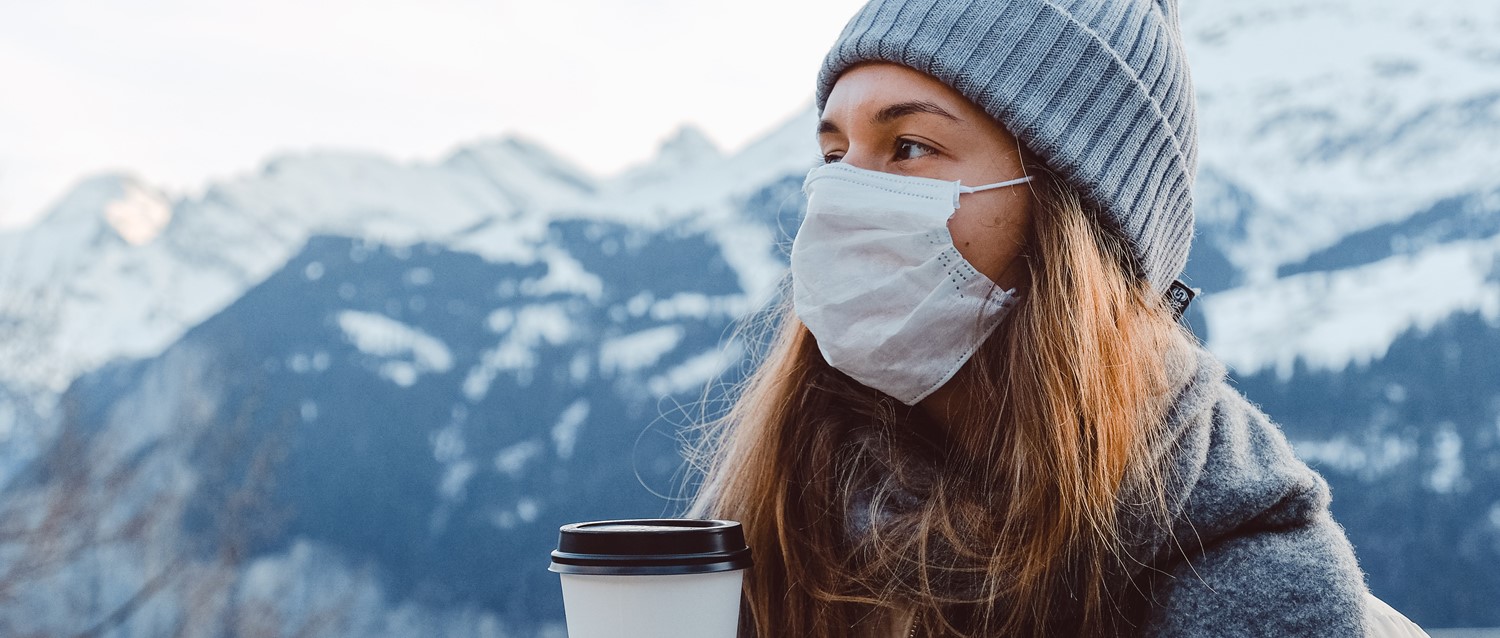
Devriez-vous porter un masque si vous avez un rhume cet hiver ?
Évalué par des pairs Dr Sarah JarvisDernière mise à jour par Emily Jane BashforthDernière mise à jour 23 nov. 2021
Respecte les directives éditoriales
- TéléchargerTélécharger
- Partager
- Language
- Discussion
- Version audio
- Ajouter aux sources préférées sur Google
Porter un masque facial est devenu une pratique courante pour beaucoup d'entre nous tout au long de la pandémie. Porter des couvre-visages dans les espaces intérieurs a permis de réduire la propagation du COVID-19, mais ils sont désormais moins portés à mesure que les vaccins ont été déployés et que le port du masque n'est plus une obligation légale. Mais à l'approche de l'hiver et alors que les gens commencent à attraper des rhumes, le fait de garder nos masques pourrait-il nous aider à rester en bonne santé ?
A YouGov poll found between 15 July-22 September 2021 there was a drop from 72% to 60% in the number of people in the UK who said they were wearing a face mask when in public places. Are we wrong to give up on face coverings?
What are the benefits of wearing a face mask?
There was a time when we mainly only saw face masks worn by dentists and surgeons. However, we've quickly adjusted to a 'new normal' of being asked to cover our mouths and noses. Dr Tom Micklewright explains the benefits of this, and how masks limit the spread of viruses.
"Many infections, including COVID-19 et grippe, are transmitted via respiratory particles. These are exhaled from an infected individual. When we are infected, whether or not we know about it, wearing a mask appears to reduce our likelihood of passing that infection on to others," he says.
Why might some people think face masks are no longer necessary?
Dr Micklewright stresses that the pandemic is far from over. However, many aspects of our day-to-day lives have returned to the normal we knew prior to COVID-19, such as going to social gatherings and working back in the office. He says people would be forgiven for assuming the pandemic is non-existent now since schools and workplaces are open, stadiums are selling tickets again and international borders have opened up.
However, the decisions for these aspects of life to resume have been difficult, and careful planning was needed to ensure things opened back up safely. The risks to the economy and public health have been weighed up over many months, alongside the rollout of the vaccination programme.
Dr Micklewright says that while vaccines are helping to reduce deaths and minimise the spread of COVID-19, the virus is still present. Tens of thousands of people in the UK are still catching COVID-19 every day.
So while the pandemic is much more under control than it was this time last year, we aren't at the end of the road yet.
Some people have doubted the benefits of face masks throughout the pandemic, with some believing they do more harm than good. Add this portion of the population to those now no longer wearing masks after being double-jabbed, and it's likely you'll go to the supermarket and see more people without a mask than with.
Should we still wear masks if we have a cold this winter?
Wearing a mask when you have a cold yourself means you are looking out for others and limiting the spread beyond your household. Doing this particularly benefits people who are in vulnerable categories or have weakened immune systems, and who might be more affected than some with a common cold.
"Colds are caused by a number of common viruses which, like COVID-19, tend to spread through respiratory particles produced when an infected person breathes, speaks or coughs. Masks are likely to be effective against these airborne illnesses too, reducing your chance of passing on a virus."
A single cough can actually produce up to 3,000 droplets. We spray thousands of droplets invisible to the naked eye into the air just by speaking. There have been fears throughout the pandemic that simply having a conversation with someone can cause particles to spread.
Dr Micklewright adds, "Critically though, it can be very difficult, even for doctors, to tell the difference between COVID-19, la grippe et le rhume. So if you think you have a cold, it's better to err on the side of caution. Wear a mask and, if you have a cough, fever or a loss of smell or taste, stay at home and book a COVID-19 PCR test."
What other infections or illnesses might a face mask prevent the spread of?
"Face masks have been shown to prevent the spread of a number of airborne infections, including grippe et SARS," says Dr Micklewright.
"In theory, however, the spread of any airborne infection might be reduced by wearing a face mask, including the common cold, coqueluche et les oreillons."
Masks may also protect those with rhume des foins de pollen.
Is it good practice to continue wearing masks in future if we get sick?
It's difficult to imagine there was once a time when we were still encouraged to drag ourselves into the office if we were unwell. The pandemic has certainly taught us a lot and created important conversations around public health and being considerate of others.
Dr Micklewright believes, since most of us are used to wearing masks, it's a good idea to keep one in your pocket, even if you've been vacciner against COVID-19.
He says, "I certainly think masks are good practice going forwards. It's hard to imagine returning to a world where people might be packed, coughing and éternuements, into a bus station or waiting room without any hygiene measures."
He also highlights, however, that masks are only one part of the solution.
"Infected respiratory droplets can also be picked up from surfaces that we touch, so it's important we remember to laver nos mains frequently and to use disposable tissue to cover our mouths when coughing. You should also consider se faire vacciner against both COVID-19 and flu to reduce your likelihood of becoming seriously ill with these conditions."
Sélections des patients pour Infections virales

Infections
Les remèdes naturels contre le rhume sont-ils efficaces ?
Cet hiver, beaucoup d'entre nous se retrouvent à lutter contre des symptômes de rhume bien connus, notamment un mal de gorge, un nez qui coule, de la toux et des sinus bouchés. Nous explorons les remèdes naturels contre le rhume que vous pouvez utiliser à la maison - et nous demandons à quel point ils sont efficaces.
par Lynn Stephen

Infections
Peut-on attraper un rhume en été ?
Chaque été, je reçois une petite vague de patients atteints de rhumes, tous perplexes car « les rhumes ne devraient pas arriver en été ». J'aimerais que ce soit aussi simple — ils sont peut-être plus fréquents en hiver, mais les virus du rhume sont là, prêts à frapper toute l'année.
par Dr Sarah Jarvis
À propos de l'auteurVoir la biographie complète

Emily Jane Bashforth
Auteur de chroniques
NCTJ
Emily est rédactrice spécialisée chez Patient, écrivant des articles sur une variété de sujets liés à la santé et au bien-être.
À propos du critiqueVoir la biographie complète

Dr Sarah Jarvis
Consultant Clinique
MA (Cantab), BM, BCh (Oxon), DRCOG, FRCGP, MBE
Après avoir suivi une formation en médecine à Cambridge et Oxford, le Dr Sarah Jarvis MBE est devenue médecin généraliste.
Historique de l'article
Les informations sur cette page sont examinées par des cliniciens qualifiés.
Article également disponible en Anglais, Allemand, Espagnol, Français, Italien, Portugais, Hindi, Hébreu, Arabe, and Suédois.
23 nov. 2021 | Dernière version
23 nov. 2021 | Publié à l'origine

Demandez, partagez, connectez-vous.
Parcourez les discussions, posez des questions et partagez vos expériences sur des centaines de sujets de santé.

Vous ne vous sentez pas bien ?
Évaluez vos symptômes en ligne gratuitement
Inscrivez-vous à la newsletter Patient
Votre dose hebdomadaire de conseils de santé clairs et fiables - rédigés pour vous aider à vous sentir informé, confiant et maître de la situation.
En vous abonnant, vous acceptez notre Politique de confidentialité. Vous pouvez vous désabonner à tout moment. Nous ne vendons jamais vos données.
Plus sur les infections
- Démystifier les idées reçues sur le VIH et le SIDA
- Avez-vous besoin du vaccin contre la méningite ?
- Vaccin gratuit contre la varicelle proposé pour la première fois aux enfants en Angleterre
- Cystite de la lune de miel : qu'est-ce que c'est et comment l'éviter
- À quelle vitesse les différentes IST se propagent-elles ?
- Comment éviter l'intoxication alimentaire cet été
- Comment éviter les maux de ventre
- Comment gérer la gastro-entérite
- Comment traiter une intoxication alimentaire à la maison
- Vidéos sur la méningite
- Tous les enfants devraient-ils recevoir le vaccin contre la grippe ?
- Moyens simples pour aider à prévenir les mycoses vaginales
- Quels sont les moyens les plus efficaces pour prévenir la grippe ?
- Quels facteurs causent la résistance aux antimicrobiens ?
- Qu'est-ce que le Hantavirus ? Tout ce que vous devez savoir sur ce virus rare mais sérieux
- Quand la grippe est-elle la plus contagieuse ?
- Où obtenir votre vaccin contre la grippe cette année
- Pourquoi y a-t-il encore une stigmatisation autour du HPV ?
- Pourquoi vous avez constamment besoin d'uriner
- Une infection urinaire peut-elle disparaître d'elle-même ?