
Dépendez-vous trop des analgésiques ?
Revu par Dr Krishna Vakharia, MRCGPRédigé par Dr Sarah JarvisPublié à l'origine 30 janv. 2023
Respecte les directives éditoriales
- TéléchargerTélécharger
- Partager
- Language
- Discussion
- Version audio
- Ajouter aux sources préférées sur Google
Pratiquement tous, nous avons pris des analgésiques à un moment donné de notre vie, et ils peuvent certainement offrir un soulagement à court terme de la douleur. Mais les directives nationales de NICE (l'Institut National pour la Santé et l'Excellence des Soins) encouragent les médecins à s'en éloigner pour de nombreuses personnes souffrant de douleur. Ce n'est pas parce qu'ils veulent que quelqu'un souffre - loin de là. C'est à cause du risque de devenir dépendant aux analgésiques sur ordonnance, ce qui peut causer encore plus de problèmes que la douleur initiale.
There's no question that use of illegal drugs is widespread: in England and Wales, around 1 in 11 16-59 year-olds (around 3 million people) and 1 in 5 16-24 year-olds - around 1.1 million people - reported using drugs in the year ending June 2022. 862,000 of these are frequent drug users who take illicit drugs at least once a month. Although more than 4 in 10 16-24 year-olds et 16-59 year-olds who take these drugs do so only once or twice a year.
Is there a problem with prescription painkillers?
In addition to illicit drug use and use of legal recreational drugs, millions of people in the UK take painkillers regularly. A 2021 survey found that 1 in 10 UK residents have overused prescription pain medication. The government was so concerned about painkiller addiction that in 2015 it set up an All-Party Parliamentary Group on prescribed drug dependence. The government believes that if the issues continue, we could be heading for a public health disaster along the lines of that seen in the USA.
What are strong painkillers?
There are many different types of painkiller. 'Non-opioid' painkillers such as paracétamol are not addictive. Neither are non-steroidal anti-inflammatory medicines (NSAIDs) such as ibuprofen. However, for severe pain, stronger painkillers called opioïdes are often prescribed. These medicines are related to morphine and include codéine, dihydrocodéine, tramadol, morphine, fentanyl, oxycodone, buprénorphine et diamorphine.
What are the risks of opioid painkillers?
Prescriptions for opioid painkillers increased from three to 23 million between 1991 and 2014. Even though by 2018 they were slowly starting to fall, levels are still much higher than they were 25 years ago. Sometimes these are prescribed for a fairly short period - say, to cope with pain while recovering from surgery. Sometimes the risk of addiction is much less than the need to control pain completely - for instance, in people with cancer needing end-of-life care.
But chronic pain affects between 1 in 2 and 1 in 3 adults in the UK - just under 28 million people. The most common reason for chronic pain is muscle and joint problems - musculoskeletal conditions. Symptoms of l'arthrose, dos et douleurs au cou can last for years and paracetamol makes little difference. In fact, national guidance recommends that paracetamol shouldn't be prescribed for back pain or osteoarthritis because it doesn't work.
As a consequence, many patients turn to stronger, opioid painkillers.
Unfortunately, all of these carry a risk of painkiller addiction - and the stronger they are the greater the risk. Most people never imagine they can become addicted to medicines prescribed by a doctor, but that's not true.
What are addictive drugs?
Addictive drugs share certain properties. As time goes on, you become tolerant of the drug - in other words, you need higher and higher doses to have the same effect. If you don't get the drug, you start to crave it - you can't think about anything other than your next dose. And if you stop it suddenly, it leads to withdrawal symptoms.
Because strong painkillers are so addictive, they have less and less effect as time goes on. That means the dose you were prescribed may not control your pain. The longer you've been taking a painkiller, and the higher the dose, the more likely it is that you will find yourself relying on them.
What are the signs of painkiller addiction?
Signs of painkiller addiction may come on gradually, but over time they start to have more and more impact on your ability to function. They can be broadly divided into behavioural, psychological, physical and cognitive.
Behavioural symptoms include:
Taking a higher dose of medication than you've been prescribed.
Running out of medicine early.
Exaggerating your pain to get more medicine.
Borrowing painkillers from friends.
Going to multiple pharmacists to get supplies of non-prescription opioid painkillers.
Hiding medicine or medication packaging.
Thinking about your medication, and when you can get your next dose, all the time.
Spending less time with family and friends.
Psychological symptoms include:
Being moody or irritable.
Feeling constantly anxieux.
Low mood or dépression.
Cognitive symptoms include:
Feeling confused or disorientated.
Difficulté à se concentrer.
Making poor decisions.
Having hallucinations or delusions.
Physical symptoms include:
Problems sleeping or sleeping too much.
Feeling itchy.
Excess sweating.
Being off your food.
Pinpoint pupils.
What should I do if I'm worried about painkiller addiction?
If you're concerned about your painkiller intake, do speak to your doctor. They are very used to helping people with this sort of problem, and they won't judge you. Instead, they can help work with you to develop a plan to reduce or even stop your tablets.
The process isn't quick and you'll need to tail off slowly. Your doctor can also help with other non-drug treatments that can help your pain. For instance, la physiothérapie, de l'exercice régulièrement and sometimes counselling have been found to be very effective for helping many people manage pain.
Avec remerciements au magazine 'My Weekly' où cet article a été initialement publié.
Sélections des patients pour Informations sur les médicaments

Traitement et médicaments
Devez-vous vous inquiéter de la dépendance aux analgésiques ?
Grâce aux analgésiques, nous pouvons soulager de nombreux types de douleur qui pesaient sur nos ancêtres. Mais la dépendance aux analgésiques est un risque sérieux si vous en prenez pendant trop longtemps. Comment savoir si vous en êtes dépendant, et que pouvez-vous faire ?
par Amberley Davis
Traitement et médicaments
Est-ce que la médecine à base de plantes fonctionne vraiment ?
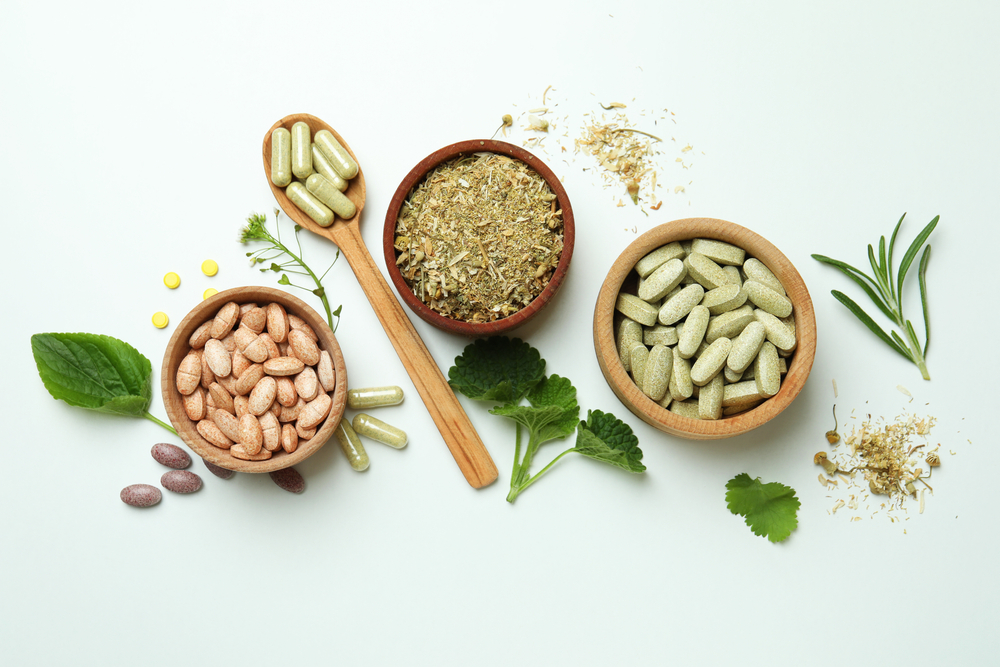
Herbal medicines have been used for centuries to treat a wide range of health conditions. Many people choose them because they're seen as a natural alternative to conventional medicine. But do herbal medicines actually work - and are they safe to take?
par Heather Ainsworth
À propos de l'auteurVoir la biographie complète

Dr Sarah Jarvis
Consultant Clinique
MA (Cantab), BM, BCh (Oxon), DRCOG, FRCGP, MBE
Après avoir suivi une formation en médecine à Cambridge et Oxford, le Dr Sarah Jarvis MBE est devenue médecin généraliste.
À propos du critiqueVoir la biographie complète

Dr Krishna Vakharia, MRCGP
Médecin-chef pour la santé, Optum UK
MBChB, MRCGP(2013), BMedSci (hons), DFSRH, DRCOG, PGDipDerm (Distn)
Le Dr Krishna Vakharia est un médecin généraliste du NHS. Elle est également examinatrice régulière pour le diplôme de troisième cycle en dermatologie pratique à l'Université de Cardiff, ainsi que médecin-chef pour la santé chez Optum UK.
Historique de l'article
Les informations sur cette page sont examinées par des cliniciens qualifiés.
Article également disponible en Anglais, Allemand, Espagnol, Français, Italien, Portugais, Hindi, Hébreu, Arabe, and Suédois.
30 janv. 2023 | Publié à l'origine
Écrit par :
Dr Sarah JarvisRevu par
Dr Krishna Vakharia, MRCGP

Demandez, partagez, connectez-vous.
Parcourez les discussions, posez des questions et partagez vos expériences sur des centaines de sujets de santé.

Vous ne vous sentez pas bien ?
Évaluez vos symptômes en ligne gratuitement
Inscrivez-vous à la newsletter Patient
Votre dose hebdomadaire de conseils de santé clairs et fiables - rédigés pour vous aider à vous sentir informé, confiant et maître de la situation.
En vous abonnant, vous acceptez notre Politique de confidentialité. Vous pouvez vous désabonner à tout moment. Nous ne vendons jamais vos données.
Plus sur le traitement et les médicaments
- 4 conseils de premiers secours pour un Noël sûr et joyeux
- Les shakes protéinés sont-ils bons pour la perte de poids ?
- Art-thérapie : des moyens créatifs pour améliorer votre santé mentale
- L'hypnothérapie peut-elle aider à lutter contre l'insomnie ?
- Un composé chimique trouvé dans le cannabis pourrait être plus efficace que les analgésiques
- Mis à jourEst-ce que la médecine à base de plantes fonctionne vraiment ?
- Avoir des relations sexuelles après une vasectomie
- Rhume des foins : comment votre pharmacien peut vous aider
- Comment Mounjaro fonctionne-t-il pour la perte de poids ?
- Comment Wegovy fonctionne-t-il pour la perte de poids ?
- Comment arrêter la prise de Mounjaro ou passer à une alternative
- Comment la chirurgie de perte de poids a changé ma vie : l'histoire de Gemma
- L'ASMR est-il le secret du bonheur sensoriel ?
- Un adulte sur quatre se voit prescrire des médicaments addictifs
- Ordonnances : vos questions répondues
- La chirurgie par maille vaginale devrait-elle être interdite ?
- Comprendre l'EMDR : comment les mouvements oculaires peuvent-ils aider à traiter le traumatisme ?
- Que se passe-t-il lorsque vous arrêtez de prendre des injections pour perdre du poids ?
- Qu'est-ce que la physiothérapie par vidéo et à qui peut-elle être utile ?
- Qui est éligible pour les injections de perte de poids ?