Vivre avec l'endométriose - L'histoire de Keisha
Revu par des pairs Dr Krishna Vakharia, MRCGPRédigé par Amberley DavisPublié à l'origine 18 avr. 2023
Respecte les directives éditoriales
- TéléchargerTélécharger
- Partager
- Language
- Discussion
- Version audio
- Ajouter aux sources préférées sur Google
Dans le monde entier, environ 200 millions de femmes souffrent d'endométriose. C'est l'une des conditions de santé spécifiques aux femmes les plus courantes, pourtant les récits de diagnostics tardifs, de problèmes de traitement de la douleur et de luttes pour la santé mentale sont fréquents. Keisha partage son propre témoignage pour aider d'autres femmes à trouver le soutien dont elles ont besoin pour l'endométriose
Endometriosis and the gender health gap
"I did not know what endometriosis was. I had never heard of it - I had not been taught about it at school. To this day, this shocks me, when it affects 10% of those who identify as women at birth," - Keisha Meek on getting diagnosed.
Endométriose is a female health condition where tissue that acts in the same way as the lining of the womb grows in other places. Like in the womb, this tissue thickens and breaks down with each period, but becomes trapped when it can't exit the body. Endometriosis can cause severe pain and affect la fertilité, among other des symptômes.
In the UK, it's thought that one in 10 women are living with endometriosis - the second most common gynaecological condition. Yet, according to a government report, the impact of endometriosis is overlooked, and on average it takes 7.5 years to get a diagnosis, and 10 or more GP appointments to access specialist care1.
As a female-specific condition, the challenges that women face in endometriosis care have been linked to a gender health gap - a term used to bring together evidence that would suggest your gender has a bearing on the healthcare you receive. Studies find that women are less likely to get diagnosed, wait longer for pain relief2, and consistently have their pain under-estimated and under-treated3.
But sharing and listening to women's experiences with endometriosis could help to make this condition more understood, and enable more women to find the clinical and emotional support they need. This is why Keisha shares her personal story - and her quest for the knowledge and support that would improve her quality of life.
Keisha's story
Keisha is a 31 year old operations manager from Leeds. Her experience of living with endometriosis inspired her to set up the endometriosis support group National Endometriosis Survivors Support and to join the All Party Parliamentary Group (APPG) for endometriosis.
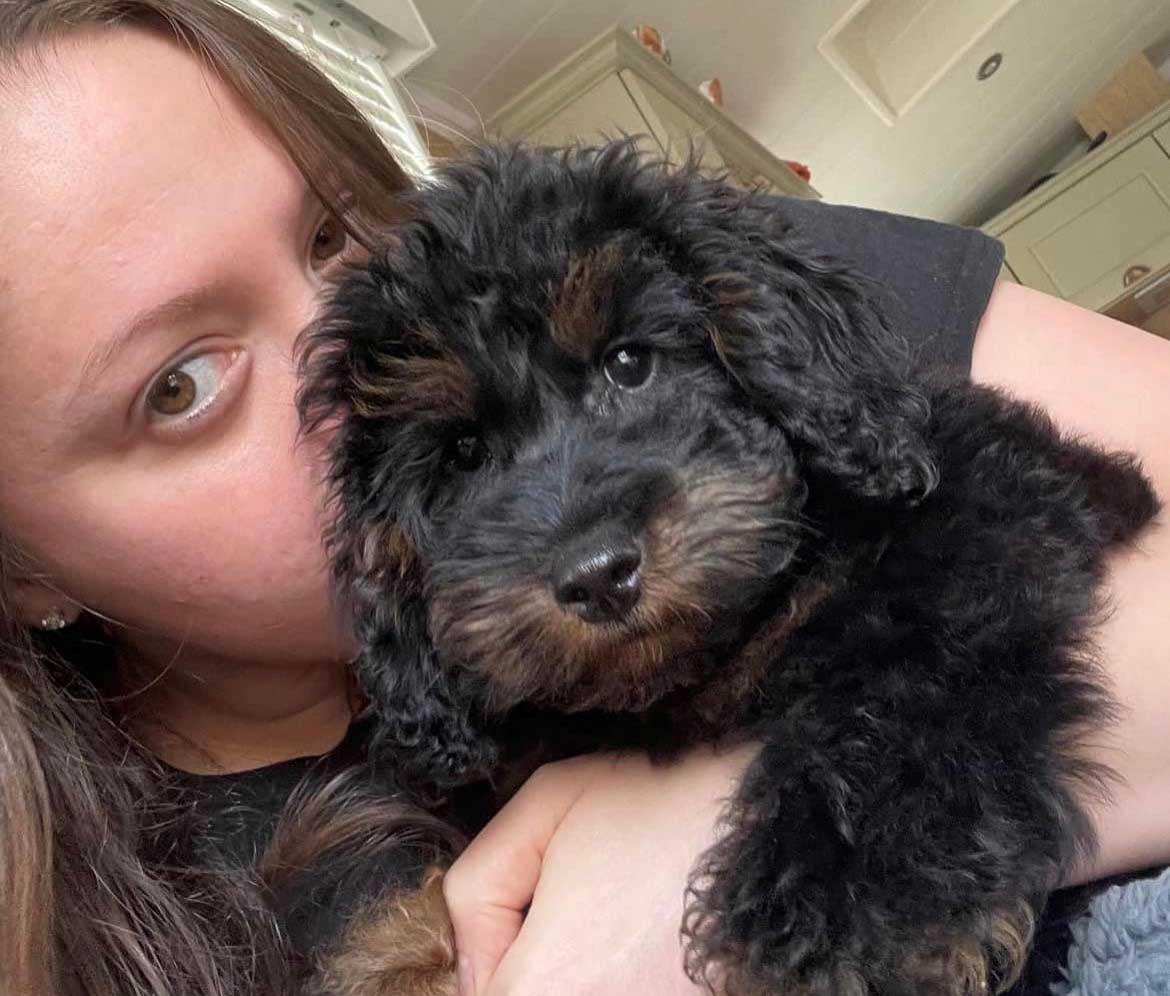
An advocate and activist for endometriosis support, Keisha has worked closely with the media to raise awareness worldwide. She lives with her eight-month-old puppy, Ollie, and is looking forward to welcoming her first child - a daughter - into the world very soon.
Keisha and her puppy Ollie
10 years for diagnosis
"I have suffered with endometriosis for 20 years," says Keisha. "My symptoms started when I was 11 years old. However, I was not diagnosed until I was 21. This took 10 years.
"Many women in my endometriosis support group have waited for similar lengths of time, and for the BME (Black and minority ethnic) women, it often takes even longer4.
The teenage years
Spending her teenage years with undiagnosed endometriosis made Keisha's school life especially hard.
"For years, I was told that I was just a teenager who could not handle her period. There was no support or understanding at school - I would get detentions for truanting in the toilets when I wasn't physically able to go to class, and was punished for my poor attendance rate, because my symptoms kept me home so much. Excessive bleeding also caused me many embarrassing moments as a teenager, but my teachers reacted by getting annoyed," says Keisha.
"This lack of understanding around period pain, and what is normal, still exists today. In National Endometriosis Survivors Support, we support teenagers who have endometriosis symptoms but no diagnosis. When they visit the GP, many are told they are too young to have endometriosis. Medically, we know this isn't true."
Not only can menstruating teenagers develop endometriosis, but some evidence suggests the pain may start a couple of months before a girl's periods have started5.
Misdiagnosis and diagnosis
Endometriosis can be difficult to diagnose through ultrasounds and blood tests. At 17, Keisha was incorrectly diagnosed with PCOS, a different condition that also affects women of childbearing years. At 20, she had a hysteroscopy - a procedure to examine the womb - but her endometriosis was missed again.
One year on, it was a laparoscopie that eventually confirmed Keisha's condition. This operation, where a telescope-like instrument is inserted into the tummy through a small cut, is considered the best diagnostic method for endometriosis.
"Finally, I had my diagnosis, and finding out what health problem you have is so important for your mental health - particularly when pain is involved. However, I had never heard of endometriosis, and there were things I remained unaware of, like that this was a lifetime condition, and there was no cure."
Living with endometriosis
For Keisha, attempts to manage her endometriosis pain have involved multiple surgeries and hormonal treatments. Yet despite her diagnosis, it took time for Keisha to learn of endometriosis specialists, who carry out excision surgery, which she has since learnt is "the best treatment offering longer term pain relief."
The pain and mental health cycle
On average, women wait 16 minutes longer than men in emergency departments for pain relief, and are 25% less likely than men to be given opioids - medication used to treat severe pain2. One 2021 study found that the false belief that women are oversensitive to pain, and exaggerate it more easily, leads many healthcare staff to discount female pain3.
This is something that Keisha has experienced first hand: "my pain has led me to seek urgent help in A&E several times, and it has always been dismissed as something that's just part of endometriosis that I must live with.
"It's really sad that this is a common experience. You can become trapped by the pain you're in - and it's so dangerous to try and self-manage with painkillers. I've had people in my support group who have accidentally overdosed.
"Tragically, others have taken their own life on purpose. I've been in this position myself, before I found an endometriosis specialist. In cycles of really bad pain, it's too easy to feel like there's no escape."
Keisha feels that a more joined up approach for treating chronic pain and associated mental health problems would help. For example, if thérapie cognitivo-comportementale (TCC) counsellors and doctors worked more closely together.
Finding the right support
"After years of suffering alone, not knowing one person with endometriosis, and feeling ashamed because of the taboo around periods and the fact that nobody had heard of it, I looked for other people like me with the condition," says Keisha.
Finding that there was no local support group, Keisha set up National Endometriosis Survivors Support in 2017. This would change her life, and the life of many others living with endometriosis, for the better.
"From setting up the group, I made friends who told me about endometriosis specialists, and got referred."
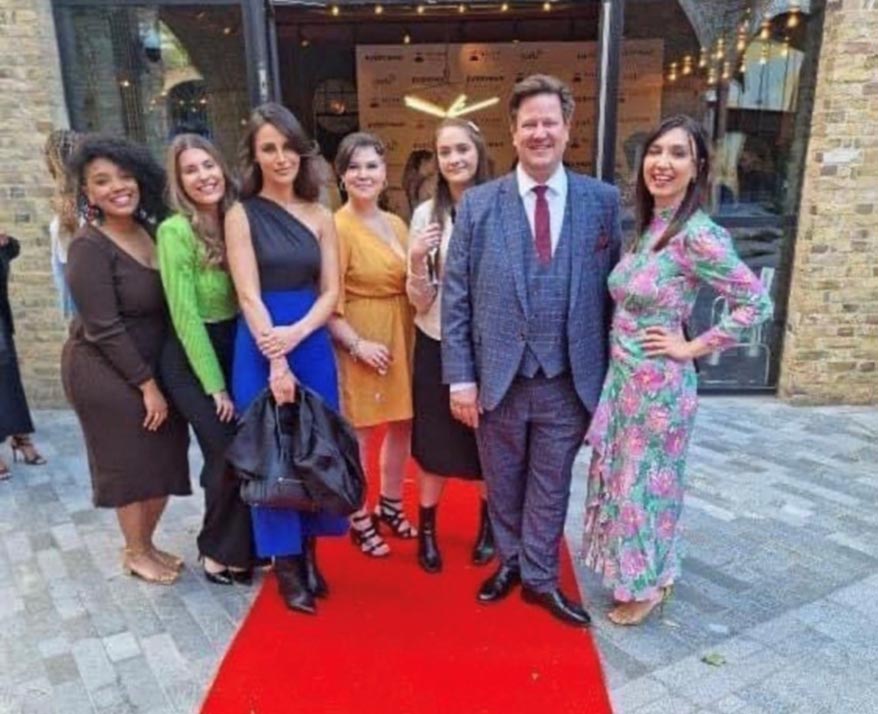
National Endometriosis Survivors Support Group
My fertility miracle
Since getting endometriosis support from her specialist team, Keisha has received life-changing traitement de fertilité. She says:
"Since I was 20, I've had four endometriosis-related pregnancy losses and was diagnosed with sub-fertility after a year of trying. I also had to have a medically-advised abortion, which was then followed by one of my ablation surgeries. Only last year, I was advised by specialists that, with my history of multiple losses and 12 surgeries, it would be unlikely I would conceive.
"However, due to the amazing work of Dr Kremer and his team, I am now 28 weeks pregnant and what a miracle she is! I feel extremely lucky."
Half of people with endometriosis experience fertility issues, but Keisha's story is one of hope - and of the power of finding endometriosis support in people going through the same as you.
Where to find endometriosis support
If you're living with endometriosis and need specialist or emotional support, you may find these resources helpful:
Specialist endometriosis centres - you can find your nearest centre by visiting bsge.org.uk.
Endometriosis support groups - for example, Keisha's National Endometriosis Survivors Support group provides information and online support on Facebook et Instagram, and is open to people with endometriosis, PCOS, period issues and fertility issues, whether diagnosed or undiagnosed.
Endometriosis charities - par exemple, Endometriosis UK membership provides priority booking for information webinars and events.
Endometriosis podcasts - par exemple, The cycle - endometriosis et Unheard of: the hidden voices of endometriosis aim to share stories and create communities for those living with the condition.
Endometriosis on social media - for example, the Endometriosis Dietitian shares diet advice to help you manage your symptoms.
Our tips for managing endometriosis pain - explains the lifestyle changes and at-home treatments that can ease pain and make life that little bit easier.
Pour en savoir plus
Sélections des patients pour Endométriose
Santé des femmes
Vos douleurs menstruelles pourraient-elles être de l'endométriose ?
For around one in ten women, endometriosis is the underlying cause of period pain. This can be quite distinct from normal period pain, so you should speak to your doctor about endometriosis is the cause of your pain. Here we look at when to be concerned about period pain and what to do about it.
par Victoria Raw
Santé des femmes
Vidéo : L'endométriose peut-elle survenir pendant la grossesse ?
L'endométriose, une condition dans laquelle un tissu semblable à la muqueuse de l'utérus se développe ailleurs comme les ovaires ou l'intestin, est l'une des conditions les plus déroutantes auxquelles les femmes peuvent être confrontées. Alors que certaines femmes n'ont aucun symptôme, pour d'autres, cela peut être débilitant. Le Dr Sarah Jarvis explique certaines des informations essentielles à connaître.
par Lydia Smith
À propos de l'auteurVoir la biographie complète

Amberley Davis
Rédacteur senior
BA (Hons), CPD
Amberley est une rédactrice senior chez Patient et a écrit de manière approfondie sur une gamme de sujets liés à la santé et au bien-être.
À propos du critiqueVoir la biographie complète

Dr Krishna Vakharia, MRCGP
Médecin-chef pour la santé, Optum UK
MBChB, MRCGP(2013), BMedSci (hons), DFSRH, DRCOG, PGDipDerm (Distn)
Le Dr Krishna Vakharia est un médecin généraliste du NHS. Elle est également examinatrice régulière pour le diplôme de troisième cycle en dermatologie pratique à l'Université de Cardiff, ainsi que médecin-chef pour la santé chez Optum UK.
Historique de l'article
Les informations sur cette page sont examinées par des cliniciens qualifiés.
Article également disponible en Anglais, Allemand, Espagnol, Français, Italien, Portugais, Hindi, Hébreu, Arabe, and Suédois.
18 avr. 2023 | Publié à l'origine
Écrit par :
Amberley DavisRevu par des pairs
Dr Krishna Vakharia, MRCGP

Demandez, partagez, connectez-vous.
Parcourez les discussions, posez des questions et partagez vos expériences sur des centaines de sujets de santé.

Vous ne vous sentez pas bien ?
Évaluez vos symptômes en ligne gratuitement
Inscrivez-vous à la newsletter Patient
Votre dose hebdomadaire de conseils de santé clairs et fiables - rédigés pour vous aider à vous sentir informé, confiant et maître de la situation.
En vous abonnant, vous acceptez notre Politique de confidentialité. Vous pouvez vous désabonner à tout moment. Nous ne vendons jamais vos données.
Plus sur la santé des femmes
- 8 mythes courants sur le SOPK (Syndrome des Ovaires Polykystiques)
- Anatomie du sein
- Les applications de fertilité sont-elles une forme fiable de contraception ?
- Peut-on prévenir les saignements intermenstruels sous pilule ?
- Avez-vous besoin d'un bilan de ménopause à 40 ans ?
- Moyens faciles d'obtenir la pilule : options au-delà du cabinet médical
- Comment les événements de la vie et le vieillissement peuvent changer votre vagin
- Quelle quantité de douleur menstruelle est normale ?
- Prendre soin de votre santé pendant la ménopause
- Un test sanguin personnalisé détecte le retour du cancer du sein
- Histoires vraies : Comment gérer l'endométriose et votre carrière
- La chirurgie par maille vaginale devrait-elle être interdite ?
- Les bienfaits des jouets sexuels pour la santé
- Vidéo : Les fibromes sont-ils cancéreux ?
- Quels sont les effets secondaires du THS ?
- Quels sont les signes que le THS ne fonctionne plus ?
- Qu'est-ce que le syndrome post-contraceptif ?
- Ce que c'est d'être chirurgien du sein atteint d'un cancer du sein
- Pourquoi les femmes ont-elles plus froid que les hommes ?