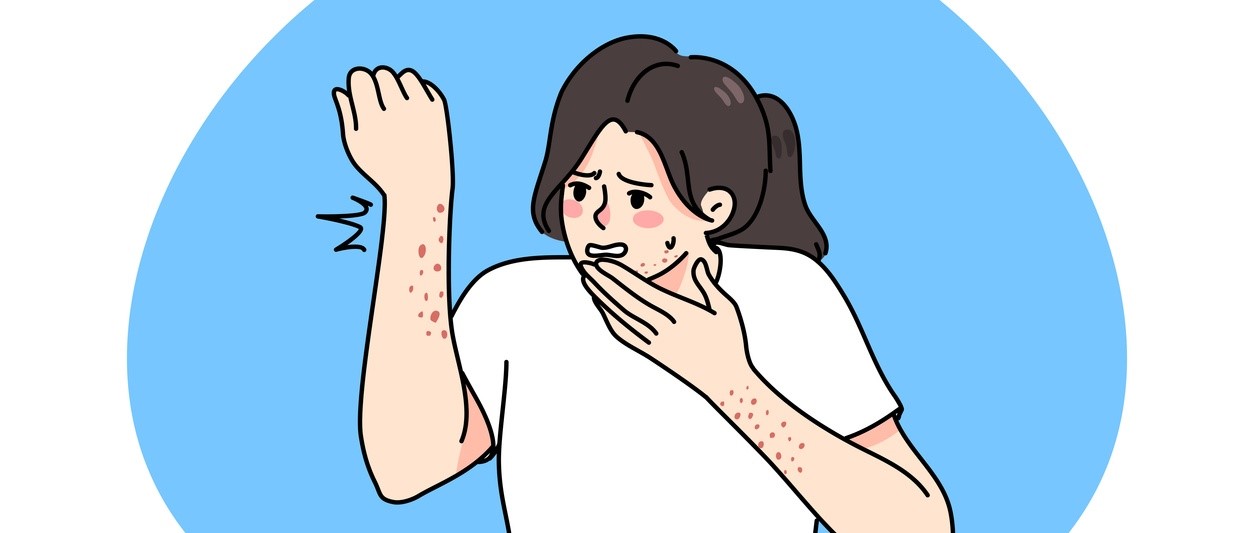
Augmentation des cas de gale à travers le Royaume-Uni
Évalué par des pairs Dr Krishna Vakharia, MRCGPRédigé par Amberley DavisPublié à l'origine 4 Jan 2024
Respecte les directives éditoriales
- TéléchargerTélécharger
- Partager
- Language
- Discussion
- Version audio
- Ajouter aux sources préférées sur Google
Le nombre de personnes atteintes de la gale est environ deux fois supérieur à ce que l'on attend habituellement à cette période de l'année. Nous expliquons ce qu'est la gale, comment la repérer et quoi faire à ce sujet.
Doctors report surge in scabies
According to a new report from the British Association of Dermatologists (BAD), 8 out of the 9 regions across the UK have seen an increase in scabies this year.
Professor Kamila Hawthorne, chair at the Royal College of General Practitioners (RCGP) commented on the surge: "Since July, GPs have seen a growing rate of scabies - at a consistently higher level than the five-year average and the seasonal norm. At the end of November, the rate of scabies was double the seasonal average."
The North of England appears to be most affected. Due to the highly contagious nature of scabies, outbreaks in nursing homes, care homes, and university accommodation are more common, where people are closer together.
How to prevent scabies
Gale is an intensely itchy skin condition caused by tiny insects known as mites, which are almost invisible to the naked eye. It can spread between people through close skin contact.
Therefore, the best way to protect yourself against scabies is to:
Avoid touching someone who shows the symptoms below.
Avoid sharing clothes, towels, and bedsheets with them.
Hot wash your bedding and towels at 50°C or above if they have been used by them.
Anyone can get scabies, so it's important to know the signs so it can be treated and prevented from spreading.
How to spot scabies
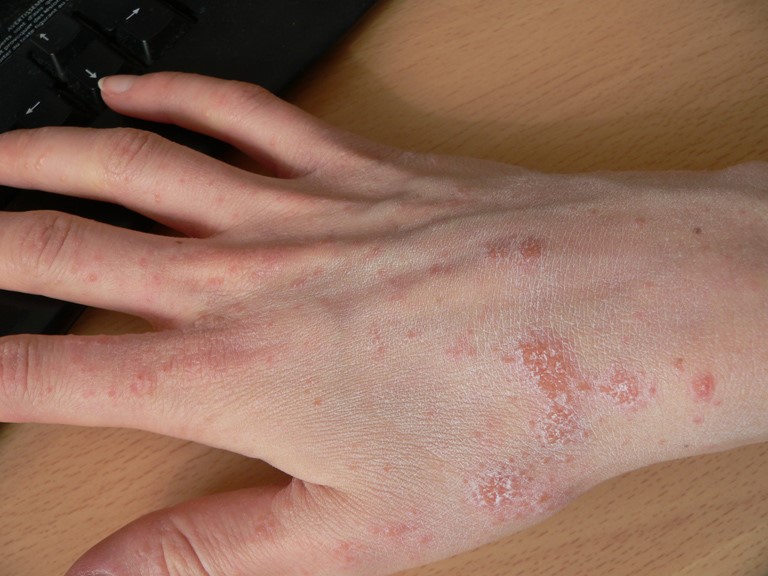
Scabies appears as blotchy, lumpy red rashes. It's common to first notice them on your hands, and they also tend to form on the stomach, lower back, and thighs - although they can appear anywhere on your body.
These rashes are often very itchy and cause you to scratch the affected areas, which can further damage your skin. It might be that this itchiness starts in one place, and then spreads to other areas you touch.
You might also see small dark-grey lines on your skin, most commonly in between your fingers, on your wrists, and in the palms of your hands. However, these aren't always visible.
Scabies rash on hand
What to do if you have scabies
If you think you might have scabies:
It's important to get treatment to help prevent the condition spreading to others.
Try and avoid skin contact with other people as much as possible.
Either your pharmacist or GP can diagnose this condition based on how your rash looks.
Treatment involves a cream or lotion you apply to your skin.
In the UK, the two main treatment creams are called permethrin and malathion. These are usually available in pharmacies and GP surgeries, however the surge in scabies cases comes during a shortage of both medicines.
This is thought to be due to the increase in demand, supply chain issues, a rise in the cost of raw materials, and the war in Ukraine, according to BAD1.
Currently, the availability of scabies treatment will depend on where you are, so it's important that you try your pharmacist or doctor, instead of suffering this uncomfortable condition and possibly passing it on to others.
If you have problems getting treatment, home remedies like neem, tea tree oil, and clove oil may help ease your itching in the meantime but it won't get rid of the mites.
Pour en savoir plus
Sélections des patients pour Éruptions cutanées

Santé de la peau, des ongles et des cheveux
Déclencheurs courants de la rosacée et comment les éviter
One in ten people in the UK are thought to be suffering from rosacea - a condition that causes redness and flushing of the skin. Like many skin conditions, its exact cause is unknown. But the good news is that treatments are available, and people living with rosacea can take steps to minimise redness and flare-ups.
par Gillian Harvey

Santé de la peau, des ongles et des cheveux
Que faire lorsque votre enfant a une éruption cutanée
As a parent, it's hard not to panic when your child develops a rash. But these disturbing skin flare-ups are often nothing to worry about. Follow our troubleshooting guide to see what to do about your child's rash.
par Gillian Harvey
À propos de l'auteurVoir la biographie complète

Amberley Davis
Rédacteur senior
BA (Hons), CPD
Amberley est une rédactrice senior chez Patient et a écrit de manière approfondie sur une gamme de sujets liés à la santé et au bien-être.
À propos du critiqueVoir la biographie complète

Dr Krishna Vakharia, MRCGP
Médecin-chef pour la santé, Optum UK
MBChB, MRCGP(2013), BMedSci (hons), DFSRH, DRCOG, PGDipDerm (Distn)
Le Dr Krishna Vakharia est un médecin généraliste du NHS. Elle est également examinatrice régulière pour le diplôme de troisième cycle en dermatologie pratique à l'Université de Cardiff, ainsi que médecin-chef pour la santé chez Optum UK.
Historique de l'article
Les informations sur cette page sont examinées par des cliniciens qualifiés.
Article également disponible en Anglais, Allemand, Espagnol, Français, Italien, Portugais, Hindi, Hébreu, Arabe, and Suédois.
4 Jan 2024 | Publié à l'origine
Rédigé par :
Amberley DavisÉvalué par des pairs
Dr Krishna Vakharia, MRCGP

Demandez, partagez, connectez-vous.
Parcourez les discussions, posez des questions et partagez vos expériences sur des centaines de sujets de santé.

Vous ne vous sentez pas bien ?
Évaluez vos symptômes en ligne gratuitement
Inscrivez-vous à la newsletter Patient
Votre dose hebdomadaire de conseils de santé clairs et fiables - rédigés pour vous aider à vous sentir informé, confiant et maître de la situation.
En vous abonnant, vous acceptez notre Politique de confidentialité. Vous pouvez vous désabonner à tout moment. Nous ne vendons jamais vos données.
Plus sur la santé de la peau, des ongles et des cheveux
- 8 causes de l'acné du dos
- Biotine : les vitamines pour la croissance des cheveux sont-elles vraiment efficaces ?
- Inquiet pour un grain de beauté ? Obtenez la tranquillité d'esprit avec un contrôle en ligne des grains de beauté
- Les remèdes naturels sont-ils vraiment efficaces contre l'acné ?
- Le maquillage provoque-t-il de l'acné ?
- Boire au soleil : un cocktail dangereux
- Comment éviter les piqûres de tiques et la maladie de Lyme
- Comment se débarrasser des cicatrices d'acné : votre guide ultime
- Comment prendre soin de vos cheveux pendant la chimiothérapie
- Comment prévenir et apaiser les kystes cutanés : un guide simple
- Comment repérer les punaises de lit et s'en débarrasser
- Comment distinguer l'acné des autres problèmes de peau
- Y a-t-il un lien entre l'alimentation et l'acné ?
- Acné de grossesse : pourquoi cela se produit et comment la traiter
- Traitements de la rosacée : lequel vous convient ?
- Grattage de la peau et trichotillomanie : gérer les comportements répétitifs centrés sur le corps
- Qu'est-ce qui provoque l'apparition d'urticaire sur notre peau ?
- Qu'est-ce que le skinimalisme, et est-ce bon pour votre peau ?
- Que faire si vous êtes piqué par une méduse
- Un régime sans gluten aidera-t-il l'eczéma de mon enfant ?