Aliments riches en calcium
Revu par Dr Toni Hazell, MRCGPDernière mise à jour par Dr Hayley Willacy, FRCGP Dernière mise à jour 30 janv. 2023
Respecte les directives éditoriales
- TéléchargerTélécharger
- Partager
- Language
- Discussion
- Version audio
Dans cette série :OstéoporoseScan DEXABisphosphonatesCarence en vitamine DPrévenir l'ostéoporose induite par les stéroïdes
Calcium is an important nutrient with many functions. It's necessary for nerve function, to help muscles contract and to assist with normal blood clotting. Our primary source of calcium is from food.
Dans cet article:
Sélections de vidéos pour Régime et nutrition
Continuez à lire ci-dessous
Why is calcium important?
Calcium plays an important role in building and maintaining strong teeth and bones. It also helps to prevent loss of bone strength (osteoporosis) as we age.
Calcium is the most abundant mineral in the body, but because we can't make it, we need to consume calcium-rich foods instead.
Calcium-rich foods
Retour au sommaireFoods rich in calcium include:
Lait et produits laitiers.
Fish with edible bones, such as tinner salmon.
Green, leafy vegetables.
Noix.
Graines.
Fruits.
Some food manufacturers also enrich food products with calcium by adding it to certain foods - for example, in soya milk, orange juice, cereals and breads. In the UK, all wheat flour except wholemeal must be fortified with calcium.
Milk and dairy sources of calcium
Food | Portion size | Calcium |
Milk (any type) | 200 ml | 240 mg |
Yoghurt | 125 g | 200 mg |
Cheddar cheese | 30 g | 216 mg |
Soft cheese triangle | 15 g | 100 mg |
Cottage cheese | 100 g | 73 mg |
Rice pudding | 200 g | 180 mg |
Ice cream | 60 g (one scoop) | 78 mg |
Custard | 120 ml | 150 mg |
Non-dairy sources of calcium
Food | Portion size | Calcium |
Sardines | 100 g (four sardines) | 410 mg |
Pilchards | 100 g (two pilchards) | 340 mg |
Haddock | 150 g fillet | 150 mg |
Baked beans | 220 g (one half of a large can) | 100 mg |
Enriched soya/rice milk | 200 ml | 240 mg |
Enriched orange juice | 250 ml | 300 mg |
Tofu | 100 g | 500 mg |
Spring green | 100 g | 200 mg |
Spinach | 100 g | 150 mg |
Watercress | 50 g | 75 mg |
Broccoli | 50 g | 30 mg |
Okra | 50 g | 130 mg |
Kale | 50 g | 65 mg |
Chickpeas | 100 g | 45 mg |
Almonds | 15 g | 35 mg |
Brazil nuts | 15 g | 26 mg |
Sesame seeds | one tablespoon | 160 mg |
Dried figs | 60 g (three figs) | 150 mg |
Calcium-enriched bread | Two slices (80 g) | 300 mg |
Currants | 100 g | 93 mg |
Continuez à lire ci-dessous
How much calcium do we need?
Retour au sommaireAdults over the age of 18 years need around 700 mg of calcium per day. There are other circumstances where more calcium is required. This may be if you:
Are aged 9-18 years (1300 mg). Children aged 4-8 years need about 800 mg per day.
Are l'allaitement (1250 mg).
Avez maladie cœliaque ou maladie de Crohn ou la colite ulcéreuse (1000-1500 mg).
Are a postmenopausal woman or man over 55 years old (1200 mg).
Avez osteoporosis - loss of bone strength - (1000 mg).
Getting enough calcium
There are web pages and apps which will help you add up the calcium in your diet to make sure you are getting as much as you need. See an example of an online calcium calculator here.
If you find it difficult to get enough calcium from your diet - for example, if you are a vegan who is unable to tolerate soya - calcium supplement tablets are available at supermarkets and chemists.
Calcium deficiency
You need to make sure you are consuming enough calcium-rich food if you have low calcium levels in the blood (hypocalcaemia) or are taking stéroïdes. One of the side-effects of taking steroid tablets in the long term (for three months or more) is an increased risk of developing osteoporosis. This is known as steroid-induced osteoporosis.
There is some evidence that sodium in the diet, (generally in the form of salt), can increase calcium loss from the body. It is generally a good idea to reduce salt in your diet, but particularly so if you are trying to make sure your body gets plenty of calcium.
If you are on additional treatment for osteoporosis (such as alendronic acid) then it is particularly important that you are eating enough calcium, as these treatments will not work if your calcium intake is too low.
Side-effects of calcium supplements
People who are taking high doses of calcium supplements may increase their risk of heart disease but there is no association of increased risk with a diet which is naturally high in calcium.
Why is vitamin D important for calcium?
Retour au sommaireVitamin D is needed so that the body can absorb calcium effectively.
Unlike other vitamins, we do not need to get vitamin D from food. Most of the vitamin D we have is made by our own bodies. It is made in the skin by the action of sunlight. This is a good thing because most foods contain no, or very little, vitamin D naturally.
However, this can also be a problem if you live in an area where sunshine cannot be guaranteed (even in summer), or if it is culturally inappropriate for you to have your skin uncovered.
How much vitamin D do we need to absorb calcium?
The Department of Health and Social Care currently recommends that everyone should take a vitamin D supplement of 10 micrograms (mcg) daily during the winter months (October-March). Some people are at greater risk of vitamin D deficiency; therefore, a routine vitamin D supplement all year round is recommended. This includes:
All enceinte et l'allaitement women.
All babies and young children aged 6 months to 5 years should take a daily supplement containing vitamin D in the form of vitamin drops. However, those infants who are fed infant formula will not need vitamin drops until they are receiving less than 500 ml of infant formula a day, as these products are fortified with vitamin D. Breast-fed infants may need to receive drops containing vitamin D from 1 month of age if their mother has not taken vitamin D supplements throughout pregnancy.
People aged 65 years and over.
People who are not exposed to much sun, or who have darker skin.
See the separate leaflet called Vitamin D Deficiency for further information.
Sélections de patients pour Régime et nutrition
Mode de vie sain
potassium alimentaire
Le potassium est un minéral présent naturellement dans de nombreux aliments. Il est nécessaire dans le corps pour le bon fonctionnement du cœur, des nerfs et des muscles. Des niveaux élevés de potassium peuvent entraîner des rythmes cardiaques dangereux. Des niveaux faibles de potassium peuvent également causer une faiblesse musculaire et des problèmes de rythme cardiaque. Des niveaux faibles de potassium à long terme ont été liés à l'hypertension artérielle, aux maladies cardiaques et aux accidents vasculaires cérébraux. Un faible taux de potassium est particulièrement susceptible d'augmenter votre pression artérielle si vous consommez beaucoup de sel (chlorure de sodium). Le potassium détend les parois des vaisseaux sanguins, abaissant la pression artérielle. Il protège également contre les crampes musculaires.
par Dr Surangi Mendis, MRCGP
Mode de vie sain
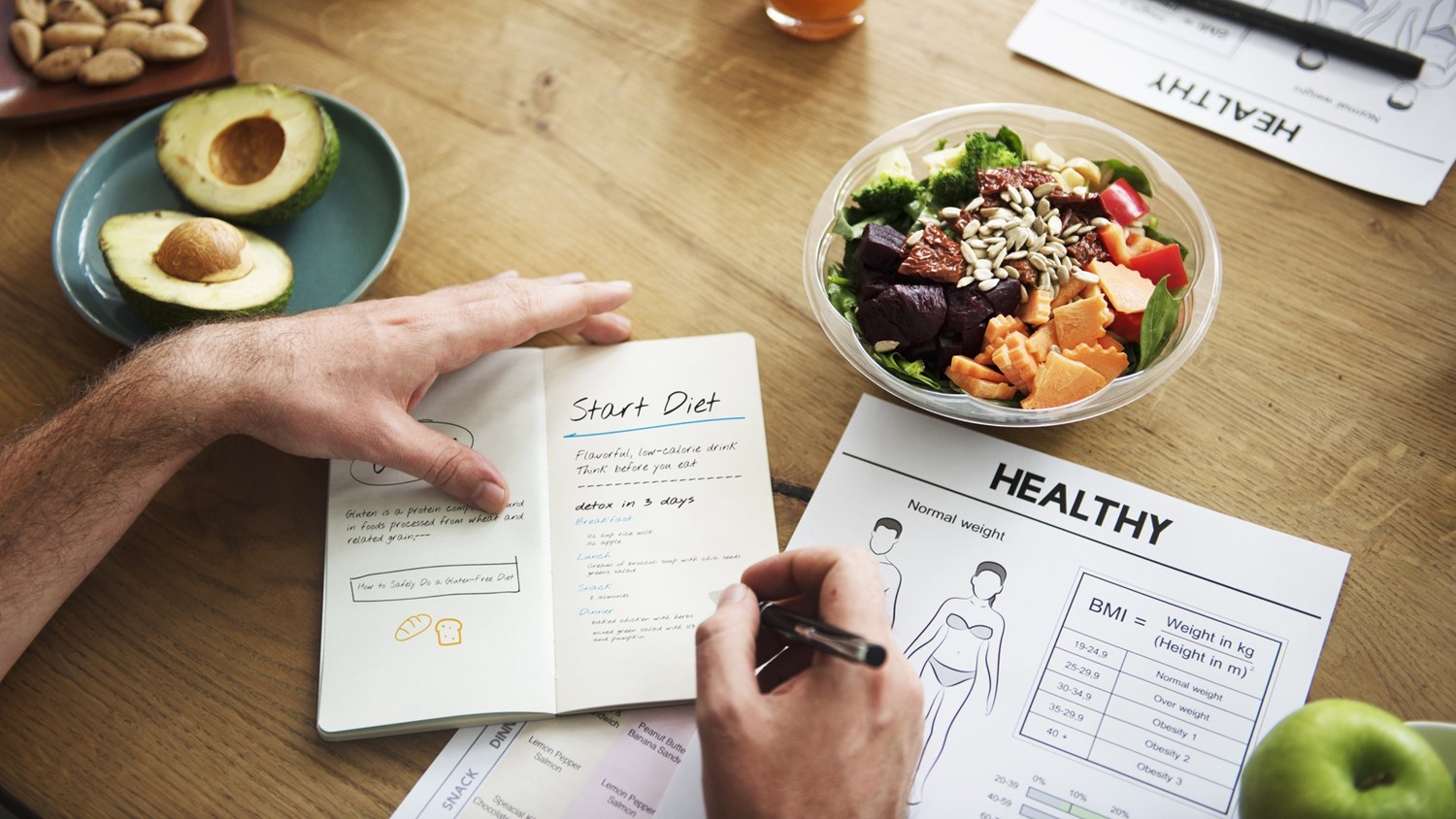
Régime 5:2
The 5:2 diet is a calorie-restricted diet that involves eating 'normally' for five days out of seven and then 'fasting' on the other two days out of seven. The proposed health effects of the 5:2 diet include weight loss, improvement in life expectancy, protection against certain cancers and protection against dementia. However, the evidence supporting the 5:2 diet is currently limited. More research is needed to look at the long-term risks and benefits.
par Dr Hayley Willacy, FRCGP
Lectures complémentaires et références
- Ostéoporose : évaluer le risque de fracture de fragilité; Ligne directrice clinique NICE (août 2012, mise à jour février 2017)
- Vitamine D et santé; Comité consultatif scientifique sur la nutrition (juillet 2016)
- Hofmeyr GJ, Lawrie TA, Atallah AN, et al; Calcium supplementation during pregnancy for preventing hypertensive disorders and related problems. Cochrane Database Syst Rev. 2018 Oct 1;10:CD001059. doi: 10.1002/14651858.CD001059.pub5.
- Guide clinique pour la prévention et le traitement de l'ostéoporose; Groupe de Lignes Directrices sur l'Ostéoporose (mis à jour en septembre 2021)
- Palacios A, Rojas-Roque C, Balan D, et al; Fortification of staple foods with calcium: a novel costing tool to inform decision making. Ann N Y Acad Sci. 2022 Jul;1513(1):79-88. doi: 10.1111/nyas.14775. Epub 2022 Mar 31.
- Warensjo Lemming E, Byberg L, Hoijer J, et al; Combinations of dietary calcium intake and mediterranean-style diet on risk of hip fracture: A longitudinal cohort study of 82,000 women and men. Clin Nutr. 2021 Jun;40(6):4161-4170. doi: 10.1016/j.clnu.2021.01.043. Epub 2021 Feb 5.
Continuez à lire ci-dessous
Historique de l'article
Les informations sur cette page sont rédigées et examinées par des cliniciens qualifiés.
Next review due: 4 Dec 2027
30 janv. 2023 | Dernière version
29 Aug 2014 | Publié à l'origine
Écrit par :
Alexa Evans

Demandez, partagez, connectez-vous.
Parcourez les discussions, posez des questions et partagez vos expériences sur des centaines de sujets de santé.

Vous ne vous sentez pas bien ?
Évaluez vos symptômes en ligne gratuitement
Inscrivez-vous à la newsletter Patient
Votre dose hebdomadaire de conseils de santé clairs et fiables - rédigés pour vous aider à vous sentir informé, confiant et maître de la situation.
En vous abonnant, vous acceptez notre Politique de confidentialité. Vous pouvez vous désabonner à tout moment. Nous ne vendons jamais vos données.