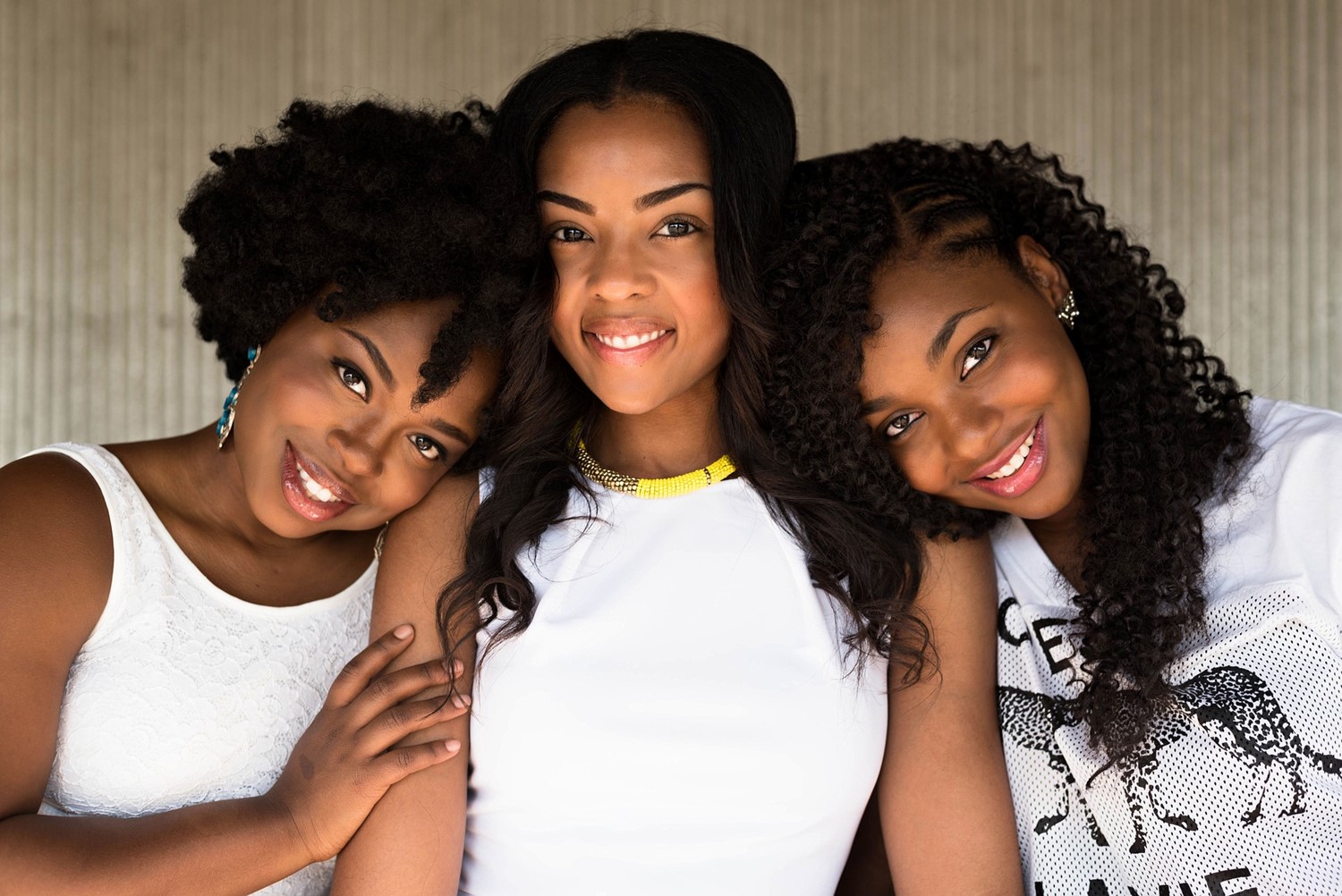
What's the link between hair relaxers and fibroids?
Revu par Dr Krishna Vakharia, MRCGPDernière mise à jour par Dr Gabrielle Macaulay, MBBSDernière mise à jour 31 Jan 2024
Respecte les directives éditoriales
- TéléchargerTélécharger
- Partager
- Language
- Discussion
- Version audio
If you use chemical hair relaxers to straighten your hair, you may not be aware that the possible health effects go beyond your hair and scalp. If you have a womb, the chemicals in relaxers can cause growths known as fibroids - and these can trigger health issues that range from the uncomfortable to the serious.
Dans cet article:
Sélections de vidéos pour General women's health
The Study of Environment, Lifestyle and Fibroids in the USA1 found that nine out of ten of the African American women who took part had used chemical relaxers or straightening products in their lifetime.
Frequent usage, of more than once a year, peaked as girls approached mid teenage years, from around 1 in 10 at age five, to 7 in 10 at age 15, and then 3 in 10 at adulthood. Only around 2 out of 10 15-year-olds rarely or never used relaxers - that increased to 6 in 10 adults.
Continuez à lire ci-dessous
What are fibroids?
Fibromes are non-cancerous growths in the muscular middle layer of the womb. They respond to oestrogen and progesterone hormones. They are a significant cause of disease in women of childbearing age. Some problems women with fibroids encounter include:
Heavy periods.
Painful periods.
Douleur pelvienne.
Fatigue.
Problèmes de vessie.
Low red blood cell count.
Fertility issues.
Miscarriage.
Are fibroids common in the Black community?
Retour au sommaireAlthough they are commonly found in women of all ethnicities, Black women are three times more likely to be diagnosed with fibroids compared to white women. A study found around 8 out of 10 Black women aged 35-49 had fibroids.
Black women tend to:
Develop fibroids at a younger age.
Have a greater number of fibroids.
Are more likely to have severe douleur pelvienne with fibroids.
Are more likely to be admitted to hospital with fibroid complications.
Are more likely to have a hysterectomy - womb removal - due to fibroids.
What makes fibroids grow?
Fibroids are a condition fuelled by oestrogen dominance. This can occur when there is an imbalance in:
The amount of oestrogen the body is producing.
The amount of oestrogen like substances the body is exposed to.
The amount of oestrogen that the body can get rid of.
What disrupts your oestrogen balance?
An endocrine disrupting compound (EDC) is something that interferes with the production, release, transport, metabolism (chemical reactions), binding, or clearance of natural blood found hormones. These are responsible for body balance, reproduction, and development.
Hormones are chemicals that influence different functions in your body. They carry messages through the blood to parts of the body, with signals telling your body what to do, and when, by activating hormone receptors.
EDCs do more than just act on hormone receptors. They can act through other receptors or cause problems with pathways involved in hormone life-cycle. There are many compounds, both natural and synthetic, that affect your hormones.
Continuez à lire ci-dessous
Do hair relaxers cause fibroids?
Retour au sommaireThe Black Women's Health Study in the USA2 followed 23,580 premenopausal women to see who developed fibroids. It found that women who had used hair relaxer were 17% more likely to develop fibroids compared to women who never had.
Of the women who used hair relaxer for 10 years or longer, the risk of fibroids increased with frequency of hair relaxer use per year. These results suggest there is an association with hair relaxer use and fibroids risk.
They showed that the longer you use relaxer, and having a higher number of burns, increased your chances of developing fibroids.
The study showed the following behaviours increase your risk of uterine fibroids:
Using relaxers at all, even if just once.
Using relaxers for a longer length of time.
Increased frequency of relaxer use.
Increased number of scalp burns with relaxer use.
In recent years, studies have started to identify a link between use of chemical hair relaxers and endometrial (womb) cancer.
One study of 33,947 women aged 35-74 found that using relaxers within the last year increased the overall risk of endometrial cancer3.
Another looking at the long-term use of relaxers in 44,798 women found the risk to increase in postmenopausal women, but found no change in those who were premenopausal4.
It can be tricky to find alternative hair care products
Even if you avoid relaxers, many other common hair care products contain similar, or other hormone disrupting compounds, to what is found in relaxers.
A study in California5 found that, despite knowing the potential harmful effects of hair product use, college educated Black women continued to use potentially harmful hair products because hair was strongly tied to their self-worth and identity. The products helped them achieve styles that made them feel socially accepted and supported their self-identity.
Tips for protecting hormone health when choosing hair products
Retour au sommaireIt is difficult for consumers to choose hair products as there are so many different chemicals to look out for with very complicated names. Apps such as Think Dirty ou Yuka can be useful for checking the toxic substances in products.
Also, there are key groups to look out for, so check the product label and packaging to see that it does not contain - or is free of - the following groups.
Parabens.
Phthalates.
Bisphenol A.
Fragrance.
A combination of common chemicals including phthalates, fragrances, parabens, and chemical UV filters are likely to have a greater effect combined than each one on its own. This could include a built-up oestrogen like effect on the body. There are many other risk factors for fibroid development, including:
Increased abdominal fat.
Alcohol use.
Greater body weight.
Family history of fibroids.
Food additive consumption.
Increased alcohol consumption.
Poor levels of physical activity.
Heavy coffee or caffeine intake.
Low fruit and vegetable intake.
Pressure from society often pushes Black people to use relaxers without fully understanding the risks. Dr Rephainah Mallet, a UK based obstetrics and gynaecology specialist says: "The beauty industry targets Black people in a way that disadvantages them, as there is a western influence of beauty leaning towards straight hair."
The doctor says that some ingredients that affect the endocrine system have undisclosed chemicals listed as fragrance on ingredients lists. As all the risks of relaxers are not explicitly explained, some people assume they are safe without being properly informed.
Dr Mallet adds: "With children on the box, people assume it is safe. We assume our laws keep products safe. But things we apply on the skin and scalp are absorbed which can affect the sensitive endocrine system."
Black women who are already at an increased risk of fibroids should understand the facts and issues before deciding if they use relaxers to chemically straighten their own or their children's hair. It is particularly important that teenagers understand the risks as they tend to use relaxers most frequently.
Continuez à lire ci-dessous
Further Reading
Retour au sommaireSélections de patients pour General women's health
Santé des femmes
La chirurgie par maille vaginale devrait-elle être interdite ?
Lorsque Kath Sansom a consulté son médecin pour des problèmes d'incontinence, elle était une mère active de deux adolescentes qui, comme beaucoup de femmes d'un certain âge, avaient commencé à avoir des fuites embarrassantes lors de l'exercice. « On m'a orientée vers un spécialiste, et l'opération de pose de mesh vaginal m'a été présentée comme une solution rapide et simple. On m'a dit que je serais en ambulatoire, sortie en 20 minutes, de retour chez moi pour le thé, et de retour à mon bureau en une semaine », explique-t-elle. En réalité, cependant, Sansom dit qu'elle est sortie avec tellement de douleur qu'elle pouvait à peine marcher — et elle n'est pas la seule.
par Sarah Graham
Santé des femmes
Analyser l'écart de santé entre les sexes
L'écart de santé entre les sexes est un terme que certains d'entre vous connaissent peut-être bien, tandis que d'autres l'ont peut-être simplement croisé en passant. Vous n'en avez peut-être jamais entendu parler du tout. Bien que la sensibilisation à cette problématique varie, c'est un sujet d'une importance cruciale qui affecte la santé des femmes de manière à exiger toute notre attention. Cet écart représente une forme grave d'inégalité entre les sexes dans le domaine des soins de santé.
par Victoria Raw
Continuez à lire ci-dessous
Historique de l'article
Les informations sur cette page sont examinées par des cliniciens qualifiés.
31 Jan 2024 | Dernière version
10 Mar 2023 | Publié à l'origine
Écrit par :
Dr Gabrielle Macaulay, MBBS

Demandez, partagez, connectez-vous.
Parcourez les discussions, posez des questions et partagez vos expériences sur des centaines de sujets de santé.

Vous ne vous sentez pas bien ?
Évaluez vos symptômes en ligne gratuitement
Inscrivez-vous à la newsletter Patient
Votre dose hebdomadaire de conseils de santé clairs et fiables - rédigés pour vous aider à vous sentir informé, confiant et maître de la situation.
En vous abonnant, vous acceptez notre Politique de confidentialité. Vous pouvez vous désabonner à tout moment. Nous ne vendons jamais vos données.