Calcium pyrophosphate deposition
Pseudogout
Revu par Dr Colin Tidy, MRCGPDernière mise à jour par Dr Hayley Willacy, FRCGP Dernière mise à jour 21 août 2023
Respecte les directives éditoriales
- TéléchargerTélécharger
- Partager
- Language
- Discussion
- Version audio
Calcium pyrophosphate is a substance produced in the cartilages of the joints. It can become deposited as crystals on joint tissues. This is called calcium pyrophosphate deposition. Calcium pyrophosphate deposition can cause a number of problems of which the most well known is pseudogout.
This is almost identical to gout, causing attacks of pain and swelling in one or more joints. Some people develop damage to the joint, causing a type of long-term arthritis. Calcium pyrophosphate deposition may cause no symptoms and is sometimes picked up on an X-ray done for an unrelated condition.
Unlike gout, there is no special treatment for pseudogout. Rest, ice packs and anti-inflammatory medicines are the main forms of treatment.
Dans cet article:
Sélections de vidéos pour Arthrite
Continuez à lire ci-dessous
What is pseudogout (calcium pyrophosphate deposition)?
Calcium pyrophosphate (CPP) crystals (sometimes called pseudogout crystals) can become deposited on cartilage and various other tissues in and around joints. This is known as CPP deposition (CPPD).
Some people have CPPD on the cartilages that cover their joints. This is known as chondrocalcinosis. It may cause no symptoms but may be picked up on an X-ray. Other people may have an attack of joint pain and swelling identical to goutte. This is called pseudogout, or acute CPP crystal arthritis.
There is also a longer-term condition called chronic CPP crystal inflammatory arthritis. Some people with l'arthrose get CPPD and, when this causes symptoms, it is referred to as osteoarthritis with CPPD.
What causes pseudogout?
Retour au sommairePseudogout is caused by calcium pyrophosphate deposition (CPPD).
What causes calcium pyrophosphate deposition disease?
Calcium pyrophosphate deposition disease is just a term that incorporates all problems caused by deposition of CPP crystals - mainly acute attacks of pseudogout and chronic CPP crystal inflammatory arthritis.
What causes calcium pyrophosphate crystals?
There can be many reasons why CPP forms crystals which settle on the tissues in and around the joints.
Some people inherit a fault in one of the basic units of genetic information (a gene) which makes them more prone to develop CPP crystals in the joints.
What triggers pseudogout?
An attack of pseudogout is triggered by CPP crystal formation. Several conditions can trigger crystal formation, including:
Lack of fluid (déshydratation).
An attack of any severe illness.
Overactivity of the parathyroid glands (hyperparathyroidism).
Underactive thyroid gland (hypothyroïdie).
Any cause of l'arthrite.
An illness which causes too much iron in the body (l'hémochromatose).
An inherited illness causing a build-up of copper in the body (Maladie de Wilson).
An illness caused by an increased level of growth hormone in the body (acromegaly).
Surgery or injury.
Low magnesium level in the blood (hypomagnesaemia).
Continuez à lire ci-dessous
How common is pseudogout (calcium pyrophosphate deposition)?
Retour au sommaireCPPD is more common as you get older. X-ray studies show that over half of people over the age of 80 have changes typical of CPPD. One English study calculated that 7-10 people out of 100 over the age of 60 have CPP crystals which accumulate on cartilage (chondrocalcinosis). Men and women are equally affected.
Figures from America suggest that every year about 1 in 100,000 people experience an acute attack of pseudogout.
What are the symptoms of pseudogout (calcium pyrophosphate deposition)?
Retour au sommaireCPP crystals which accumulate on cartilage (chondrocalcinosis) may cause no symptoms but may just be picked up on an X-ray.
Is pseudogout painful?
Acute CPP crystal arthritis, or pseudogout, may cause exactly the same symptoms as gout. Thus, there will be pain, warmth, redness and swelling of one or more joints. Any joint can be involved but the knees are most commonly affected, followed by the wrists, shoulders, ankles, hands and feet.
Chronic CPP crystal arthritis resembles osteoarthritis. It causes longer-term damage to joints, with pain and stiffness. Knees, hips, shoulders and wrists are most often affected.
Continuez à lire ci-dessous
What is the difference between pseudogout and gout?
Retour au sommaireIt's always a problem sorting out pseudogout vs goutte, as they can cause identical symptoms. The difference only becomes apparent when tests show that the problem is the formation of CPP crystals rather than uric acid crystals.
How is pseudogout diagnosed?
Retour au sommaireX-rays (radiology) may be helpful. They show shadows that look like straight lines typical of chondrocalcinosis. Scans may also be useful. Looking at joint fluid that has been removed with a syringe and needle under the microscope may show typical CPP crystals.
Tests may be needed to rule out other causes.
Is there a pseudogout blood test?
Unlike gout, pseudogout cannot be diagnosed on a blood test alone.
Qu'est-ce que cela pourrait être d'autre ?
There are several other conditions that can cause joint pain and swelling. These include goutte, infection (septic arthritis), l'arthrose et polyarthrite rhumatoïde.
What is the treatment for pseudogout?
Retour au sommaireChondrocalcinosis which produces no symptoms does not need any treatment.
Ice packs and rest may be helpful. Analgésiques et des médicaments anti-inflammatoires are usually given to help the pain and inflammation. Other treatments sometimes tried include draining any fluid with a syringe and needle, injecting steroid liquid into the joint and taking steroid tablets.
Can pseudogout be cured?
Pseudogout cannot be cured but treatment is available to relieve the symptoms until the attack settles.
Chronic CPP crystal arthritis treatment
Chronic CPP crystal arthritis is usually treated in the same way as pseudogout, with painkillers and anti-inflammatory medicines. Other medicines that have been tried are called méthotrexate et hydroxychloroquine.
However, little evidence has been found to support the effectiveness of methotrexate in this condition, and it is now no longer used. More research is needed into specific therapies for pseudogout.
Does colchicine work for pseudogout?
Colchicine, often used in the treatment of gout, is also sometimes helpful in pseudogout management. In pseudogout, colchicine has been found to reduce inflammation and slow the production of CPP crystals. It can therefore be used as a treatment for an acute attack of pseudogout and as a preventative treatment in people who have frequent attacks.
Is there a pseudogout diet?
Unlike gout, no specific diet has been found to be helpful in pseudogout and there's no link between pseudogout and alcohol. However, since lack of fluid (dehydration) is a trigger factor for CPP crystal deposition, it makes sense to keep up your fluid intake.
Chirurgie
Chronic CPP crystal arthritis affecting a large joint sometimes requires surgery.
Quel est le pronostic ?
Retour au sommaireAttacks of pseudogout usually settle in about ten days. Chronic CPP crystal arthritis can cause long-term joint damage and difficulties with mobility. If CPPD is caused by another illness, the seriousness will depend on the underlying condition.
Can pseudogout be prevented?
Retour au sommaireUnlike gout, there is no treatment or diet that can prevent the formation of CPP crystals. If an underlying condition caused an episode of pseudogout (eg, lack of fluid (dehydration) or low magnesium levels), treating this may prevent further attacks.
Like osteoarthritis, the damage from chronic CPP crystal arthritis can be limited by keeping your weight normal and getting a moderate amount of exercise.
Sélections de patients pour Arthrite
Os, articulations et muscles
Chondrocalcinosis
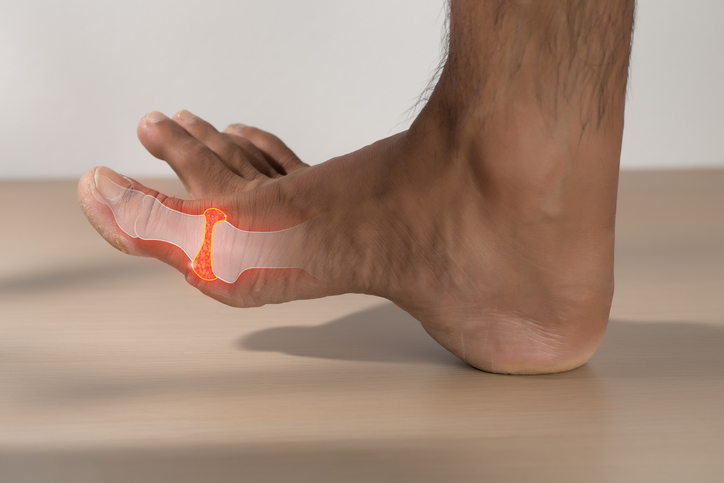
Chondrocalcinosis is very common but only tends to cause symptoms when it is caused by an underlying condition, such as osteoarthritis.
par Dr Colin Tidy, MRCGP
Os, articulations et muscles
Goutte
Gout causes attacks of pain and swelling in one or more joints. An anti-inflammatory painkiller usually eases an attack quickly. Lifestyle factors may reduce the risk of having gout attacks. These include losing weight (if overweight), eating a healthy diet and not drinking a lot of alcohol or sugar-sweetened soft drinks. If gout attacks are frequent then taking a medicine (such as allopurinol) each day can prevent them.
par Dr Hayley Willacy, FRCGP
Lectures complémentaires et références
- EULAR recommendations for calcium pyrophosphate deposition - Part I: terminology and diagnosis; European League Against Rheumatism (2011)
- EULAR recommendations for calcium pyrophosphate deposition - Part II Management; European League Against Rheumatism (2011)
- Stack J, McCarthy G; Calcium pyrophosphate deposition (CPPD) disease - Treatment options. Best Pract Res Clin Rheumatol. 2021 Dec;35(4):101720. doi: 10.1016/j.berh.2021.101720. Epub 2021 Oct 28.
- Zamora EA, Naik R; Calcium Pyrophosphate Deposition Disease.
Continuez à lire ci-dessous
Historique de l'article
Les informations sur cette page sont rédigées et examinées par des cliniciens qualifiés.
Prochaine révision prévue : 19 août 2028
21 août 2023 | Dernière version

Demandez, partagez, connectez-vous.
Parcourez les discussions, posez des questions et partagez vos expériences sur des centaines de sujets de santé.

Vous ne vous sentez pas bien ?
Évaluez vos symptômes en ligne gratuitement
Inscrivez-vous à la newsletter Patient
Votre dose hebdomadaire de conseils de santé clairs et fiables - rédigés pour vous aider à vous sentir informé, confiant et maître de la situation.
En vous abonnant, vous acceptez notre Politique de confidentialité. Vous pouvez vous désabonner à tout moment. Nous ne vendons jamais vos données.