Quand consulter un médecin pour la grippe
Revu par Dr Sarah JarvisRédigé par Allie AndersonPublié à l'origine 20 Nov 2020
Respecte les directives éditoriales
- TéléchargerTélécharger
- Partager
- Language
- Discussion
- Ask Patient
- Version audio
- Ajouter aux sources préférées sur Google
Pour la plupart des gens, attraper la grippe peut signifier se sentir mal pendant une semaine environ. Mais si vous êtes âgé, souffrez d'une maladie chronique ou avez un système immunitaire affaibli, le risque que la grippe vous rende gravement malade augmente. Et cette année, avec la menace supplémentaire du COVID-19, on peut comprendre que les gens soient particulièrement inquiets.
Explore relief for cold and flu symptoms
Get expert healthcare advice from the comfort of home. Complete a quick online consultation, available 24/7, with your request reviewed by a UK-registered clinician. Next day delivery available on eligible treatments.

Sélections vidéo pour Grippe et vaccinationBibliothèque vidéo
The illness we commonly know as flu is caused by the influenza virus. There are different strains of the virus, and each year in autumn and winter, one or more new types of virus circulate, spreading among communities and infecting lots of people. This is known as seasonal flu: if you catch a flu-like illness during winter it's likely to be this new, seasonal flu virus.
Symptoms of flu include toux, mal de gorge, sneezing, high temperature, sweats, aches and pains, headache, and nausée. They can be bad enough that you need bed rest for a few days but healthy people tend to fully recover after around seven days.
The false perception of flu as a nothing more than a mild inconvenience - not helped by the notion of a 'man flu' - belies its potential to wreak havoc. In England alone, flu kills 11,000 people on average each year and is responsible for putting many more in hospital with complications from the virus.
Groupes à haut risque
Some people are at higher risk of such complications, as Dr Samar Mahmood, a GP in Barnsley highlights. "A person's particular vulnerability factor relates to how well their immune system functions," he explains.
"For example, in children, the immune system has not fully developed and in older adults, their immune system tends to have weakened. Older people also tend to have other health problems, which can increase the risk of flu-related complications in itself."
Other people who are more vulnerable include pregnant women, people with a long-term medical condition - like diabète; cœur or lung disease; kidney problems; and neurological conditions - and people whose immune system doesn't work properly.
That could be because of illness, like VIH for example, or because of medical treatment, such as chimiothérapie or immunosuppressant drugs following an organ transplant.
Flu complications
Personnes avec asthme ou maladie pulmonaire obstructive chronique (BPCO) may find that a bout of the flu triggers an exacerbation of their condition, making their usual symptoms worse.
For anyone, but particularly people with respiratory illnesses, the most common complication from flu is a bacterial chest infection, which can develop on top of the flu virus itself. In some cases, a secondary chest infection can worsen and lead to pneumonie, where the lung tissue becomes inflamed. This can be serious or even fatal, particularly for the elderly and those with lung disease.
Flu can also cause sinus et infections de l'oreille, and less commonly, the virus travels in the bloodstream to the brain where it causes inflammation, known as encéphalite.
"It's difficult to quantify, but we know that it's quite common for vulnerable people to become seriously ill with flu," says Dr Mahmood. "That's why we have the programme de vaccination - because of the high prevalence of flu in the clinically vulnerable group."
COVID-19 and flu
This year, it's more important than ever that you have the flu vaccination if you're susceptible to complications, because of the added danger of COVID-19.
The viruses present with similar symptoms, making it difficult in some cases to distinguish between them. A new, continuous cough, a high temperature, and a change to your sense of taste or smell indicate COVID-19. If you have these symptoms, you should isolate at home. Use the NHS 111 coronavirus checker pour savoir quoi faire ensuite.
You can have both flu and coronavirus at the same time, which can be a perilous combination - especially if you're at high risk.
In fact, during the early stages of the coronavirus pandemic, which overlapped with the end of the 2019-20 flu season, people who contracted both viruses simultaneously were more at risk of serious illness, and more than twice as likely to die, compared with people who only had COVID-19.
Should I seek advice?
The chances are that if you catch flu, the virus will be self-limiting and you'll be able to treat your symptoms at home.
However, it's crucial that you get medical advice if you're clinically vulnerable and you think you have flu. Essentially, you are classed as clinically vulnerable if you are normally entitled to the free NHS flu jab.
Cela inclut :
People with a long-term medical condition - for example, diabetes, heart disease, a lung condition (like COPD or asthma), kidney disease, neurological disease (like Parkinson's or motor neurone disease).
Those aged 65 or over.
Femmes enceintes.
People who have a weakened immune system - for example, due to chemotherapy, immunosuppressant medication, or HIV.
Babies and children of certain ages.
Carers and those in regular close contact with people on this list may also be eligible, according to the plein criteria.
If you're normally healthy and not clinically vulnerable, you should also seek medical advice if you're still unwell with flu after seven days - although it's worth bearing in mind that cough associated with flu can sometimes persist for a few weeks.
Be on the lookout, too, for signs that you're developing a secondary chest infection. They include recurring fever, worsening cough, shortness of breath, chest pain and tightness in your chest, and fast breathing.
It's important that you don't visit a pharmacy or your GP practice, because even if you're certain you don't have COVID-19 (and the only reliable way of knowing for sure is to have a test), if you're unwell with another flu-like illness you could be more prone to picking up coronavirus from someone else.
Whether or not you're classed as vulnerable, if you're worried at all about your symptoms, seek advice by visiting 111.nhs.uk or calling 111. An adviser will be able to tell you what to do.
Prevention and cure
The best way of keeping yourself and others safe from flu and its potential complications is to have the annual flu vaccination if you're eligible. This year, even more people can get a free flu jab. And those who aren't eligible for a free vaccine can pay for a vaccination from their pharmacy, which normally costs less than £15.
It's also a good idea to keep viruses (including flu and COVID-19) at bay by washing your hands regularly with soap and water for at least 20 seconds each time - especially when you come indoors after being out, and before and after preparing food and eating.
As well as that, Dr Mahmood says diet is important in keeping your immune system in tip-top condition. "Maintain a healthy diet rich in vitamins C et D in particular," he says. "Supplements are not essential if you have a balanced diet, but they're unlikely to do any harm, as they are, after all, a supplement and not a replacement."
You can treat flu symptoms at home with over-the-counter remedies, like le paracétamol, and drinking plenty of fluids. With any luck you'll be back to full health within a week or two.
Sélections des patients pour Grippe et vaccination
Infections
Allons-nous avoir une mauvaise saison de grippe cette année ?
Avec la COVID-19 faisant la une des journaux, la grippe saisonnière est passée au second plan dans nos esprits. Mais alors que l'hiver dernier, il y a eu moins de cas de grippe saisonnière que d'habitude, cette maladie reste une menace importante qui cause en moyenne 11 000 décès par an au Royaume-Uni. Les scientifiques prévoient une augmentation significative des cas de grippe cet automne et cet hiver, mais pourquoi le virus risque-t-il d'être si virulent ? Et que devons-nous faire pour nous protéger et protéger les autres ?
par Gillian Harvey
Infections
Les remèdes traditionnels ou à base de plantes sont-ils efficaces contre la grippe ?
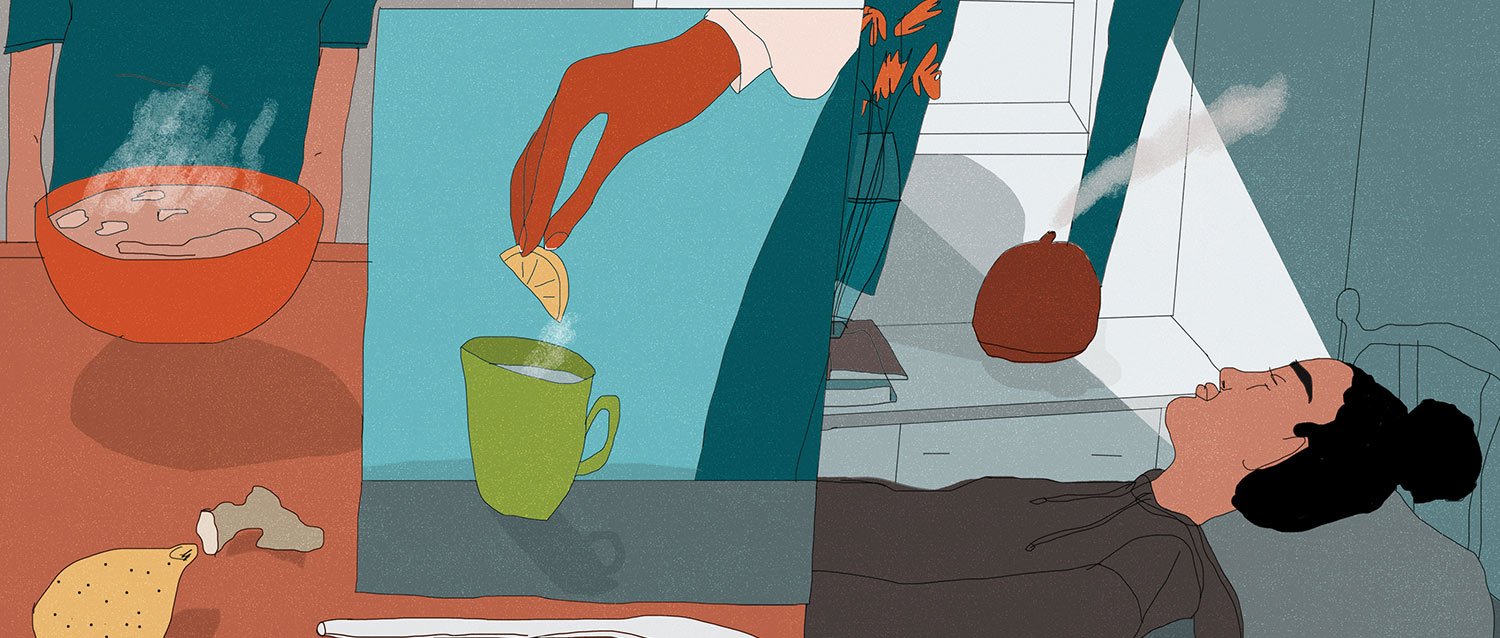
Advice for flu treatment is, and has always been, simply 'fluids and bed rest' - little wonder some of us turn to family recipes or alternative medicine to get creative with our approach. A virologist and a GP explain which traditional and herbal remedies work for flu, and why.
par Ellie Broughton
À propos de l'auteurVoir la biographie complète
Rédigé par

Allie Anderson
Journaliste indépendant
NCTJ
Allie Anderson est une journaliste qualifiée par le NCTJ avec de nombreuses années d'expérience en rédaction et en édition pour divers éditeurs.
À propos du critiqueVoir la biographie complète

Dr Sarah Jarvis
Consultant Clinique
MA (Cantab), BM, BCh (Oxon), DRCOG, FRCGP, MBE
Après avoir suivi une formation en médecine à Cambridge et Oxford, le Dr Sarah Jarvis MBE est devenue médecin généraliste.
Historique de l'article
Article également disponible en Anglais, Allemand, Espagnol, Français, Italien, Portugais, Hindi, Hébreu, Arabe, and Suédois.
20 Nov 2020 | Publié à l'origine
Écrit par :
Allie AndersonRevu par
Dr Sarah Jarvis
Partagez vos pensées ou expériences avec les autres dans notre communautés de patients.
Inscrivez-vous à la newsletter Patient
Votre dose hebdomadaire de conseils de santé clairs et fiables - rédigés pour vous aider à vous sentir informé, confiant et maître de la situation.
En vous abonnant, vous acceptez notre Politique de confidentialité. Vous pouvez vous désabonner à tout moment. Nous ne vendons jamais vos données.