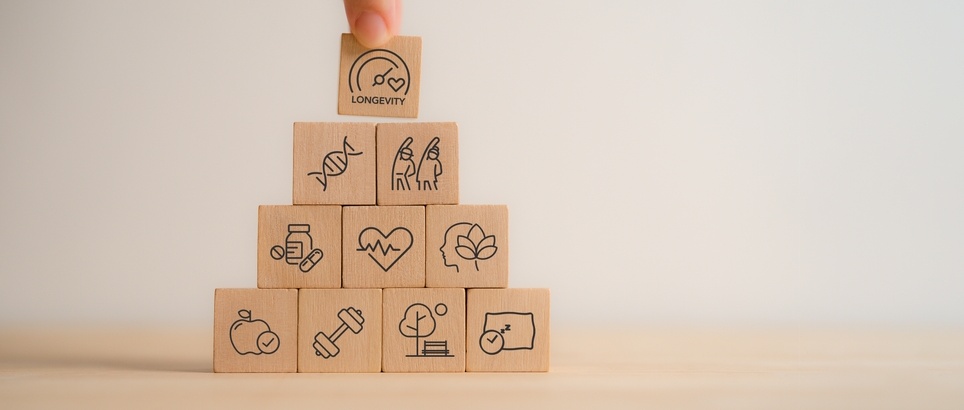
Healthy ageing - what you need to know
Peer reviewed by Dr Colin Tidy, MRCGPAuthored by Lawrence HigginsOriginally published 10 Jan 2026
Meets Patient’s editorial guidelines
- DownloadDownload
- Share
- Language
- Discussion
- Audio Version
Healthy ageing isn’t about holding on to your youth and not getting grey hair - it’s about the actions you can take today that set you up for a healthy future.
Read on for practical tips and advice to help you stay sharp, active, and strong as the years go by.
In this article:
Video picks for Ageing
Continue reading below
Why you need to start your healthy ageing early
As you move through midlife, the steps you take now can make the difference to how well you live and enjoy your later years. It’s not enough to rely on going to the gym or eating your five a day - it’s a combination of factors that affect mind and body.
Jessica Cvetic, PA-C, Physician Associate, founder of Citrus Aesthetics, San Diego, USA, says: “Healthy ageing isn’t about chasing quick fixes. It’s about supporting your body’s foundation - cellular, physical, and emotional health - so you can thrive in midlife and beyond with a high-quality life.”
Dr Aaron Hartman, triple board-certified, Assistant Clinical Professor of Family Medicine at the VCU School of Medicine, founder Richmond Integrative and Functional Medicine, USA, says that healthy ageing requires many different actions to keep your entire body working at its best as you age. “It's not just one supplement, one pill, or one activity - it must be a combination of many things. You are a complete being that is a brain, heart, lungs, and kidneys - you must think holistically about healthy ageing.”
Looking after your body, brain, and emotional wellbeing will not just help prevent or slow health conditions, it can build up reserves in your own personal health bank. You can then draw down on it in later life. So, as with your pension, it’s important to start paying in early.
Mario Martinez, Founder Biocognitive Science Institute, has been studying centenarians - people who have lived to 100 years and older - around the world. One of the findings from Martinez’s research was that the centenarians studied showed an average of 20 years younger than their chronological age. But Martinez emphasises: “The most significant finding, however, is that these centenarian ways of perceiving and emoting the world can be taught at any age. Genetics only contributes 20% to longevity. The rest, is culturally learned.”
By combining mental, physical, nutritional, social, and preventive strategies, you build a foundation for healthy ageing. Heath Jones, exercise scientist, founder of Active & Ageless, Sydney, Australia, says: “It’s not just about more years, but better years - age is simply a number when your habits and mindset are right.”
Here we highlight those key areas where small actions now have a big effect down the line.
Mental stimulation and brain power
Back to contentsKeeping your brain active is just as important as exercising your body. Challenging yourself mentally - from doing a puzzle to learning a language - can help preserve memory and build up your brain power. Cvetic says: “Mental stimulation is one of the most powerful ways to maintain clarity, memory, and emotional balance as you age.”
Building brain muscle
Activities that challenge your creativity, learning, and connection - such as taking up a new skill, practising coordination, or playing strategic games - can all help build up your brain muscle.
Jones says: “Exercising your brain helps form new neural pathways and strengthens existing ones. This creates a brain reserve, giving you extra cognitive capacity.”
And Dr Jennifer Brown, Obesity Medicine doctor, MyObesityTeam, USA, says that creating a brain reserve can help compensate for age-related cognitive decline. “Think of your brain as a muscle - the more you work it, the stronger it becomes, and the better it can resist ageing changes.”
Dementia prevention
Dementia is one of the conditions that affects many as we age. Whilst it cannot be prevented, exercising your brain is one way which may delay its onset. Hartman gives the example of medical doctors who have a lower-than-average rate of dementia, which he says is thought to partly be due to the amount of problem-solving and thinking required for their job.
“Mental thought and thinking activate parts of your brain - just the act of using your brain stimulates its innate physiology. Also, this kind of brain activity creates special anti-inflammatory molecules and cytokines, and neurotransmitters that feed back into your entire system to improve brain function.”
Simple brain workouts
Whilst most of our careers may not require us to solve lifesaving problems every day, there are many activities we can add to our day-to-day life which will stimulate our brains.
Simple activities which can help build cognitive strength include:
Learning a new skill - such as how to play a musical instrument, or a new language.
Puzzles - such as crosswords, or sudokus.
Journaling - using pen and paper to write down your thoughts.
Creative hobbies - such as painting, or photography.
Learning a new skill can be particularly helpful if it’s done in a class or learning group. Cvetic says: “Social participation is especially valuable because connection reduces stress, supports emotional wellbeing, and strengthens cognitive reserve. A purposeful, engaged mind is a resilient mind.”
Continue reading below
Physical activity and heart health
Back to contentsRegular activity supports your heart, builds muscles and bones, and boosts your mind and mood - it also helps your brain power. Cvetic adds that it will also improve your skin by enhancing oxygenation and collagen production.
As Jones puts it: “Movement is medicine - especially as you age - consistent physical activity is the foundation of long-term health.” He recommends activities such as strength training, mobility work, and low-impact cardio such as swimming - which all help maintain heart health, balance hormones, reduce inflammation, and improve your emotional well-being.
Cvetic adds that exercises such as Pilates, yoga, or just regular outdoor walking not only protect against age-related physical decline, but they also support tissue repair. She says: “They create an incredibly powerful foundation for healthy ageing.”
How much exercise is enough
Everybody should aim for 150 minutes of activity per week – ideally in 30-minute sessions spread over five days - what’s key is not being sedentary. Hartman says: “The most important thing is to move. Just be physically active.”
And your activity does not need to be extreme or complicated. Jones says that whilst he enjoys ultra marathons and big wave surfing, what’s important when it comes to exercise and healthy ageing is: “It just needs to be consistent, purposeful, and functional.”
Get walking
Walking is one of the simplest yet most effective forms of exercise for healthy ageing. Dietician Amy Goldsmith, Owner at Kindred Nutrition, Maryland, USA, says that getting outdoors and taking a stroll lowers cortisol and increases dopamine and serotonin.
She explains that serotonin improves sleep, which helps with immune function, reduces inflammation, and helps regulate stress and anxiety. She also says it can help improve blood pressure, “which is important since high blood pressure can lead to heart disease which is the number one cause of a reduced lifespan. Dopamine helps reduces the risk of cognitive decline."
Exercise and your brain
As well as your bones and muscles regular physical can boost your brain health. It can help you think better, solve problems quicker, improve memory and reduce anxiety or depression.
On top of this, the Physical Activity Guidelines for Americans says that taking part in regular activity – whether it’s a long swim, a brisk walk, or doing housework – can help lower the risks of dementia or slow its onset.
Hartman explains that being physically active, creates muscle hormones (myokines) that activate parts of your brain. He says: “There's a thing called brain-derived neurotrophic factor (BDNF) that is activated through physical activity. So literally using your body preserves your brain function.”
Dr Aaron Hartman's exercise top tip
“If you have limited time, try HIIT (High Intensity Interval Training) or lifting heavy weights.
These intense activities speed up the process of boosting your brain power and reserves, as well as utilising glucose and glycogen stores.”
Diet and nutrition
Back to contentsWhat you eat today shapes your health tomorrow. Making the right food choices and having a healthy, balanced diet can help protect your body and mind. A healthy diet can help manage your weight, blood pressure, and cholesterol. Cvetic says: “Food truly is a daily opportunity to support age longevity.”
It is estimated that more than 30% of cancers are diet-related, and a poor diet is also the main cause of heart disease. Research has also found that eating a healthy diet can reduce the risk of chronic disease by around 80%.
Hartmann says: “If you want a healthy body, a healthy brain, and healthy ageing, you must put the right kind of nutrition in - diet is key.
What you eat now will influence your health in later years. Jones puts it like this: “In midlife, nutrition shifts from ‘looking good’ to ‘living well.’ Managing your weight, blood pressure, and cholesterol reduces your risk of heart disease, diabetes, and cognitive decline.”
Dan Jackowiak, Nutritional Consultant, Founder of Yeast Infection Advisor, USA, says: “Nutrition has one of the biggest influences in midlife because the way you eat now sets the stage for how inflamed or resilient your body will be later.”
It is important to understand that these conditions are related. Hartman says: “When I look at weight, blood pressure, and cholesterol, I don’t see separate issues - I see one system. If your weight is creeping up, blood pressure is rising, or cholesterol is off, it usually means your metabolism is also under strain.”
Keep it simple
All our experts agree that a simple diet with minimum artificial additives is important in a healthy ageing diet. Hartmann says: “The key is to eat food - real food - in moderation, mostly plants. Not to focus on what foods, but just eat real food.”
You can build a healthy ageing diet around simple, everyday foods you can find in any supermarket. Jones says: “Simple is sustainable - whole foods, minimal processed sugars, and balance that fits real life.”
The best food types to centre a healthy ageing diet around
Food type | Examples | Why it’s healthy |
Whole foods – high in fibre | Oats, brown rice, quinoa, whole wheat bread, barley, beans, lentils | Provide fibre, vitamins, and minerals that support digestion, heart health, and stable energy |
Lean proteins | Skinless chicken breast, turkey, eggs, legumes, white fish - cod, haddock - Greek yoghurt | Help maintain muscle mass and strength, especially important as you age |
Antioxidant-rich fruits and vegetables | Blueberries, blackcurrants, spinach, broccoli, peppers | Packed with vitamins C, E, and phytonutrients that protect cells from damage and support brain and heart health |
Omega-3 fatty acids | Salmon, mackerel, walnuts, chia seeds, flaxseeds | Reduce inflammation, support brain function, and protect against heart disease |
Foods to avoid | Example | Why its harmful |
Sugary foods | Fizzy drinks, sweets, cakes, biscuits | Spike blood sugar, contribute to weight gain, increase risk of type 2 diabetes |
Saturated fats | Fatty cuts of beef or lamb, butter, cheese, fried fast food | Raise cholesterol and increase risk of heart disease |
Nitrates – processed meats | Bacon, ham, salami, sausages | Linked to higher risk of certain cancers and heart disease |
As well as food, make sure you stay hydrated by drinking at least 2 litres - 8 glasses - of water each day, to help support your joints and boost energy levels. And always keep your alcohol intake to within safer limits.
Dr Jennifer Brown's nutrition top tip
"Try the 80/20 rule - consume 80% whole foods and limit ultra-processed foods to no more than 20% of your diet.” Follow the Mediterranean diet for healthy ageing as it lowers inflammation, improves cholesterol, and can protect brain health.
Other diets which can help you age healthily include the TLC, DASH, Okinawa, and MIND diets.
Supplements
As we age, our bodies become less efficient at absorbing nutrients, and it becomes more difficult to get certain vitamins – such as vitamin D, B12, and calcium - from food alone. And whilst nutrients are best absorbed from whole foods, supplements can help fill these gaps.
There are several key nutrients you need to ensure you are getting enough of as you get older – these include:
Vitamin A - Eggs, milk, carrots, mangoes
Vitamin B6 - Fish, potatoes, bananas, starchy veg
Vitamin B12 - Meat, fish, dairy, fortified cereals (supplements often needed after 50)
Vitamin C - Citrus fruits, tomatoes, peppers, potatoes
Vitamin D - Oily fish, fortified milk/cereals
Vitamin E - Nuts, seeds, vegetable oils, spinach, broccoli
Folate (B9) - Leafy greens, beans, peas, oranges
Calcium - Dairy, tofu, sardines, fortified plant milks, leafy greens
Magnesium - Whole grains, nuts, seeds, legumes, green veg
Potassium - Bananas, potatoes, lentils, apricots, dairy
Jackowiak says that whilst supplements can help, you should treat them as support, not the foundation. He does say, though that a well-designed probiotic, or enzyme support may be useful alongside your diet to help your gut health. He suggests consuming fermented products such as kombucha.
Brown says that whilst omega-3 fatty acids, magnesium, and B vitamins support a healthy mind and body it’s preferable to get these nutrients through whole food. “However In some cases, people with dietary restrictions may not be able to consume enough of these nutrients through food, in which case supplements are a good option,” she says.
But always remember that supplements are exactly that - a supplement - to be taken alongside a healthy diet and not instead of. Cvetic says: “Supplements can be helpful in targeted ways, but consistent nutrition, rest, and hydration are what create lasting change.”
Speak to your health care professional about how to make sure you are getting enough of these vital nutrients. They can recommend supplements that would be beneficial to you and whether they are safe in combination with any other medicines you are taking.
Continue reading below
Social and emotional wellbeing
Back to contentsStaying connected and managing stress are vital for your long-term health. Friendships, being part of a community, and caring for your emotions can ease anxiety and support a positive outlook.
Stay connected
In 2023 the US Surgeon General (USSG) said that loneliness carries the equivalent health risk as smoking 15 cigarettes a day, and the World Health Organization (WHO) has declared loneliness a "pressing global health threat".
The research from the USSG showed that loneliness is linked to:
Heart disease - 29% increased risk.
Stroke - 32% increased risk.
Dementia in older adults - 60% increased risk.
Cvetic says: “Human connection is a core pillar of longevity. Community, friendship, emotional support, and shared experiences help regulate stress hormones, reduce inflammation, and improve mental wellbeing.”
All our experts agree that emotional wellbeing is as important - or even more so - than physical exercise. Brown says: “Social connection has been shown to increase longevity more than physical activity. Staying socially connected decreases rates of depression, while improving immune function and overall quality of life.”
Jones backs up Brown, saying that in his professional work, he often sees that with older adults, loneliness and isolation affect their health more than physical limitations. He says that staying socially connected - whether through group exercise, community activities, or just catching up with friends - reduces anxiety, depression, and cognitive decline.
Managing stress and anxiety is another important factor in healthy ageing. Jones says that mindfulness, nature walks, structured routines, or breathing exercises will protect your nervous system and your heart. “Strength isn’t just physical - it’s emotional too.”
How to connect
There are several practical and easy steps you can take now to improve your emotional wellbeing and protect yourself from loneliness in later life - these include:
Keep in touch - reach out to people, just a quick chat with friends, neighbours, or colleagues can help you feel less isolated.
Find ‘your’ people - join groups with those with whom you share interests, such as book clubs, sports fan groups, historical societies, or walking groups.
Engage - a smile or hello to the person on the supermarket checkout or saying good morning to the post-worker can lift your mood.
Keep your mind busy - learn something new, like a language, take up a hobby, start gardening, or do word puzzles.
Move your body - take a stroll or do a light workout to improve your mood and reduce stress. Join a fitness class for physical activity with social contact.
Practice self-care -simple things like baking a cake, decluttering, or reading a book can boost your self-esteem.
Connections beyond people
And it’s not just people that you can connect with. Spending time with pets gives connectivity - and walking your dog gets you out of the house, exercise and likely integration with other dog walkers.
If your house feels empty, listening to music can fill the gap or the radio can put a voice in the background.
If loneliness or anxiety feels overwhelming, speak to your doctor, they may recommend talk therapies (CBT) or counselling to help you.
Preventive health
Back to contentsIt is a cliché, but when it comes to healthy ageing, prevention is usually better than a cure. Regular check-ups, monitoring your health, and looking after yourself can help you spot issues early, manage them effectively, and keep you living well for longer.
Jones says: “Longevity isn’t about avoiding ageing, it’s about ageing well - preventive care is crucial. Small issues become big ones when you ignore them.”
He says that being proactive, managing your mobility, building strength, nourishing your body properly, and checking in with your health care provider means: “You stay independent, active, and confident for longer.”
Start now to prevent future health conditions
The most common health conditions in older age often have their foundations when you are younger. Jackowiak says: “Chronic conditions don’t usually arrive out of nowhere - they build quietly over time. Regular health checks matter because they catch things like rising blood sugar, blood pressure, or cholesterol while they’re still reversible with lifestyle.”
He says that by monitoring your health, if something starts drifting, you can act early with lifestyle changes rather than waiting for it to become a condition.
The key conditions that affect health in later life that you can act upon now:
Condition | Why it matters in older age | Preventive actions earlier in life |
Cardiovascular disease - heart disease, stroke, hypertension. | Leading cause of death and disability - risk rises with age | Maintain healthy blood pressure, do not smoke, exercise regularly, eat a balanced diet, manage stress, limit alcohol. |
Increases risk of heart disease, kidney failure, vision loss | Keep weight healthy, stay active, limit processed sugars, monitor blood sugar | |
Osteoporosis and fractures | Major cause of frailty and loss of independence | Build bone density early with calcium, vitamin D, weight-bearing exercise, avoid smoking/excess alcohol |
Dementia and cognitive decline | Affects memory, independence, and quality of life | Stay mentally active, manage heart health, stay socially connected, protect hearing, eat a Mediterranean-style diet |
Cancer (bowel, breast, prostate, lung) | Risk rises with age - some cancers linked to lifestyle | Do not smoke, limit alcohol, maintain healthy weight, eat fibre-rich diet, attend screening programmes |
Depression and anxiety | Often underdiagnosed in older adults; linked to isolation | Build resilience early, nurture social networks, manage stress, seek help for mental health concerns |
Hearing and vision loss | Linked to cognitive decline and social isolation | Protect ears from loud noise, get regular eye and ear checks, manage diabetes. |
Infections - flu, pneumonia, shingles | Older adults are more likely to get these. | Get your vaccinations - flu, shingles, pneumonia - good hygiene, |
Jackowiak adds that you should avoid unnecessary antibiotic use because recovery gets slower as you age.
Key actions to help you age healthily
Back to contentsHere is a summary of the best actions you can take to help you have a healthier, happier life in old age.
Regular health checks and monitoring – check blood pressure, cholesterol, blood sugar, dental health, and weight.
Vaccinations – flu, shingles, pneumonia, and COVID boosters as appropriate.
Screenings – cancer (bowel, breast, cervical, prostate), vision, hearing.
Balanced diet – plenty of fruit, veg, fibre, lean protein. Limit processed foods and sugar.
Keep moving – aerobic exercise, strength training, walking, gardening – whatever works for you and gets you active.
Do not smoke – the biggest preventable risk for cancer, heart disease, and lung disease
Limit alcohol – keep within safer guidelines.
Protect brain health – keep learning, keep connected, manage stress, and get good sleep.
Bone health – calcium, vitamin D, weight-bearing exercise.
Mental wellbeing - stay socially engaged, seek support when needed.
Patient picks for Ageing

Senior health
Could an optimistic outlook help you live longer?
Having a positive mental attitude can help you live longer, suggests a new study.
by Ashwin Bhandari
Senior health
Exercise for healthy ageing
Staying strong, flexible, and mobile as you age can protect your independence, reduce frailty, and help you enjoy life more. From building muscle to protecting your joints, we asked the experts for practical strategies that will help you move better, feel steadier, and stay active for years to come. Read on to discover the actions you can take that make the biggest difference.
by Lawrence Higgins
Continue reading below
Article history
The information on this page is peer reviewed by qualified clinicians.
Next review due: 10 Jan 2029
10 Jan 2026 | Originally published
Authored by:
Lawrence HigginsPeer reviewed by
Dr Colin Tidy, MRCGP

Ask, share, connect.
Browse discussions, ask questions, and share experiences across hundreds of health topics.

Feeling unwell?
Assess your symptoms online for free
Sign up to the Patient newsletter
Your weekly dose of clear, trustworthy health advice - written to help you feel informed, confident and in control.
By subscribing you accept our Privacy Policy. You can unsubscribe at any time. We never sell your data.