Steroid nasal sprays
Peer reviewed by Dr Rosalyn Adleman, MRCGPLast updated by Dr Rachel Hudson, MRCGPLast updated 24 Apr 2023
Meets Patient’s editorial guidelines
- DownloadDownload
- Share
- Language
- Discussion
- Audio Version
- Add to preferred sources on Google
In this series:SteroidsSteroid injectionsOral steroidsTopical steroidsFingertip units for topical steroids
Steroid nasal sprays are medicines that are commonly used to treat symptoms of stuffiness or congestion in the nose. They are used most often for allergies of the nose, such as hay fever. They are also used for other causes of persistent inflammation of the nose (rhinitis). Steroid sprays reduce swelling and mucus in the nose, and usually work well.
People with hay fever only need to use them for a few months of the year. Others may need to use them long-term. You can buy some steroid nasal sprays from your supermarket or local pharmacy, without a prescription.
At a glance
Steroid nasal sprays reduce swelling and mucus in the nose.
They are used to treat symptoms like blocked, runny, or itchy nose.
It can take several days or up to two weeks for the spray to work fully.
Steroid nasal sprays have very few side-effects and are generally safe for long-term use.
Do not use a decongestant spray for more than 5-7 days.
Consult a doctor or pharmacist before use if you have certain medical conditions.

Unsure about mixing medicines?
Check for possible interactions between medicines, supplements and foods before taking them together.
What are steroid nasal sprays?
A steroid nasal spray is a small bottle of a solution which you spray into your nose. It contains a medicine called a corticosteroid or steroid. Steroid sprays reduce swelling (inflammation) and mucus in the nose, and usually work well.
Because the medicine is mainly absorbed in your nose, it has very little effect anywhere else in your body. Therefore they are considered to be very safe to use.
A steroid nasal spray is commonly used to treat symptoms of the nose such as:
Blocked nose.
Runny nose.
Congestion of the nose.
Itchiness of the nose.
These symptoms may be caused by conditions such as:
Allergies of the nose, such as hay fever.
A steroid nasal spray may also be used to treat other conditions such as:
There are a number of different steroid nasal sprays - these include beclometasone, budesonide, fluticasone, mometasone and triamcinolone. They come in different brands. Ciclesonide and flunisolide are other steroid nasal sprays (they are not available in the UK).
How to use a steroid nasal spray
Steroid nasal spray administration
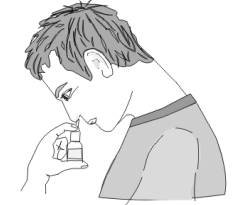
Blow your nose.
Shake the bottle.
Tilt your head forwards.
Hold the spray bottle upright.
Insert the tip of the spray bottle just inside one nostril. Close the other nostril with your other hand, and apply one or two sprays as prescribed.
Breathe in as you spray (but do not sniff hard as the spray then travels past the nose to the throat).
Do not angle the canister towards the middle or side of the nose, but straight up. With your head tilted forward, the spray should go to the back of your nose.
Repeat in the other nostril.
What if my nose is very blocked or runny?
Sometimes a very blocked or runny nose will prevent the steroid spray from getting through to work. A decongestant nasal spray which you can buy at pharmacies may then be useful. These contain decongestant medicines such as xylometazoline.
A decongestant spray has an immediate effect to clear a blocked nose. You can then use the steroid spray once the nose is clear.
Note: decongestant sprays are not usually advised for more than a few days. If you use one for more than 5-7 days, a rebound, more severe congestion of the nose may develop. In contrast, steroid sprays work well to clear symptoms, and can be used for long periods.
What if my symptoms come and go?
If your symptoms are very mild, if they don't happen all that often or if they only start after a particular trigger - for example, if you have a cat allergy - a steroid nasal spray may not be the best treatment for you. A nasal spray containing a type of medicine called an antihistamine (such as azelastine or olopatadine) may be better. Only azelastine is available in the UK.
How long does it take for steroid nasal sprays to work?
It takes several days for a steroid spray to build up to its full effect. Therefore, you will not have an immediate relief of symptoms when you first start it. In some people it can take up to two weeks or longer to get the maximum benefit.
If you use the spray for hay fever, it is best to start using it at least a couple of weeks before the hay fever season starts.
What is the usual length of treatment?
Some people only need a nasal spray for the hay fever season (a few months). However, if you have a persistent rhinitis, you may have to take treatment long-term to keep symptoms away.
Once symptoms are gone, you are still likely to need to use a steroid nasal spray regularly, to keep symptoms away. Your doctor may advise that you reduce the dose to a lower maintenance dose once symptoms have gone. The aim is to find the lowest dose that controls symptoms.
An occasional forgotten dose should not be a problem, but symptoms usually return after a few days if you stop taking the spray.
Side-effects of steroid nasal sprays
Steroid nasal sprays rarely cause side-effects. This is because they are applied directly to the nose and very little of this medicine is absorbed into the body. Therefore, they are much less likely to cause side-effects in other parts of the body. Occasionally, they cause dryness, crusting, and bleeding of the nose.
If this occurs, stop it for a few days and then restart. There have been reports of nasal steroids possibly having an effect on behaviour, particularly in children. This is thought to be rare. However, a few people have reported hyperactivity, problems sleeping, anxiety, depression, and aggression.
Are nasal steroid sprays safe?
Long-term use of a steroid nasal spray is thought to be safe.
For a full list of possible side-effects please read the leaflet that came with your medicine.
Where to buy steroid nasal sprays
You can buy a number of steroid nasal sprays from the supermarket and your local pharmacy. These include beclometasone, fluticasone and triamcinolone.
Who cannot use a steroid nasal spray?
Most people can use a steroid nasal spray, unless they have ever had an allergic reaction to this medicine. However, you should talk with your doctor or pharmacist before using a steroid nasal spray if you:
Have recently had surgery on your nose.
Have infection in your nose.
Are pregnant, trying for a baby or breastfeeding.
You may still be able to have this medicine - your doctor will advise you.
Patient picks for Respiratory medicines

Treatment and medication
Mucolytics
Mucus (sputum) is made in the lungs. Mucolytics are medicines that make the mucus less thick and sticky and easier to cough up. They are usually prescribed for people who have a long-term (chronic) cough. They work best if taken regularly.
by Dr Philippa Vincent, MRCGP

Treatment and medication
Cough medicines
Cough medicines are commonly bought to treat various types of coughs that occur when you have an upper respiratory tract infection (URTI). Cough medicines that you can buy are often divided into those for a dry or tickly cough, and those for a chesty cough. It is thought that cough medicines do not really work. However, some people feel that they work for them and they are thought to be reasonably safe to use, though it is important to check with a pharmacist if you are taking other medications. Children who are aged 12 years and younger should only be given cough syrups which state they are suitable for the child's age.
by Dr Doug McKechnie, MRCGP
Frequently asked questions
When is it better to use an antihistamine nasal spray instead of a steroid nasal spray?
If your nasal symptoms are very mild, infrequent, or consistently triggered by specific allergens (like a cat), an antihistamine nasal spray might be a more suitable treatment than a steroid spray. These sprays, such as those containing azelastine, are particularly useful for occasional or trigger-specific symptoms.
Can I stop using my steroid nasal spray once my symptoms have improved?
Even after your symptoms have gone, it's generally recommended to continue using your steroid nasal spray regularly to prevent symptoms from returning. Your doctor might suggest reducing the dose to a lower 'maintenance' level. The goal is to find the lowest dose that keeps your symptoms under control. While occasionally missing a dose isn't usually an issue, symptoms typically reappear within a few days if you stop the spray entirely.
What is the Yellow Card Scheme and why should I use it?
The Yellow Card Scheme is a system in the UK where you can report any side-effects you believe your medicines or other healthcare products have caused. It's important because it helps pharmacists, doctors, and nurses become aware of new or rare side-effects. If you experience a side-effect, reporting it provides valuable information that contributes to medicine safety monitoring.
Further reading and references
- Inhaled and intranasal corticosteroids: risk of psychological and behavioural side effects; Medicines and Healthcare products Regulatory Agency (MHRA), September 2010
- British National Formulary (BNF); NICE Evidence Services (UK access only)
- BSACI guideline for the diagnosis and management of allergic and non-allergic rhinitis; British Society for Allergy and Clinical Immunology (July 2017)
- Corticosteroids - topical (skin), nose, and eyes; NICE CKS, June 2022 (UK access only)
- Allergic rhinitis; NICE CKS, January 2024 (UK access only)
About the authorView full bio

Dr Rachel Hudson, MRCGP
General Practitioner and Medical Author
MBChB, MRCGP (2008), BSc (Medical Science), DFSRH, DRCOG, DCH
Dr Rachel Hudson, is an NHS GP working in the North West of England.
About the reviewerView full bio

Dr Rosalyn Adleman, MRCGP
MRCGP
Dr Rosalyn Adleman, is an NHS GP working in north London.
Article history
The information on this page is written and peer reviewed by qualified clinicians.
Article also available in English, German, Spanish, French, Italian, Portuguese, Hindi, Hebrew, Arabic, and Swedish.
Next review due: 22 Apr 2028
24 Apr 2023 | Latest version
Join the conversation
Share your thoughts or experiences with others in our patient communities.

Ask, share, connect.
Browse discussions, ask questions, and share experiences across hundreds of health topics.

Feeling unwell?
Assess your symptoms online for free
Sign up to the Patient newsletter
Your weekly dose of clear, trustworthy health advice - written to help you feel informed, confident and in control.
By subscribing you accept our Privacy Policy. You can unsubscribe at any time. We never sell your data.
More in treatment and medication
- ACE inhibitors
- Bisphosphonates
- Cannabis-based medicinal products
- Chemotherapy
- Cholera vaccine
- Complementary and alternative medicine
- Coronary angioplasty
- Drug allergy
- Head lice treatment and prevention
- Hepatitis B vaccine
- Hormone replacement therapy (HRT)
- Immunisation for flu
- Japanese encephalitis vaccine
- Laxatives
- Nicotine replacement therapy
- Nitrate medication
- Peripheral vasodilators
- Refer yourself to NHS stop smoking services
- Steroid injections
- Worm medicines