Faire face au TOC alors que le confinement s'assouplit
Revu par Dr Sarah JarvisRédigé par Ellie BroughtonPublié à l'origine 18 Aug 2020
Respecte les directives éditoriales
- TéléchargerTélécharger
- Partager
- Language
- Discussion
- Version audio
- Ajouter aux sources préférées sur Google
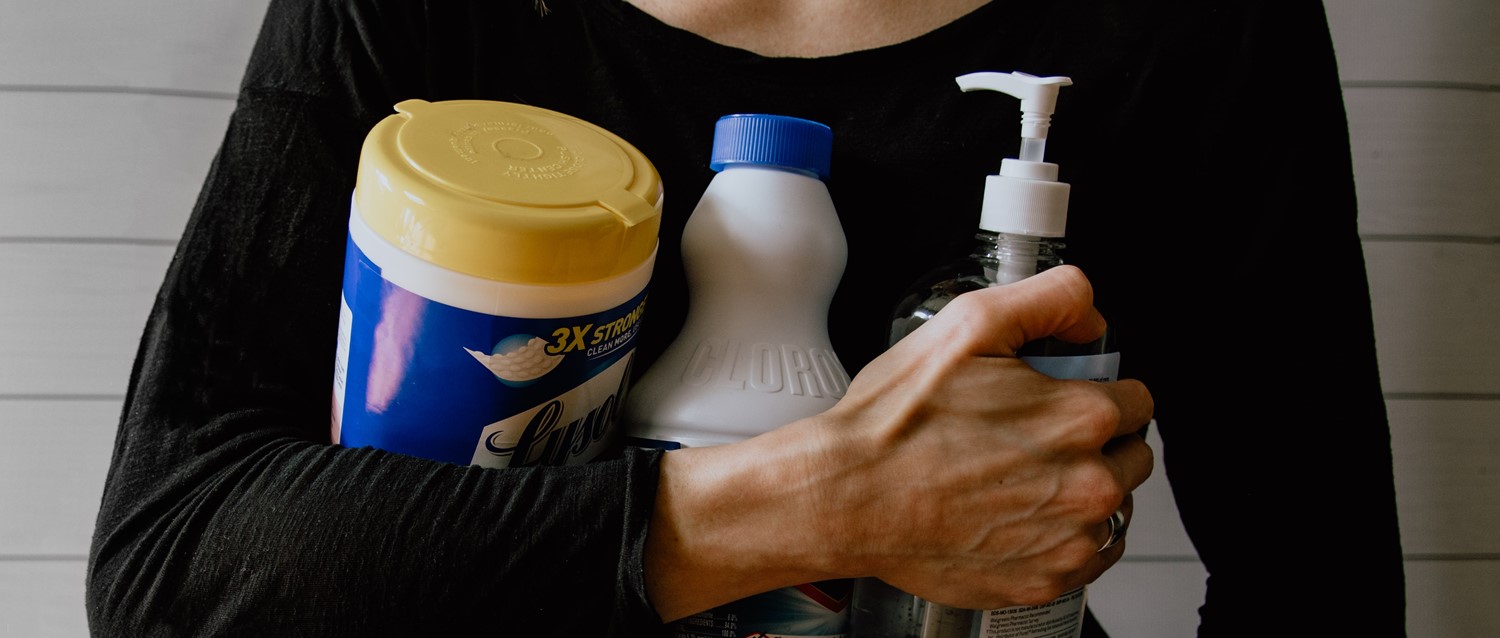
Alors que les pubs, salons et restaurants rouvrent leurs portes, pour certains d'entre nous — et pour beaucoup souffrant de TOC — plus de liberté signifie plus de stress. Un psychologue spécialisé dans le traitement du TOC explique quelles mesures les gens peuvent prendre pour gérer leurs problèmes de santé mentale.
Sabrine, 23, blogs about her experience of obsessive-compulsive disorder (TOC). She says that before lockdown she wasn't leaving the house much, and the new rules didn't seem disruptive.
After a while, though, she started to feel constricted. "It started to grate on me a lot," she says. "I began to feel restricted. I didn't like the lack of control. I was no longer staying at home simply due to my health - even if I had a day I felt I could manage venturing out, I no longer had the option to do so."
As lockdown eases, she feels apprehensive and anxieux. "It's definitely ruined a lot of this year's plans for me," she says. "Life has just been massively put on hold and the restrictions have given my OCD more of an opportunity to fester."
Mind's resource on lockdown easing warns that changes might make people feel stressé, anxious, angry, conflicted, uneasy, protective - the list is long and by no means exhaustive. The important thing, writers point out, is that there is no 'normal' response. Furthermore, emotions might well vary from day to day.
Dr Liz Forrester is a consultant clinical psychologist and specialises in helping patients use thérapie cognitivo-comportementale (TCC) and exposure to treat OCD. She says that her clients' experience of lockdown has varied. Some with contamination OCD have been unwilling to go into the garden, but for others it has been less intense.
Lockdown has created tensions in clients' households and social circles, she says. "If your partner is doing things that you don't feel comfortable with, that can lead to tensions," she says. "Maybe you doubt what they're doing or what they say they're doing. You might feel less inclined to meet up with friends who you perceive as being too careless or relaxed."
Before stressful events, make a plan
One of Dr Forrester’s clients has had to attend hospital regularly with their child - hard enough before COVID-19.
"She's been to and fro from hospitals for the last three or four weeks," Dr Forrester says. "And that's been really strange and stressful, initially. But she felt reassured about the way that things were being done."
Dr Forrester says making a plan helped her prepare for the anxiety she would face in that situation, and to avoid OCD compulsions.
"We had a plan of action about how she would go about it: not to take excessive precautions, not to increase safety behaviours, and to be sure to use hand sanitiser if she couldn't wash her hands," she says. "Having a plan, sometimes writing it down, really helps people."
Practise 'exposure' every day
Even simple outings like grocery shopping can be tough, and Dr Forrester says that anxiety can build in anticipation of trips like these.
"Try to increase your resilience to going out and getting used to it. Rather than kind of storing it up, thinking, 'This is the day that I go to the supermarket' and getting yourself worked up all week, do something like walking up to the shop, even if you're not going in," she says. "Have that as your daily exercise. Make sure that you get out and about as often as possible." Making small trips avoids 'all or nothing' thinking, and builds confidence.
Dr Forrester also uses exposure techniques with clients at home. "One of the things that I've been doing with my patients recently is getting them to buy lots of sticky notes and writing things like 'coronavirus' and sticking them around the house," she explains. "You get used to having the thought, and repeated exposure kind of strips the meaning."
Don't read more news
It can be tempting, particularly as local lockdowns are introduced, to go back to regularly reading the news. But if this is a trigger, Dr Forrester said, it's best avoided.
"By all means keep an eye on the news," she says. "But don't let the coronavirus dominate your life. Engage in other activities, do other things. Don't spend all your time Googling for 'how many cases in my area', because it just makes it seem more scary."
Stay connected
A constant thread that runs through most mental health advice is to stay connected with people who support you. For example, Mind's self-care advice recommends keeping in touch with friends and family, or spending time with people around shared interests like reading or sport.
For Sabrine, writing has provided her with an outlet during the pandemic, and connected her to others. "It's good to be openly expressive and feel like you're not alone. The lockdown has introduced me to a writing community, and they're all very supportive and nice people who I would have never interacted with, had this not happened."
Sélections des patients pour articles sur la pandémie
COVID-19
Comment rencontrer des amis et de la famille en toute sécurité à l'extérieur
Partout au Royaume-Uni, les confinements s'assouplissent et nous sommes autorisés à voir des amis et de la famille à l'extérieur (et à l'intérieur aussi si vous vivez en Angleterre ou en Écosse). Mais cela ne signifie pas que le risque de propagation du COVID-19 a disparu ; vous devez toujours prendre des précautions pour vous protéger et protéger vos proches.
par Andrea Downey
COVID-19
Quelles sont les dernières règles concernant les masques faciaux au Royaume-Uni ?
Alors que les règles s'assouplissent légèrement dans certaines parties du Royaume-Uni, de nouvelles mesures sont mises en place pour nous protéger à mesure que notre exposition au monde extérieur augmente. L'une de ces mesures consiste à porter un masque ou une couverture faciale, qui, en Angleterre, est devenue obligatoire dans certaines situations.
par Milly Evans
À propos de l'auteur
Rédigé par

Ellie Broughton
À propos du critiqueVoir la biographie complète

Dr Sarah Jarvis
Consultant Clinique
MA (Cantab), BM, BCh (Oxon), DRCOG, FRCGP, MBE
Après avoir suivi une formation en médecine à Cambridge et Oxford, le Dr Sarah Jarvis MBE est devenue médecin généraliste.
Historique de l'article
Article également disponible en Anglais, Allemand, Espagnol, Français, Italien, Portugais, Hindi, Hébreu, Arabe, and Suédois.
18 Aug 2020 | Publié à l'origine
Écrit par :
Ellie Broughton
Revu par
Dr Sarah Jarvis
Participez à la conversation
Partagez vos pensées ou expériences avec les autres dans notre communautés de patients.

Demandez, partagez, connectez-vous.
Parcourez les discussions, posez des questions et partagez vos expériences sur des centaines de sujets de santé.

Vous ne vous sentez pas bien ?
Évaluez vos symptômes en ligne gratuitement
Inscrivez-vous à la newsletter Patient
Votre dose hebdomadaire de conseils de santé clairs et fiables - rédigés pour vous aider à vous sentir informé, confiant et maître de la situation.
En vous abonnant, vous acceptez notre Politique de confidentialité. Vous pouvez vous désabonner à tout moment. Nous ne vendons jamais vos données.