Salmonella
Peer reviewed by Dr Hayley Willacy, FRCGP Last updated by Dr Doug McKechnie, MRCGPLast updated 10 Aug 2023
Meets Patient’s editorial guidelines
- DownloadDownload
- Share
- Language
- Discussion
- Audio Version
- Add to preferred sources on Google
Salmonella are bacteria (germs) that can cause different types of infection. Usually, Salmonella causes gastroenteritis, or food poisoning.
Salmonella bacteria may be found in the gut of many animals, including farm animals and pets. Poultry (chickens, turkeys, etc) are especially likely to carry salmonella.
At a glance
Salmonella is a group of bacteria that cause infection, typically food poisoning or gastroenteritis in the UK.
Common symptoms include diarrhoea, stomach cramps, feeling sick, being sick, and a high temperature.
Symptoms usually appear within 12-36 hours of consuming contaminated food or being near an infected animal.
Most cases are mild and improve within 4-7 days without specific treatment.
Seek medical advice for children under 6 months, if dehydration is suspected, or for severe symptoms.
Adults should seek medical advice if dehydrated, have severe pain, or if symptoms do not settle after a few days.
Good hygiene, proper cooking, chilling food, and preventing cross-contamination are key to prevention.
What is Salmonella?
Salmonella is the name for a group of germs (bacteria) that cause infection.
In developed countries, like the UK and US, Salmonella bacteria usually cause gut infections: typically food poisoning or gastroenteritis. In developing countries, particularly in South Asia and sub-Saharan Africa, a different type of Salmonella bacteria can cause different illnesses, called typhoid fever and paratyphoid fever.
Salmonella symptoms
In developed countries, Salmonella usually causes a gut infection called gastroenteritis or food poisoning. Typical symptoms of Salmonella gastroenteritis include:
Diarrhoea, which can sometimes be bloody.
Stomach cramps.
Feeling sick (having nausea) and being sick (vomiting).
These symptoms tend to come on within 12-36 hours of eating contaminated food or being in contact with an infected animal. This time period before symptoms appear is known as the 'incubation period'.
Different types of Salmonella bacteria - which are rare in developed countries, but more common in South Asia and sub-Saharan Africa - can cause typhoid fever and paratyphoid fever, which have different symptoms. See the typhoid and paratyphoid fever leaflet for more information.
When should I seek medical advice?
Children
If your child has gastroenteritis from any cause (including possible food poisoning caused by salmonella), you should seek medical advice in the following situations:
If your child is under the age of 6 months.
If your child has an underlying medical condition (for example, heart or kidney problems, diabetes, history of premature birth).
If your child has a high temperature (fever).
If you suspect a lack of fluid in the body (dehydration) is developing (see earlier).
If your child appears drowsy or confused.
If your child is being sick (vomiting) and is unable to keep fluids down.
If there is blood in their diarrhoea or vomit.
If your child has severe tummy (abdominal) pain.
Infections caught abroad.
If your child has severe symptoms, or if you feel that their condition is getting worse.
If your child's symptoms are not settling (for example, vomiting for more than 1-2 days, or diarrhoea that does not start to settle after 3-4 days).
If there are any other symptoms that you are concerned about.
Adults
If you have gastroenteritis from any cause (including possible food poisoning caused by salmonella), you should seek medical advice in any of the following situations:
If you suspect that you are becoming dehydrated.
If you are vomiting a lot and unable to keep fluids down.
If you have blood in your diarrhoea or your vomit.
If you have severe abdominal pain.
If you have severe symptoms, or if you feel that your condition is becoming worse.
If you have a persisting high fever.
If your symptoms are not settling; for example, vomiting for more than 1-2 days, or diarrhoea that does not start to settle after 3-4 days.
Infections caught abroad.
If you are elderly or have an underlying health problem such as diabetes, epilepsy, inflammatory bowel disease, kidney disease.
If you have a weakened immune system because of, for example, chemotherapy treatment, long-term steroid treatment, HIV infection.
If you are pregnant.
If you suspect that you may have contracted food poisoning from eating restaurant or takeaway food (see below).
If your job involves preparing food for other people.
If there are any other symptoms that you are concerned about.
How long does Salmonella last?
In most people, symptoms are relatively mild and improve within 4-7 days without any specific treatment. However, sometimes, symptoms can be more severe and/or complications can occur, like dehydration.
Severe dehydration can be fatal unless quickly treated because the organs of your body need a certain amount of fluid to function.
Symptoms and signs of dehydration include:
Feeling very thirsty.
Having a dry mouth.
Passing less urine than usual.
Feeling dizzy or lightheaded.
Having sunken eyes.
Children and babies can also have:
Fewer wet nappies than normal.
Drowsiness, or being unusually irritable and unsettled.
A sunken fontanelle (the soft spot at the top of the head), in young babies.
Types of Salmonella
Salmonella is the scientific name for a group of different types of bacteria. There are over 2,500 different strains (subtypes) of Salmonella.
Salmonella types can be divided into "typhoidal" strains, which cause typhoid and paratyphoid fever, and "non-typhoidal" strains, which typically cause gut infections such as gastroenteritis.
Non-typhoidal Salmonella infection is a relatively common cause of gastroenteritis in the UK and other developed countries.
Typhoidal Salmonella infection is rare in the UK. Most people in the UK with typhoid or paratyphoid fever have picked up the infection whilst in another country. Typhoidal Salmonella infection is more common in South Asia and sub-Saharan Africa.
What causes Salmonella?
Salmonella germs (bacteria) may be found in the gut of many animals, including wild animals, farm animals and pets.
Most causes of Salmonella are caused by consuming food or water that has been contaminated by faeces. Commonly infected foods include:
Raw and undercooked meat (especially poultry).
Raw eggs from chickens.
Unpasteurised milk and dairy products.
Contaminated fruit.
Contaminated seafood.
Contact with infected animals (dogs, cats, terrapins, and tortoises).
Once you have Salmonella, you may also spread the infection to your close contacts if you do not follow strict hygiene measures to prevent the spread of infection to others (see below).
How common is Salmonella?
Salmonella food poisoning is quite common. In England in 2019, there were 8,398 confirmed cases. As many people with food poisoning are not tested, there are probably many more cases than were confirmed.
In the UK, Salmonella is less common than it used to be. Levels of Salmonella infections were high in the 1990s, but have reduced since. It's thought that several things might be responsible, including better hygiene standards in the poultry industry, and a Salmonella vaccination programme for hens.
Eggs marked with the red British Lion symbol are produced under certain safety standards, which include vaccination of hens against Salmonella, Salmonella testing, and hygiene controls.
The UK's Food Standards Agency has stated that British Lion eggs are safe to eat raw or lightly cooked, even by vulnerable people (infants, children, pregnant women, and elderly people). Non-British Lion eggs, non-chicken eggs and eggs from outside the UK should always be fully cooked for vulnerable people.
Because it is possible for salmonella to be spread from person to person, outbreaks can occur, particularly in institutions such as elderly care or nursing homes.
How is Salmonella diagnosed?
Gastroenteritis - the infection that Salmonella most commonly causes - can be diagnosed based on symptoms. Food poisoning - of which Salmonella is one cause - is a possibility if you've eaten contaminated food or drunk contaminated water, or if you've recently travelled abroad.
Salmonella itself can be diagnosed from a stool (faeces) sample. The sample can be tested in a laboratory for Salmonella infection.
A stool sample is not always needed, because treatment is usually the same regardless of which Salmonella strain is identified in the faeces. Most cases of Salmonella get better on their own before the stool sample gets back. Food is sometimes tested for Salmonella in outbreaks.
Salmonella treatment
Children
Most children with Salmonella do not need any specific treatment. The symptoms usually improve in a few days as their immune system has time to clear the infection. Children with Salmonella can usually be cared for at home. Occasionally, admission to hospital is needed if symptoms are severe, or if complications develop.
You should encourage your child to take plenty of fluids. The aim is to prevent dehydration. The fluid lost in their vomit and/or diarrhoea needs to be replaced.
However, if your child is not dehydrated (most cases) or once any dehydration has been corrected, encourage your child to have their normal diet.
Medication is not usually needed
You should not give medicines to stop diarrhoea to children under 12 years old. They sound attractive remedies but are unsafe to give to children, due to possible serious complications. However, you can give paracetamol or ibuprofen to ease a high temperature (fever) or headache.
A very short course of an antibiotic may be needed if:
Your child is less than 6 months old.
Your child has another illness which affects their immune system, or is on medication which affects their immune system.
The infection has spread elsewhere in the body (other than the gut). (Children who have this will usually be seriously unwell and need to be treated in hospital.)
Adults
Symptoms often settle within a few days or so as your immune system usually clears the infection. Occasionally, admission to hospital is needed if symptoms are severe, or if complications develop.
For information about what to eat and drink during a Salmonella infection, see our separate leaflet called Gastroenteritis.
Medication
Antidiarrhoeal medicines are not usually necessary. However, a medicine called loperamide may be advised in some situations. Loperamide works by slowing down your gut's activity and it can reduce the number of trips that you need to make to the toilet.
You can buy loperamide from pharmacies. You should not take loperamide for longer than five days.
Paracetamol or ibuprofen is useful to ease a high temperature or headache.
Antibiotic medicines may sometimes be needed to treat salmonella in some situations. This may be necessary if:
The infection has spread elsewhere in the body (other than the gut). (People who have this will usually be seriously unwell, and need to be treated in hospital.)
You are over the age of 50.
You have a weakened immune system.
Salmonella prevention
The Foods Standards Agency has identified the '4 Cs' to help improve food safety and prevent food poisoning, including food poisoning caused by Salmonella:
Cleanliness.
Cooking.
Chilling.
Cross-contamination.
Cleanliness
Keep work surfaces and utensils clean.
Wash and dry your hands regularly but especially after going to the toilet, before preparing food, after handling raw food and before touching 'ready-to-eat' food.
If a potty has to be used by your child, wear gloves when you handle it and sanitise the potty afterwards.
Regularly clean your toilet with disinfectant.
Don't prepare food for others if you have diarrhoea or are being sick (vomiting).
Cover any sores or cuts on your hands with a waterproof plaster before you touch food.
Change dishcloths and tea towels regularly.
Cover any sores or cuts on your hands with a waterproof plaster before you touch food.
You should also wash your hands after touching pets or animals, after visiting farms and after gardening, to help avoid Salmonella infection.
Cooking
Make sure that you cook food thoroughly, especially meat.
If you are reheating food, it needs to be cooked right through and be piping hot in the middle.
Don't reheat food more than once.
Wash raw fruits and vegetables before you eat them.
Don't drink water thought to be unsafe (including avoiding drinks containing ice cubes that may have been made from unsafe water).
Drink pasteurised or boiled milk.
Raw or runny eggs are only safe to eat if they have the British Lion stamp. Any other eggs should be fully cooked before eating.
Chilling
Food that needs to be chilled or refrigerated, should be. If food is left out of the fridge, bacteria may multiply to levels that can cause food poisoning.
Your fridge needs to be kept between 0°C and 5°C. Don't leave the door open unnecessarily.
Cool leftover food quickly and then refrigerate.
Cross-contamination
This occurs when bacteria pass from foods (commonly raw foods) to other foods. To avoid this:
Wash your hands after touching raw foods.
Don't prepare food for others if you have diarrhoea or are vomiting.
Separate raw and cooked or 'ready-to-eat' foods.
Keep raw meat in a sealable container at the bottom of the fridge.
Don't use the same surface or cutting board for preparing raw and ready-to-eat foods.
Make sure that knives and utensils are cleaned after preparing raw foods.
Additional measures
Reptiles and amphibians, including terrapins and tortoises, can commonly carry Salmonella bacteria, they should be kept with caution. You should supervise any contact with children, particularly very young children.
You should not keep them where people with weakened immune systems may come into contact with them.
Time off work
Stay off work, school, college, etc, until at least 48 hours after the last episode of diarrhoea or vomiting. Avoid contact with other people as far as possible during this time.
If you work with food and develop diarrhoea or vomiting, you must inform your employer and immediately leave the food-handling area. If Salmonella is confirmed, you should inform your employer and stay away from work until at least 48 hours after the last episode of diarrhoea or vomiting. Antibiotics are sometimes given to clear the infection.
If you have Salmonella infection and you work with vulnerable groups of people such as the elderly, the unwell or the young, you should inform your employer.
Salmonella complications
Complications are uncommon in the UK. They are more likely in the very young, or in the elderly. They are also more likely if you have an ongoing (chronic) condition such as diabetes or if your immune system is not working normally. (For example, if you are taking long-term steroid medication or you are having chemotherapy treatment for cancer.)
Possible complications include the following:
Electrolyte imbalance and dehydration
This is the most common complication. It occurs if the salts and water that are lost in your stools (faeces), or when you are sick (vomit), are not replaced by you drinking adequate fluids.
If you can manage to drink plenty of fluids then dehydration is unlikely to occur, or is only likely to be mild, and will soon recover as you drink. Severe dehydration can lead to a drop in your blood pressure.
This can cause reduced blood flow to your vital organs. If dehydration is not treated, your kidneys may be damaged. Some people who become severely dehydrated need a 'drip' of fluid directly into a vein. This requires admission to hospital. People who are very young, elderly or pregnant are more at risk of dehydration.
Reactive complications
Rarely, other parts of your body can 'react' to an infection that occurs in your gut (intestines). This can cause symptoms such as joint inflammation (reactive arthritis), skin inflammation and eye inflammation (either conjunctivitis or uveitis).
Spread of infection to other parts of your body
Salmonella can spread to other parts of the body, such as the blood vessels, heart valves, bones or brain - causing sepsis. Fortunately, this is rare.
Persistent diarrhoea syndromes
Sometimes, people develop longer-term problems with diarrhoea.
Irritable bowel syndrome is sometimes triggered by a bout of food poisoning.
Lactose intolerance can sometimes occur for a period of time after food poisoning. This is known as 'secondary' or 'acquired' lactose intolerance. This is more common in children.
Guillain-Barré syndrome
This is a condition that affects the nerves throughout your body and limbs, causing weakness and sensory problems. Guillaine-Barré is rare. See the separate leaflet called Guillain-Barré syndrome for more details.
Reduced effectiveness of some medicines
This happens because the diarrhoea and/or vomiting mean that reduced amounts of the medicines are absorbed into your body.
Examples of such medicines are those for epilepsy, diabetes and contraception. Speak with your doctor or practice nurse if you are unsure of what to do if you are taking other medicines and have food poisoning.
Reporting the food poisoning episode
If you suspect that you or your child have Salmonella or any other type of food poisoning from eating takeaway or restaurant food, you should report this to your local Environmental Health Office.
This is so that the business can be investigated by environmental health officers and further actions may be taken if there is a problem with their food hygiene practices.
This will hopefully help to reduce the chance that other people will get food poisoning. You can find your local food standards enforcer from the Food Standards Agency Report a Food Problem.
If your doctor suspects that you have food poisoning, or Salmonella infection is confirmed from your stool (faeces) sample, they are also required by law to report this.
Patient picks for Gastroenteritis
Digestive health
Norovirus
Norovirus, also known as the winter vomiting bug, is a highly contagious virus that causes vomiting, diarrhoea, and stomach cramps. Most people recover in 1–2 days without treatment but severe dehydration can occur. Regularly washing your hands with soap helps prevent the infection from spreading. This leaflet explains how to manage norovirus at home, signs of dehydration, and when to see a doctor.
by Dr Toni Hazell, FRCGP
Digestive health
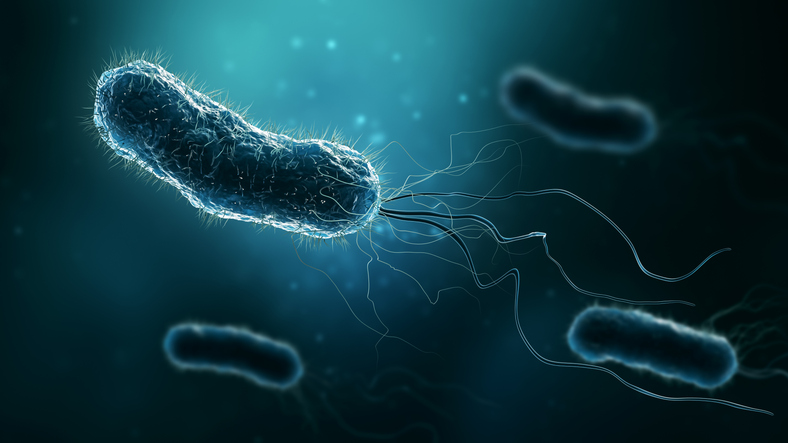
E. coli
There are various strains of E. coli germs (bacteria). Many strains are usually harmless and live in the gut of healthy people. However, some strains are a cause of common infections such as urine infections and gut infections (gastroenteritis). A strain called VTEC O157 is an uncommon cause of infection, but it can be serious. It can lead to a severe gut infection with bloody diarrhoea. Also, the poison (toxin) released by VTEC O157 can cause other serious diseases such as haemolytic uraemic syndrome (HUS) and thrombotic thrombocytopenic purpura (TTP). The majority of people fully recover from a VTEC O157 infection. However, in a few people, it can be fatal.
by Dr Toni Hazell, FRCGP
Frequently asked questions
Can Salmonella spread from person to person?
Yes, once someone has Salmonella, they can spread the infection to close contacts if proper hygiene measures are not followed. This is why outbreaks can occur, especially in institutional settings like elderly care homes.
Can I get Salmonella from petting animals?
Yes, Salmonella germs can be found in the gut of many animals, including pets. You should wash your hands after touching pets or animals, after visiting farms, and after gardening to help avoid infection.
What is the incubation period for Salmonella?
The symptoms of Salmonella gastroenteritis typically appear within 12-36 hours of eating contaminated food or being in contact with an infected animal. This period before symptoms show is known as the 'incubation period'.
Are there different types of Salmonella?
Yes, Salmonella is a group of bacteria with over 2,500 different strains. These are broadly divided into 'typhoidal' strains, which cause typhoid and paratyphoid fever, and 'non-typhoidal' strains, which are the usual cause of gut infections like gastroenteritis in developed countries.
Why is Salmonella less common in the UK now than it used to be?
Salmonella infections in the UK have decreased since the 1990s. This is thought to be due to improved hygiene standards in the poultry industry and a Salmonella vaccination programme for hens.
Further reading and references
- Diarrhoea and vomiting in children under 5; NICE Clinical Guideline (April 2009; updated October 2022).
- Salmonella: guidance, data and analysis; UK Health Security Agency
- Salmonella Fact Sheet; World Health Organization, February 2018
- Eggs and salmonella; Egg Info
- Gastroenteritis; NICE CKS, May 2024 (UK access only)
About the authorView full bio

Dr Doug McKechnie, MRCGP
Medical Writer
MA, MBBS, MSc, DRCOG, MRCP(UK), MRCGP(2021), FHEA
Dr Doug McKechnie is an NHS GP working in London. He works full-time clinically and is also the Deputy Lead for the Clinical and Professional Practice module at University College London Medical School.
About the reviewerView full bio

Dr Hayley Willacy, FRCGP
General Practitioner, Medical Author
MBChB (1992), DRCOG, DFFP, MRCOG (Part 1) MRCGP (2007), DFSRH (2013), MSc - medical education (2020)
Dr Hayley Willacy was an NHS GP working in northwest England, who retired from clinical practice in 2022 after 30 years.
Article history
The information on this page is written and peer reviewed by qualified clinicians.
Article also available in English, German, Spanish, French, Italian, Portuguese, Hindi, Hebrew, Arabic, and Swedish.
Next review due: 8 Aug 2028
10 Aug 2023 | Latest version
Join the conversation
Share your thoughts or experiences with others in our patient communities.

Ask, share, connect.
Browse discussions, ask questions, and share experiences across hundreds of health topics.

Feeling unwell?
Assess your symptoms online for free
Sign up to the Patient newsletter
Your weekly dose of clear, trustworthy health advice - written to help you feel informed, confident and in control.
By subscribing you accept our Privacy Policy. You can unsubscribe at any time. We never sell your data.
More in digestive health
- Abdominal masses
- Acid reflux and oesophagitis
- Acute diarrhoea in children
- Antacids
- Crohn's disease
- Gastroenteritis
- Gastroenteritis in children
- Gastroparesis
- Hirschsprung's disease
- Indigestion medicine
- Inflammatory bowel disease
- Laxatives
- Liver failure
- Mesenteric adenitis
- Norovirus
- Piles
- Recurrent abdominal pain in children
- Right lower quadrant pain in pregnancy
- Symptoms of appendicitis
- Trapped wind, gas and bloating