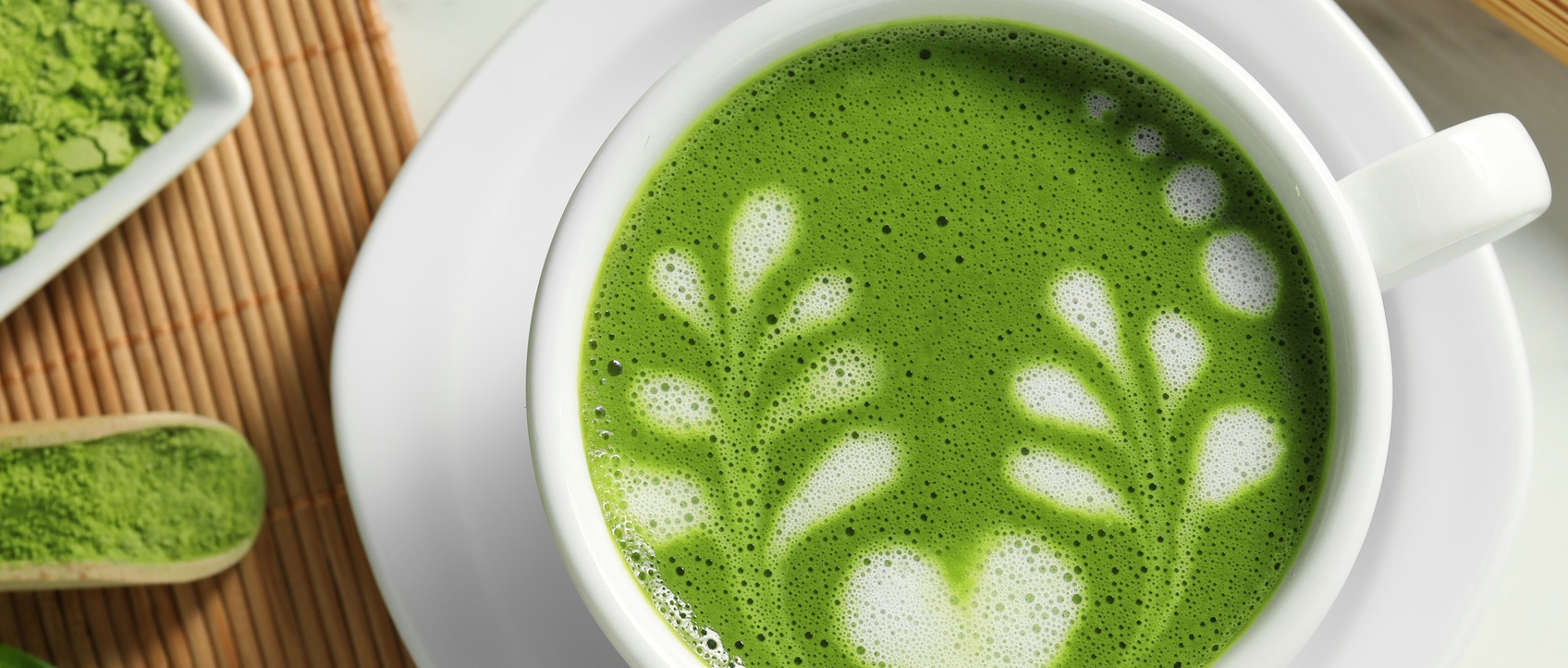
8 bienfaits du thé matcha
Revu par Dr Krishna Vakharia, MRCGPDernière mise à jour par Victoria RawDernière mise à jour 7 Apr 2025
Respecte les directives éditoriales
- TéléchargerTélécharger
- Partager
- Language
- Discussion
- Version audio
- Ajouter aux sources préférées sur Google
Brad Pitt le boit à la place de l'alcool, Gwyneth Paltrow l'applique sur son visage, et Dean de The Apprentice dit que c'est sa boisson préférée. Mais y a-t-il vraiment des bienfaits pour la santé liés au thé matcha ? Nous examinons ce que contient le thé matcha et les preuves de ses effets possibles sur votre corps et votre esprit.
What is matcha?
Matcha tea is a type of green tea, but it's grown in a precise way to give it a unique nutritional profile - and its vibrant green colour. While green tea leaves are loose, matcha tea leaves always come as a powder.
These days, matcha tea can be found in coffee shops, supermarkets, and health food stores. It's become a popular healthy alternative for coffee-loving caffeine fans, and its unique umami taste is used to flavour both savoury and sweet dishes.
Yet matcha tea is not a new invention and has a rich history in traditional Japanese and Chinese cuisine. The Western world is getting a taste for it - and becoming more aware of matcha tea health benefits.
How is matcha tea made?
Like green, black, and oolong teas, matcha tea is made from the Camellia Sinensis plant. But the growing process is more labour intensive, and involves shading the plant, steaming the leaves, drying them in a specialist machine, and grinding them into a fine powder. Each of these steps allows the product to hold onto many of the plant's health-boosting nutrients and antioxidants.
Unveiling the Power of Matcha - Beyond the Trend
Qhat are the health benefits of matcha?
There's a large body of evidence for the upsides of green tea, but less studies specifically look at matcha tea benefits.
Does matcha have the same benefits as green tea?
Many of the nutrients found in high levels in matcha - such as amino acids, polyphenols, and antioxidants like vitamine C - can do a lot of good for your body.
But before you stock your cupboards with matcha powder, it's worth remembering that there's not enough evidence from experts to recommend how much you should take to reap these benefits.
The best way to look after yourself is to eat a varied, colourful diet and eat all foods in moderation. When preparing matcha tea, only use hot water - boiling water can destroy some of these all-important nutrients.
1. Matcha tea and antioxidants
Antioxidants are molecules that help your body fight off harmful free radicals - unstable atoms that damage cells, causing illnesses and accelerating ageing.
Green and matcha teas are rich in compounds that act like antioxidants. For example, tea flavonoids can reduce inflammation and ward off infections.
2. Matcha tea and heart health
Natural compounds called polyphenols in green and matcha tea have been found to reduce your chances of une maladie cardiaque, and associated conditions such as AVC et diabète de type 2.
This is because polyphenols can help keep your cardiovascular system working properly by preventing plaque build-up and helping to improve blood pressure and cholesterol levels.
3. Matcha tea and brain health
Matcha tea and other green teas contain several compounds that are known to support brain function. For example, caffeine can reduce inflammation and damaged caused by free radicals in your brain, which may slow down age-related decline and promote memory performance.
Matcha also contains the compound epigallocatechin-3-gallate (EGCG) which has been shown to enhance brain function as well as help in the prevention of neurodegenerative diseases - including Maladie d'Alzheimer.
4. Matcha tea and weight loss
There's growing evidence that matcha tea can also help people achieve perte de poids saine and protect you against metabolic disorders.
It's thought that compounds and antioxidants in matcha tea can promote fat oxidation during exercise - the process by which your body breaks down fat to use as energy.
The antioxidants also affect the signals sent between your gut and liver, believed to be important in preventing l'obésité.
5. Matcha tea and cancer
Although evidence is limited, some studies show promising results for green tea and cancer prevention.
Although little data exists on matcha tea benefits for le cancer, scientists know that EGCG may play a part in the destruction of cancer cells, prevent cells from DNA damage, and inhibit tumour growth. We also know that EGCG is present in much higher quantities in matcha compared to green tea.
6. Matcha tea and stress
There may also be mental health benefits in drinking matcha tea - but current commercial products that are available to buy aren't likely to have much effect. An amino-acid called L-theanine - present in green tea and in higher concentrations in matcha - may help reduce niveaux de stress et l'anxiété.
However, there's a need for more human studies, and the amount of caffeine in matcha tends to counteract this effect. Most commercial matcha teas contain too much caffeine for you to benefit.
7. Matcha tea, skin, and hair
The polyphenols, caffeine, and EGCG in matcha may promote healthy skin and hair and protect against problems, such as psoriasis, la rosacée, and hair loss, when applied to these areas in creams.
They do this by preventing cell damage, protecting against UV light, and promoting hydration. However, before you invest in matcha cosmetic lotions, it's worth noting that not all extracted forms of these compounds absorb well into hair and skin.
8. Matcha tea and bone health
As we age, we can lose bone mineral density (BMD) and this can affect our ability to move about freely and painlessly.
But the antioxidant activity in polyphenols in matcha tea may counteract this, and studies have shown that regularly drinking green teas can even prevent common bone conditions.
For example, a study of postmenopausal women found that those who drank 1-3 cups a day were less likely to develop des douleurs dorsales ou ostéoporose.
Is matcha tea safe for everyone?
Matcha tea is generally considered safe to drink regularly. However, if you're sensitive to the effects of caffeine or are trying to cut down, you'll need to be careful of how much matcha you drink.
Although some of the matcha tea benefits are due to caffeine, too much caffeine can be bad for anyone. For healthy adults, up to 400 milligrams of caffeine a day is safe, which equals around four cups of coffee at 80-100 milligrams a cup.
In comparison:
Matcha tea contains between 76-178 milligrams a cup, meaning the strongest brews should be limited to two cups a day.
Green tea contains between 30-40 milligrams, the equivalent of 10 cups a day.
Black tea contains between 64-112 milligrams, the equivalent of three cups a day.
Si vous avez anémie ferriprive, you should not drink matcha tea with a meal as it contains tannins - compounds that can make it harder for us to absorb iron.
Sélections des patients pour Nutrition
Régime et nutrition
9 bienfaits des graines de chia pour la santé
Le pudding de chia de Kim Kardashian est devenu viral sur TikTok, et Taylor Swift saupoudre des graines de chia sur ses repas pour l'aider à gérer son poids. De nos jours, les graines de chia ne sont plus réservées aux stars d'Hollywood et peuvent être trouvées dans la plupart des supermarchés et des magasins d'aliments naturels. Mais répondent-elles vraiment à leur réputation en matière de santé ? Nous explorons neuf bienfaits potentiels des graines de chia pour la santé et examinons si cet ingrédient est sûr pour tout le monde.
par Heather Ainsworth
Régime et nutrition
Le miel peut être l'énergie naturelle dont vous avez besoin pour dynamiser vos entraînements
Le miel a été utilisé par les humains comme édulcorant naturel et source d'énergie pour soutenir le travail et la performance physique pendant des milliers d'années. Récemment, il a refait surface comme une option naturelle pour alimenter l'exercice, certains utilisateurs des réseaux sociaux affirmant que c'est la chose parfaite à manger avant un entraînement si vous avez besoin d'un regain d'énergie.
par Stephen Khan
À propos de l'auteurVoir la biographie complète

Amberley Davis
Rédacteur senior
BA (Hons), CPD
Amberley est une rédactrice senior chez Patient et a écrit de manière approfondie sur une gamme de sujets liés à la santé et au bien-être.
À propos du critiqueVoir la biographie complète

Dr Krishna Vakharia, MRCGP
Médecin-chef pour la santé, Optum UK
MBChB, MRCGP(2013), BMedSci (hons), DFSRH, DRCOG, PGDipDerm (Distn)
Le Dr Krishna Vakharia est un médecin généraliste du NHS. Elle est également examinatrice régulière pour le diplôme de troisième cycle en dermatologie pratique à l'Université de Cardiff, ainsi que médecin-chef pour la santé chez Optum UK.
Historique de l'article
Les informations sur cette page sont examinées par des cliniciens qualifiés.
Article également disponible en Anglais, Allemand, Espagnol, Français, Italien, Portugais, Hindi, Hébreu, Arabe, and Suédois.
Next review due: 7 Apr 2028
7 Apr 2025 | Dernière version
28 sept. 2023 | Publié à l'origine
Écrit par :
Amberley Davis

Demandez, partagez, connectez-vous.
Parcourez les discussions, posez des questions et partagez vos expériences sur des centaines de sujets de santé.

Vous ne vous sentez pas bien ?
Évaluez vos symptômes en ligne gratuitement
Inscrivez-vous à la newsletter Patient
Votre dose hebdomadaire de conseils de santé clairs et fiables - rédigés pour vous aider à vous sentir informé, confiant et maître de la situation.
En vous abonnant, vous acceptez notre Politique de confidentialité. Vous pouvez vous désabonner à tout moment. Nous ne vendons jamais vos données.
Plus sur l'alimentation et la nutrition
- 10 bienfaits surprenants du chou pour la santé
- 9 bienfaits des graines de chia pour la santé
- Le kombucha peut-il améliorer votre santé ?
- Vous avez faim et êtes de mauvaise humeur ? Pourquoi nous nous mettons en colère quand nous avons faim
- Aliments sains pour Hanoucca pour votre poids, cœur et diabète
- Combien d'eau devriez-vous boire par jour ?
- Comment augmenter votre niveau d'énergie et vous sentir moins fatigué en hiver
- Comment faire ses courses pour un régime pauvre en cholestérol
- Régime pour le SII : aliments à consommer et à éviter
- Y a-t-il un lien entre l'alimentation et l'acné ?
- Manger en pleine conscience : comment ralentir et apprécier votre nourriture
- Les protéines végétales pourraient aider à prévenir l'hypertension
- Faire les courses au supermarché pour des aliments qui aident les articulations raides et douloureuses
- La vérité sur les graisses dans votre alimentation
- Régime Wegovy : Aliments à consommer et à éviter
- Qu'est-ce que le régime anti-inflammatoire ?
- Qu'est-ce que le régime Whole30 ?
- Quels aliments ultra-transformés sont sûrs - et lesquels devons-nous éviter ?
- Héros des grains entiers : Pourquoi manger des grains anciens ?
- Pourquoi cultiver vos propres aliments pour votre santé ?