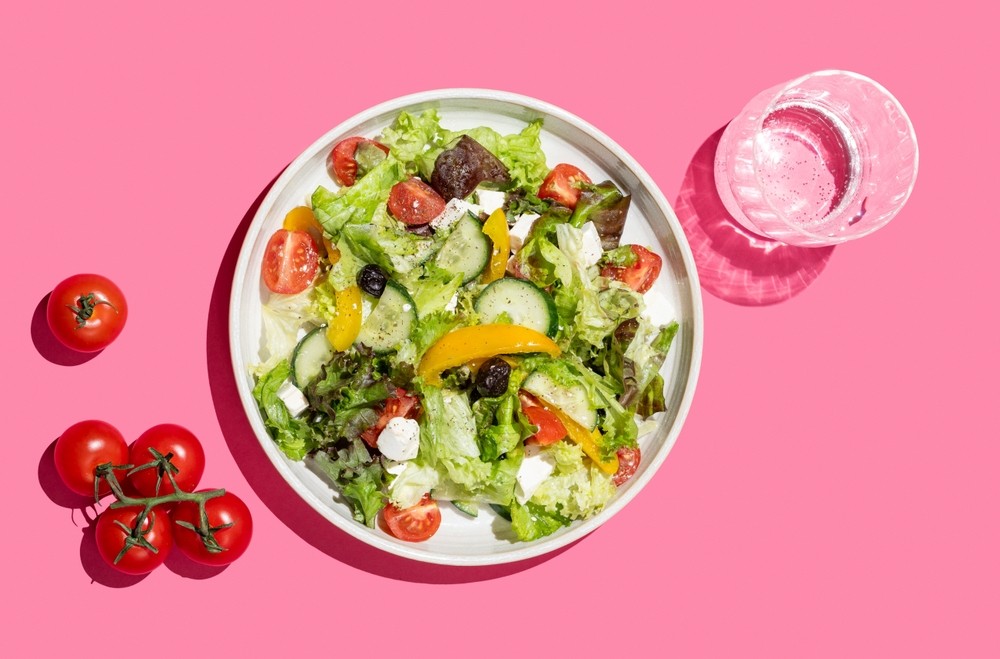
Régime pour calculs biliaires : aliments à consommer et à éviter
Revu par Dr Colin Tidy, MRCGPDernière mise à jour par Lynn StephenDernière mise à jour 31 août 2026
Respecte les directives éditoriales
- TéléchargerTélécharger
- Partager
- Language
- Discussion
- Version audio
- Ajouter aux sources préférées sur Google
1 in 3 women and 1 in 6 men will develop gallstones at some point. Gallstones are small stones - usually made up of bile - that form in your gallbladder. Here we share the foods that can prevent gallstones, trigger uncomfortable symptoms, or make them better.
Qu'est-ce que les calculs biliaires ?
Gallstones occur when bile - which is normally fluid - forms stones in your gallbladder. This is the organ that sits beneath your liver. Most commonly, gallstones contain lumps of fatty, cholesterol-like material that has solidified and hardened.
You can have just a few small stones or a great many. Occasionally, just one large stone is formed.
How common are gallstones?
About one in three women and one in six men form gallstones at some stage in their lives. Gallstones become more common as you get older.
The chance of gallstones forming increases with:
Grossesse.
Le tabagisme.
Perte de poids rapide.
Having a close relative with gallstones.
Taking certain medicines such as the pilule contraceptive.
Eating a generally unhealthy diet, particularly a diet which is high in fat.
The role of the gallbladder in digestion
The gallbladder plays a part in the digestion of food. It collects and stores bile, then releases the bile into the small intestine when food enters the small intestine from your stomach. This helps with the digestion of food because your gallbladder contains bile salts and other substances which break down fat.
The bile duct, which connects your gallbladder to your small intestine, can become blocked by gallstones.
This may cause symptoms such as:
Douleur.
Ballonnements.
Feeling and being sick.
The stone may cause a blockage and make it difficult for the bile to be released from your bile duct.
Gallstones diet
Foods to eat with gallstones
There is no specific gallstones diet, but eating a healthy balanced diet that's very low in fat can help with symptoms.
Cela inclut :
Beaucoup de fruit and vegetables - aim to have at least five portions each day.
Plenty of starchy carbohydrates - examples include bread, rice, cereals, pasta, potatoes, chapattis, and plantain. Choose wholegrain varieties where possible.
Du lait et des produits laitiers - 2-3 portions per day. Choose very low-fat dairy products.
Some meat, fish, eggs, and alternatives - such as beans and pulses.
Limited amounts of foods high in fats and sugars - limit saturated fat that is found in animal products, such as butter, ghee, cheese, meat, cakes, biscuits, and pastries. Replace these with unsaturated fats found in non-animal products, such as sunflower, rapeseed and olive oil, avocados, nuts, and seeds. But remember that unsaturated fats can also trigger gallstone pain.
Make sure your diet is high in fibres - this can be found in beans, pulses, fruit and vegetables, oats, and wholegrain products, such as bread, pasta, and rice.
Drink plenty of fluid - at least two litres daily, such as water or herbal teas.
Vegetarian diet for gallstones
Une étude1 in the UK found that vegetarians tend to consume more fibre and less fat, and have a lower BMI - all factors which are associated with lower rates of gallstone disease. Therefore, it might be expected that vegetarian diets would have a protective effect for gallstone disease. However, this study has shown there is a small but statistically significant positive association between vegetarian diet and symptomatic gallstone disease.
Will a gallstones diet cure my symptoms?
Most people with gallstones will have surgery to remove the gallbladder in an operation called a cholecystectomy. However, eating a low-fat diet is likely to reduce symptoms while you are waiting for the operation. This is because fatty foods stimulate the gallbladder to release bile into the small intestine.
Once you have had the operation there is no need to follow any particular diet, although of course it is always a good idea to eat as healthily as possible.
If you are overweight, attaining a healthy weight will be beneficial. However, it is important to do this gradually, as rapid weight loss has been associated with the development of gallstones. A safe weight loss of 1-2 pounds - 0.5 to 1 kilograms - per week is recommended.
Foods to avoid with gallstones
High-fat foods - try not to eat too much fat at one mealtime. It might be helpful to have smaller, more frequent meals.
Individual food triggers - some people find that specific foods are the triggers for symptoms. Keep a food and symptom diary to identify trigger foods. Avoid these foods for a two-week trial period and note any improvements in symptoms.
Cutting down on fat
A high-fat diet and fatty foods can sometimes cause discomfort and painful symptoms. They may also cause fatty poos (steatorrhoea), which are oily, pale, and smelly. Steatorrhoea is a sign that fat is not being digested properly.
Here are some ways to cut down on fat in your diet.
High-fat foods | Lower-fat alternatives |
Butter, lard, ghee, oils, spreads. | Lower-fat/light spreads, oil sprays for cooking, jam, honey. |
Whole milk, cream, full-fat yoghurts. | Skimmed milk, half-fat crème fraîche, low-fat evaporated milk, low-fat or fat-free yoghurt. |
Full-fat cheese, such as Cheddar, Brie, and Stilton. | Cottage cheese, light soft cheeses such as quark, reduced-fat Cheddar cheese, or naturally lower-fat cheeses such as mozzarella and ricotta (matchbox-sized portion). |
Snacks, such as cakes, biscuits, pastries, crisps, and nuts. | Toasted teacakes, low-fat popcorn, fruit and vegetables, dried fruit, meringues, rice cakes. |
Puddings, such as pies, ice cream, and custards. | Jelly, sugar-free jelly, low-fat custard, rice pudding made with skimmed milk, sorbet, tinned or stewed fruit, low-fat yoghurts. |
Sauces and dressings, such as mayonnaise, creamy sauces. | Vinaigrettes, mustard, lemon juice, fat-free salad dressings, tomato-based sauces - some can contain oil, salsa, balsamic dressing. |
Meats and processed meats, such as sausages, salami, corned beef, bacon, gammon, pork, lamb, beef mince, beef burgers, meat pies, fish tinned in oil. | Chicken, turkey, lean ham, lean or extra lean beef mince, turkey mince, red meat with visible fat cut off, and white fish, such as cod, haddock, pollock, and fish tinned in brine or water. |
Remarque: many processed foods that are low in fat can contain high amounts of sugar. Check the labels for high-sugar products and try to keep these to a minimum. A product that is high in sugar contains more than 10 grams of sugar per 100 grams.
Reduced-fat, light and low-fat are not the same thing. If a product is low-fat, this means that the product contains 3 grams or fewer of fat per 100 grams and is actually low in fat. A reduced-fat product does not mean that the product is necessarily low in fat. It means that the product contains 25% less fat than the original product, which is usually a very high-fat product, such as mayonnaise or Cheddar cheese.
This is similar for 'light' products, which contain about a third fewer calories than the original product, or 50% less fat. Therefore, keep these to a minimum when choosing reduced-fat or lighter products.
Tips to cut down on fat
Adopting some healthy habits can really impact on the amount of fat you consume.
Here are some tips you can use during cooking and food preparation:
Try to avoid processed foods and cook from scratch when possible. This will help you to have control over how much fat goes into your food.
Check labels for high-fat products. A product that is high in fat contains 17.5 grams or more of fat per 100 grams. Try to avoid foods with red colour coding on the label for fat. Look for foods that contain less than 3 grams of fat.
Bulk out meals with vegetables and pulses. For example, a Bolognese sauce could be made with half the amount of meat by adding kidney beans and mushrooms.
Use oil spray when cooking, or wipe off extra oil using a paper towel.
Measure your oil when cooking, rather than pouring it. A good measure is about one teaspoon per person.
Try to use fat/oil in food only when it is absolutely necessary.
If you are cooking meat that is sticking to the pan, a small drop of water may help rather than adding more oil.
Make your own dressings using low-fat yoghurt, lemon/lime juice, and herbs.
Remove all visible fat and skin from meat and choose leaner cuts of meat.
Skim fat off the top of casseroles and stews.
Try not to fry food. Bake, steam, boil, grill, or roast on a drip tray instead.
How to prevent gallstones
You can also reduce your chance of developing gallstones through what you eat.
Cela inclut :
Eating vegetable protein - for example, beans and pulses.
Increasing fibre intake.
Eating nuts.
Increasing dietary calcium.
Increasing vitamin C intake.
Drinking coffee.
Drinking a moderate amount of alcohol.
Sélections des patients pour Foie et vésicule biliaire
Régime et nutrition
Régime pour le foie gras : aliments à consommer et à éviter
Dans cet article, nous examinerons de plus près les aliments que vous devriez inclure dans votre régime alimentaire, ainsi que ceux à éviter en cas de foie gras.
par Josh Alderman
Santé digestive
Pourrait-il s'agir de calculs biliaires ?
Les calculs biliaires sont très courants : environ une femme sur trois et un homme sur six en auront à un moment donné. Cependant, ils ne provoquent pas toujours de symptômes - environ deux personnes sur trois qui ont des calculs biliaires ne savent pas qu'elles en ont. Mais ils sont aussi une cause fréquente de douleurs abdominales. Ils deviennent plus fréquents avec l'âge et les personnes en surpoids, qui fument, qui ont un diabète de type 2 ou un taux de cholestérol élevé, qui prennent la pilule contraceptive, ou qui ont perdu beaucoup de poids en excès en peu de temps, ont un risque accru de calculs biliaires. Ils peuvent parfois être héréditaires.
par Dr Sarah Jarvis
À propos de l'auteurVoir la biographie complète
Mis à jour par

Lynn Stephen
Rédactrice de contenu
MA (Hons)
Lynn joined Patient in 2023 and her role includes checking all the professional leaflets, patient information leaflets and medicine leaflets, to ensure consistency of spelling, grammar, reference material and brand style, working with the medical authors and clinical director to coordinate the authoring and peer reviewing of the leaflets.
Rédigé par

Dr Jan Sambrook, MRCGP
Médecin généraliste, Auteur médical
MBChB, MRCGP
Le Dr Jan Sambrook a obtenu son diplôme de l'Université de Sheffield en 1992.
À propos du critiqueVoir la biographie complète

Dr Colin Tidy, MRCGP
Médecin généraliste, Auteur médical
MBBS, MRCGP, MRCP (Paediatrics), DCH
Le Dr Colin Tidy est un médecin du NHS, basé dans l'Oxfordshire.
Historique de l'article
Article également disponible en Anglais, Allemand, Espagnol, Français, Italien, Portugais, Hindi, Hébreu, Arabe, and Suédois.
Next review due: 31 Aug 2029
31 août 2026 | Dernière version
11 Sept 2017 | Publié à l'origine
Écrit par :
Dr Jan Sambrook, MRCGP
Participez à la conversation
Partagez vos pensées ou expériences avec les autres dans notre communautés de patients.

Demandez, partagez, connectez-vous.
Parcourez les discussions, posez des questions et partagez vos expériences sur des centaines de sujets de santé.

Vous ne vous sentez pas bien ?
Évaluez vos symptômes en ligne gratuitement
Inscrivez-vous à la newsletter Patient
Votre dose hebdomadaire de conseils de santé clairs et fiables - rédigés pour vous aider à vous sentir informé, confiant et maître de la situation.
En vous abonnant, vous acceptez notre Politique de confidentialité. Vous pouvez vous désabonner à tout moment. Nous ne vendons jamais vos données.