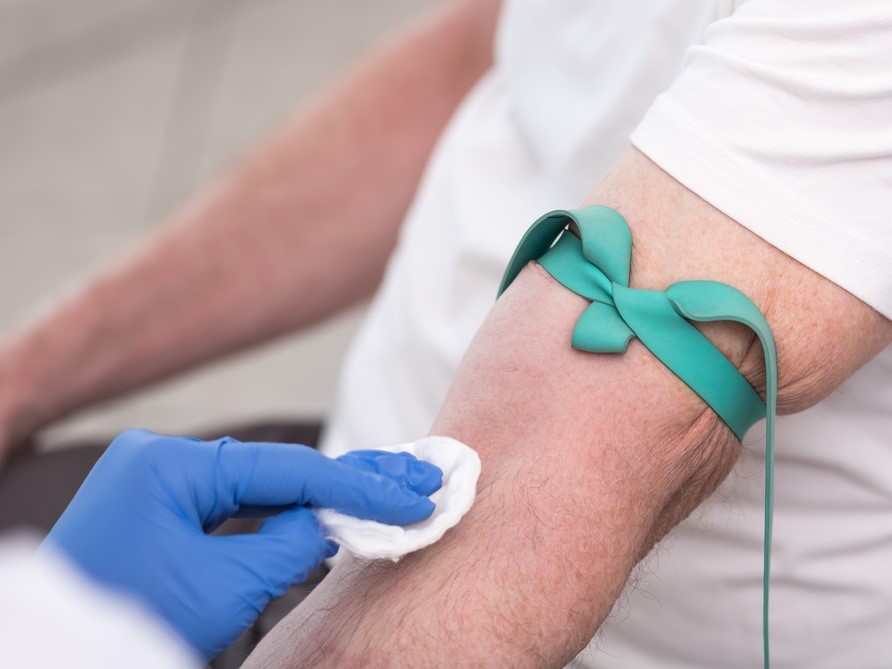
Comment prendre soin de votre foie
Revu par Dr Krishna Vakharia, MRCGPRédigé par Dr Sarah JarvisPublié à l'origine 3 nov. 2022
Respecte les directives éditoriales
- TéléchargerTélécharger
- Partager
- Language
- Discussion
- Version audio
- Ajouter aux sources préférées sur Google
Votre foie est incroyable. Il vous aide à digérer les aliments, fabrique des protéines qui aident votre sang à coaguler et élimine les toxines et les déchets de votre corps. Il aide également à contrôler les niveaux de cholestérol et à combattre les infections. Il travaille constamment à 'détoxifier' votre corps 24 heures sur 24 - vous n'avez vraiment pas besoin de régimes 'détox' à la mode ! Mais vous devez savoir comment prendre soin de votre foie - montrez un peu d'amour à votre foie par votre mode de vie et il continuera à prendre soin de vous.
How to prevent liver cancer
Last year, a survey by the British Liver Trust revealed that half of UK adults are unaware of many of the factors that can increase their risk of liver cancer. Cancer primitif du foie is cancer that starts in your liver, rather than spreading there from another part of your body. Also known as hepatocellular carcinoma (HCC), it's the fastest growing cause of le cancer death in the UK.
Sadly, due to late diagnosis, only 13% of people with the disease will survive for more than five years. In the same survey, almost 9 in 10 people thought the figure was much higher than this.
In the last decade, liver cancer has increased by almost two thirds in the UK. It's becoming more common at all ages and is now the 9th most common cause of cancer death. It's usually linked to cirrhose - advanced liver disease which leads to permanent scarring of the liver, and sometimes liver failure. Fortunately, 90% of liver disease is preventable - with healthy lifestyle changes and a knowledge of your risks, you can help protect yourself.
Building on this survey, the British Liver Trust has launched a 'Love your liver' campaign. It highlights three key steps you can use to reduce the risk of liver cancer: alcohol, lifestyle and infectious hepatitis.
How does alcohol affect the liver?
Votre foie is one of your busiest organs. It produces glucose, amino acids (the building blocks of proteins), hormones and bile, which helps your digestive system break down fats. But that's just a start. It also breaks down hormones we don't need, a variety of waste products and toxins, including alcohol.
Alcohol is a toxin - your liver can cope with so much without damage, and for a while your liver can regenerate if you stop drinking, even if it's been damaged. It's worth pointing out that the same does not apply to some of the other effects of alcohol on your body. For instance, there's no 'safe' limit for drinking where breast cancer is concerned - for every unit of alcohol you drink daily, your risk of cancer du sein increases by 7-10% compared to someone who doesn't drink at all.
But back to your liver - depending on how much you drink and for how long, your liver can develop fatty deposits which prevent it from working efficiently. This leads to inflammation (hepatitis) and finally irreversible scarring, called cirrhosis.
How to maintain a healthy liver and drink alcohol
For the sake of your liver as well as many other parts of your body, stick within the recommended limits for alcohol. That's not more than 14 units a week for men and women (a unit is about half a pint of normal strength beer or lager or a single pub measure of spirits. A 'standard' wine bar glass of wine contains about 2.3 units). You should also spread your alcohol intake over the week and have at least a couple - ideally three - alcohol-free days every week. Femmes enceintes should avoid alcohol completely.
How does diet affect the liver?
If you want to protect your liver, look at your lifestyle. Your liver would love a diet with lower intake of sugar, refined carbohydrates (white bread and white flour products, white pasta, cakes and pastries) and saturated (animal) fat, which can reduce your risk of liver cancer.
How to maintain a healthy liver through your diet
Instead, fill up on veg, fruit, pulses and unrefined (wholegrain and wholemeal) carbs to maintain a healthy liver. In addition, take de l'exercice régulièrement - aim to build up to half an hour a day, five times a week of the sort of exercise that makes you breathe a bit harder and gets your heart pumping.
Viral hepatitis and your liver
Since travel opened up after a long hiatus due to the COVID-19 pandemic, many of us are desperate to get away on a foreign adventure. But in many countries the risk of viral hepatitis is higher than it is in the UK.
Hépatite A, also known as 'infectious hepatitis', is very easy to catch from eating or drinking contaminated food or drink. It usually doesn't cause long-term problems, but it can make you feel very unwell for up to six months.
Hépatite B et hépatite C are caught through sharing bodily fluids - unprotected sex or, in some cases, contaminated blood. Both of these can increase your risk of liver cancer. There's no vaccination available against hepatitis C, although if it's diagnosed in time it can often be cured with treatment. Hepatitis B can't be cured, and over time can increase your risk of cirrhosis and liver cancer. If you are at high risk, speak to your practice nurse about hepatitis B vaccination.
What is fatty liver?
A healthy diet will also help you to keep your weight within recommended limits. Fatty liver used to be caused primarily by alcohol in the UK. However, as our nation's average weight has increased, so has the number of people with stéatose hépatique non alcoolique, (NAFLD) - it's thought as many as 1 in 3-5 people in the UK have NAFLD. Over time, these fatty deposits can make your liver stiff and scarred. This in turn makes it less able to get rid of toxins and can lead to serious health problems.
Some medicines can cause inflammation of the liver. If your doctor advises you to have regular checks, keep your appointment!
Can you inherit liver disease?
Sometimes genetics plays a part. Some liver diseases, including Maladie de Wilson et l'hémochromatose, are inherited.
A tendency to fatty liver disease can run in families. Diabète de type 2 is also a risk factor for liver disease - although being overweight may be the common link here.
But whatever the cause, maintaining a healthy weight will help protect you against fatty liver and other liver damage. Even more importantly, your liver is remarkably forgiving. By improving your diet, alcohol intake and exercise and cutting your weight if you're overweight, you can often reverse fatty liver, putting it back into tip-top shape.
Avec remerciements au magazine 'My Weekly' où cet article a été initialement publié.
Sélections des patients pour Foie et vésicule biliaire
Santé digestive
Ce que vous devez savoir sur l'hépatite
La stratégie mondiale de l'Organisation mondiale de la santé contre l'hépatite vise à réduire de 90 % les nouvelles infections par l'hépatite et de 65 % les décès d'ici 2030. Le Royaume-Uni a fait de grands progrès vers cet objectif en augmentant les vaccinations et en introduisant de nouveaux traitements améliorés. Les tests ont également été augmentés et le NHS a maintenant introduit un autotest simple à domicile pour l'hépatite C. Découvrez ici ce que l'hépatite fait au corps et ce qui la cause.
par Lawrence Higgins
Santé digestive
Pourrait-il s'agir de calculs biliaires ?
Les calculs biliaires sont très courants : environ une femme sur trois et un homme sur six en auront à un moment donné. Cependant, ils ne provoquent pas toujours de symptômes - environ deux personnes sur trois qui ont des calculs biliaires ne savent pas qu'elles en ont. Mais ils sont aussi une cause fréquente de douleurs abdominales. Ils deviennent plus fréquents avec l'âge et les personnes en surpoids, qui fument, qui ont un diabète de type 2 ou un taux de cholestérol élevé, qui prennent la pilule contraceptive, ou qui ont perdu beaucoup de poids en excès en peu de temps, ont un risque accru de calculs biliaires. Ils peuvent parfois être héréditaires.
par Dr Sarah Jarvis
À propos de l'auteurVoir la biographie complète

Dr Sarah Jarvis
Consultant Clinique
MA (Cantab), BM, BCh (Oxon), DRCOG, FRCGP, MBE
Après avoir suivi une formation en médecine à Cambridge et Oxford, le Dr Sarah Jarvis MBE est devenue médecin généraliste.
À propos du critiqueVoir la biographie complète

Dr Krishna Vakharia, MRCGP
Médecin-chef pour la santé, Optum UK
MBChB, MRCGP(2013), BMedSci (hons), DFSRH, DRCOG, PGDipDerm (Distn)
Le Dr Krishna Vakharia est un médecin généraliste du NHS. Elle est également examinatrice régulière pour le diplôme de troisième cycle en dermatologie pratique à l'Université de Cardiff, ainsi que médecin-chef pour la santé chez Optum UK.
Historique de l'article
Les informations sur cette page sont examinées par des cliniciens qualifiés.
Article également disponible en Anglais, Allemand, Espagnol, Français, Italien, Portugais, Hindi, Hébreu, Arabe, and Suédois.
3 nov. 2022 | Publié à l'origine
Écrit par :
Dr Sarah JarvisRevu par
Dr Krishna Vakharia, MRCGP

Demandez, partagez, connectez-vous.
Parcourez les discussions, posez des questions et partagez vos expériences sur des centaines de sujets de santé.

Vous ne vous sentez pas bien ?
Évaluez vos symptômes en ligne gratuitement
Inscrivez-vous à la newsletter Patient
Votre dose hebdomadaire de conseils de santé clairs et fiables - rédigés pour vous aider à vous sentir informé, confiant et maître de la situation.
En vous abonnant, vous acceptez notre Politique de confidentialité. Vous pouvez vous désabonner à tout moment. Nous ne vendons jamais vos données.
Plus sur la santé digestive
- Appendicite chez les enfants : quels sont les signes ?
- Les bébés nés par césarienne ont une flore intestinale différente de ceux nés par voie vaginale
- Causes courantes d'un fond qui démange
- Régime pour calculs biliaires : aliments à consommer et à éviter
- Comment les bactéries intestinales affectent l'humeur, la concentration et la santé cérébrale
- Comment le SII affecte le sexe, les rencontres et les relations
- Comment éviter l'intoxication alimentaire cet été
- Comment éviter la diarrhée du voyageur
- Comment se débarrasser des hémorroïdes
- Est-ce une indigestion ou une crise cardiaque ?
- Est-ce une indigestion ou quelque chose de plus grave ?
- Est-ce vraiment un reflux ? Pourquoi vous pourriez recevoir à tort des IPP
- Selles - qu'est-ce qui est normal ?
- Le système digestif
- Ce que le sang dans vos selles pourrait signifier
- Quel est le lien entre le SII et l'anxiété ?
- Ce que vous devez savoir sur l'hépatite
- Quelle est la différence entre l'hépatite A, B et C ?
- Quel est le lien entre l'anxiété et la santé intestinale ?
- Quand s'inquiéter de la diarrhée