Bêta-bloquants
Revu par Dr Rachel Hudson, MRCGPDernière mise à jour par Dr Rosalyn Adleman, MRCGPDernière mise à jour 23 mars 2023
Respecte les directives éditoriales
- TéléchargerTélécharger
- Partager
- Language
- Discussion
- Ask Patient
- Version audio
- Ajouter aux sources préférées sur Google
Les bêta-bloquants sont des médicaments utilisés pour traiter diverses affections. Leur nom complet est médicaments bloquant les récepteurs bêta-adrénergiques (ou agents bloquants bêta-adrénergiques), mais ils sont couramment appelés bêta-bloquants.
En un coup d'œil
Les bêta-bloquants sont des médicaments qui empêchent certaines impulsions nerveuses et hormones de stimuler les récepteurs dans le corps.
Ils peuvent réduire la fréquence cardiaque et la pression artérielle en bloquant les récepteurs dans le cœur.
Les bêta-bloquants sont utilisés pour les maladies cardiaques, l'anxiété, le glaucome, les migraines et les tremblements.
Les effets secondaires peuvent inclure un rythme cardiaque lent, des mains et des pieds froids, de la fatigue ou des rêves vifs.
Certaines personnes souffrant d'asthme, de rythme cardiaque très lent ou de basse pression artérielle ne peuvent pas prendre de bêta-bloquants.
Signalez les effets secondaires présumés via le système Yellow Card.

Vous n'êtes pas sûr de mélanger des médicaments ?
Vérifiez les interactions possibles entre les médicaments, les compléments et les aliments avant de les prendre ensemble.
How do beta-blockers work?
Beta-blockers work by blocking the transmission of certain nerve impulses. The ends of some nerves release a chemical (neurotransmitter) called noradrenaline when the nerve is stimulated. This chemical then stimulates beta-adrenergic receptors.
These receptors are tiny structures which occur on cells in various parts of the body, including the heart, brain, and blood vessels. When these receptors are stimulated, they cause various effects. For example, nerve impulses to the heart can stimulate beta-adrenergic receptors on heart cells. This causes an increase in the force and rate of the heartbeat. This can cause a fast heartbeat and higher blood pressure.
The beta-adrenergic receptors are also stimulated by adrenaline (epinephrine), a hormone which circulates in the bloodstream. Adrenaline is made in the adrenal gland. The blood level of adrenaline can vary. For example, you may release a lot of adrenaline into the bloodstream when you are frightened or anxious which can cause an increase in your heart rate, and other effects.
The beta-blocker medicine 'sits' on beta-adrenergic receptors and stops (blocks) the receptor from being stimulated. So, for example, if beta-adrenergic receptors in the heart are blocked, the force and rate of the heartbeat are reduced.
Types of beta-blockers
There are several types of beta-blockers - these include:
Each type has one or more brand names.
What are beta-blockers used for?
Heart and blood vessel conditions
Because of their effect on the heart cells, beta-blockers may be used to:
Reduce the risk of a further heart attack (myocardial infarction) if you have already had one.
Control certain abnormal heart rhythms (arrhythmias), particularly those where the heartbeat is too fast. A common arrhythmia is called atrial fibrillation. Beta-blockers are often used to control the fast heart rate in atrial fibrillation. Calcium-channel blockers are an alternative medicine that can be used for this problem.
Help to treat insuffisance cardiaque.
Autres conditions
Because beta-adrenergic receptors are found in other parts of the body, beta-blockers are also used for various other conditions. These include:
Glaucome. Beta-blocker eye drops reduce the fluid that you make in the front chamber of the eye. This reduces the pressure in the eye.
Anxiété. Beta-blockers do not reduce anxiety itself but can reduce some of the symptoms. For example, they can reduce shaking (tremor) and a fast heart rate.
Glande thyroïde hyperactive. Beta-blockers can help to reduce symptoms such as tremor, and slow down a fast heart rate.
Migraine. Beta-blockers can reduce the number of migraine attacks if the attacks occur frequently.
Tremblements - beta-blockers can be used in benign hand tremors which have no other underlying cause and are causing significant problems in daily activities.
Beta-blockers side-effects
Most people who take beta-blockers have no side-effects, or only minor ones. However, because of their action in various parts of the body, some people have unwanted side-effects. The side-effects of beta-blockers include::
Sometimes the heart rate can go too slowly. This can make you dizzy or feel faint.
If you have diabetes you need to be aware that beta-blockers may dull the warning signs of low blood sugar (hypoglycémie - often called a hypo). For example, you may not develop the sensation of rapid, forceful or irregular heartbeats (palpitations) or tremor, which tend to occur as the blood sugar is going too low.
Some people develop cool hands and feet when taking beta-blockers. This is because they can narrow (constrict) small blood vessels and reduce the circulation to the skin of the hands and feet.
Tiredness, la dépression, inability to achieve a proper erection (impotence), vivid dreams, nightmares and other sleeping problems occur in some people.
There is some evidence to suggest that beta-blockers may provoke type 2 diabetes to develop in some people.
Some people with asthma are advised not to take a beta-blocker. If you have asthma or something similar, discuss this with your GP.
The above is not a full list of possible side-effects but mentions the main ones that may occur. Read the information leaflet that comes with your particular brand for a full list of possible side-effects and cautions.
How long can you stay on beta-blockers?
The length of treatment depends on why you are taking a beta-blocker. Some people only need to take beta-blockers for a few weeks, or months - for example, if you have an overactive thyroid. Some people need to take beta-blockers for the rest of their lives - for example, after a crise cardiaque (infarctus du myocarde).
Who cannot take beta-blockers?
You cannot take a beta-blocker if you have certain conditions, including:
Uncontrolled heart failure.
Very slow heart rate (bradycardia).
Low blood pressure (hypotension).
Certain problems with the rhythm of your heart - eg, sick sinus syndrome.
Sélections des patients pour Médicaments pour le cœur et le sang
Traitement et médicaments
Aspirine et autres médicaments antiplaquettaires
La plupart des personnes atteintes d'une maladie cardiovasculaire (par exemple, angine de poitrine, maladie artérielle périphérique, ou un précédent infarctus, accident ischémique transitoire (AIT) ou AVC) prennent chaque jour une faible dose d'aspirine (75 mg) ou de clopidogrel (75 mg). Cela réduit le risque de crise cardiaque d'environ un tiers. Cela réduit le risque d'avoir un AVC d'environ un quart. Une dose quotidienne faible d'aspirine réduit également le risque de développer certains cancers courants, mais il n'est pas conseillé que tout le monde dans la population prenne de l'aspirine pour cette raison. En effet, chez certaines personnes, l'aspirine peut augmenter le risque de saignements d'estomac et d'ulcères gastriques, qui peuvent parfois être mortels.
par Dr Toni Hazell, FRCGP
Traitement et médicaments
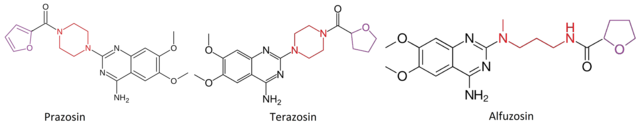
Alpha-bloquants
Les alpha-bloquants sont des médicaments principalement utilisés pour traiter l'hypertension artérielle (hypertension) et les problèmes de miction chez les hommes souffrant d'une hypertrophie de la prostate. L'hypertrophie de la prostate est également appelée hyperplasie bénigne de la prostate (HBP).
par Dr Doug McKechnie, MRCGP
Questions fréquemment posées
Les bêta-bloquants peuvent-ils fluidifier le sang ?
Non, les bêta-bloquants ne sont pas des anticoagulants. Ils agissent en bloquant les impulsions nerveuses qui affectent le cœur, et non en influençant la capacité de coagulation du sang.
Comment les bêta-bloquants vous font-ils sentir ?
Bien que de nombreuses personnes ne ressentent aucun effet secondaire, certaines peuvent éprouver de la fatigue ou de la dépression. D'autres effets potentiels peuvent inclure des rêves vifs, des cauchemars ou d'autres problèmes de sommeil. Certaines personnes signalent également des mains et des pieds froids en raison d'une circulation réduite vers la peau dans ces zones.
Les bêta-bloquants affectent-ils les niveaux de sucre dans le sang ?
Si vous êtes diabétique, les bêta-bloquants peuvent masquer les signes d'alerte habituels d'une hypoglycémie (hypoglycémie). Par exemple, ils peuvent vous empêcher de ressentir des palpitations ou des tremblements, qui signalent normalement que votre glycémie est en baisse. Il existe également certaines preuves suggérant qu'ils pourraient contribuer au développement du diabète de type 2 chez certains individus.
Les bêta-bloquants peuvent-ils causer une neuropathie ?
L'article ne mentionne pas que les bêta-bloquants provoquent une neuropathie (lésion nerveuse) comme effet secondaire. Les effets secondaires répertoriés concernent principalement la fonction cardiaque, la circulation, l'humeur, le sommeil ou la gestion du diabète.
Lectures complémentaires et références
- Hypertension overview; NICE Pathway, August 2011
- Syndrome coronarien aigu; Réseau Écossais de Directives Intercollégiales - SIGN (2016)
- Fibrillation auriculaire : diagnostic et gestion; Directive NICE (avril 2021 - dernière mise à jour juin 2021)
- Lignes directrices de l'ESC 2021 pour le diagnostic et le traitement de l'insuffisance cardiaque aiguë et chronique; Développé par le Groupe de travail pour le diagnostic et le traitement de l'insuffisance cardiaque aiguë et chronique de la Société Européenne de Cardiologie (ESC) avec la contribution spéciale de l'Association de l'Insuffisance Cardiaque (HFA) de l'ESC
- Migraine; NICE CKS, août 2025 (accès réservé au Royaume-Uni)
À propos de l'auteurVoir la biographie complète
Mis à jour par

Dr Rosalyn Adleman, MRCGP
MRCGP
Dr Rosalyn Adleman est médecin généraliste du NHS travaillant dans le nord de Londres.
À propos du critiqueVoir la biographie complète

Dr Rachel Hudson, MRCGP
Médecin généraliste et auteur médical
MBChB, MRCGP (2008), BSc (Medical Science), DFSRH, DRCOG, DCH
Dr Rachel Hudson est médecin généraliste du NHS travaillant dans le nord-ouest de l'Angleterre.
Historique de l'article
Article également disponible en Anglais, Allemand, Espagnol, Français, Italien, Portugais, Hindi, Hébreu, Arabe, and Suédois.
Prochaine révision prévue : 21 mars 2028
23 mars 2023 | Dernière version
Partagez vos pensées ou expériences avec les autres dans notre communautés de patients.
Accès simple à des traitements fiables et à des services de santé en ligne.
Common conditions
Get help with common conditions through the NHS, without a GP appointment.





Inscrivez-vous à la newsletter Patient
Votre dose hebdomadaire de conseils de santé clairs et fiables - rédigés pour vous aider à vous sentir informé, confiant et maître de la situation.
En vous abonnant, vous acceptez notre Politique de confidentialité. Vous pouvez vous désabonner à tout moment. Nous ne vendons jamais vos données.