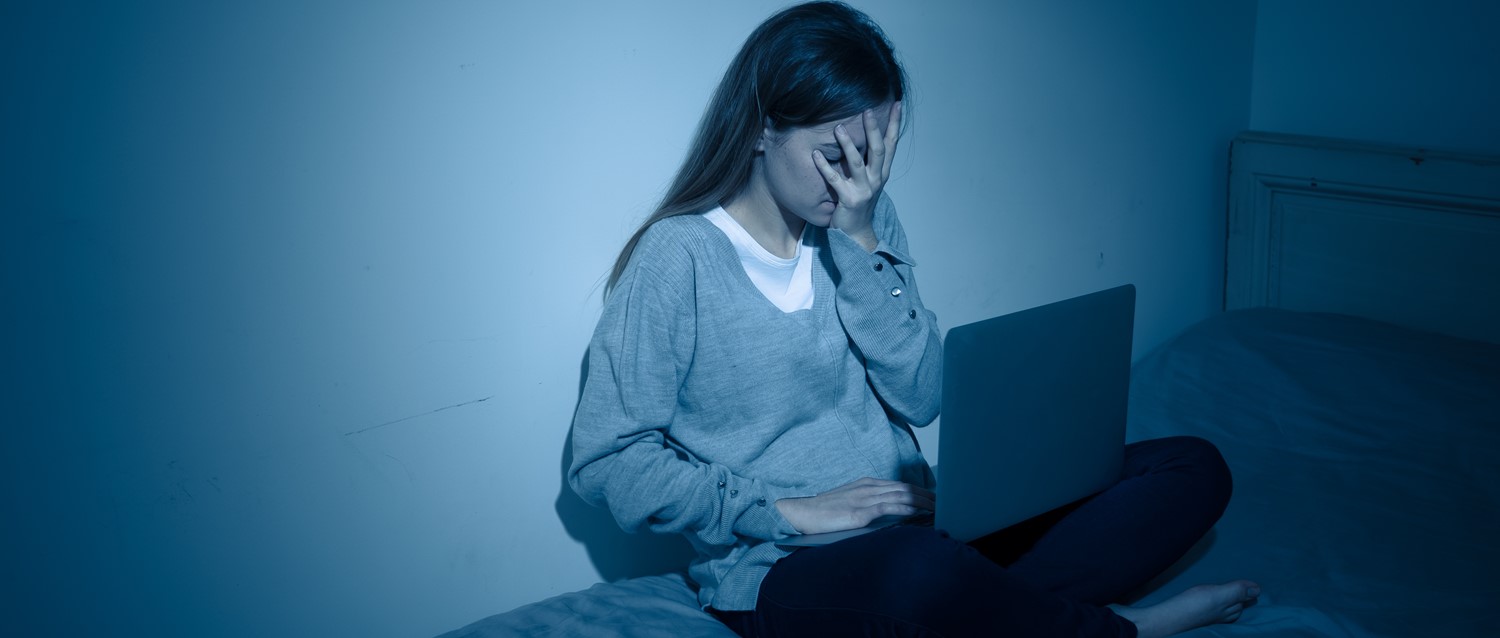
How to spot the signs of cyberbullying
Peer reviewed by Dr Krishna Vakharia, MRCGPLast updated by Amberley DavisLast updated 17 Nov 2023
Meets Patient’s editorial guidelines
- DownloadDownload
- Share
- Language
- Discussion
- Audio Version
- Add to preferred sources on Google
Cyberbullying and children's safety online have become major concerns in recent years due to technological advances and the rapid pace at which social media has grown. It's really important parents and guardians are able to spot the signs of cyberbullying in how a child is behaving, and that they know what to do to offer support.
Trigger warning: this article contains discussion of self-harm and suicide.
What is cyberbullying?
Bullying is behaviour that harms someone else and is usually repeated over an extended period of time. It can include physical attacks and threats or verbal abuse, such as name-calling.
The National Society for the Prevention of Cruelty to Children (NSPCC) defines cyberbullying as: "Bullying that takes place online. Unlike bullying offline, online bullying can follow the child wherever they go, via social networks, gaming and mobile phones."
Types of cyberbullying
Sending abusive messages.
Sharing photos or videos to embarrass someone.
Encouraging people to self-harm.
Excluding children from online gaming.
Setting up hate sites.
Sending explicit messages (known as sexting).
Pressuring children to send sexual images.
Creating fake accounts to harass someone or spread hate using their name (known as cyberbullying by proxy).
Trolling (sending menacing or upsetting messages).
Voting against someone in an abusive poll.
Is cyberbullying a crime?
Bullying and cyberbullying are not officially covered by UK law. This can be frustrating when victims try to report cyberbullying after it has severely affected their mental health. But, there is legislation that can be used to prosecute cyberbullies.
Protection from Harassment Act 1997
This Act was originally introduced to tackle stalking. It makes it a criminal offence to knowingly target a victim with multiple abusive emails with the intention of causing distress and alarm. If found guilty, the bully could be fined and spend up to six months in prison.
The Malicious Communications Act 1988
This Act makes it an offence to send someone communication that is "indecent or grossly offensive." If messages cause distress, the offender can receive a fine of up to £5,000, six months in prison or both.
The Communications Act 2003
The Communications Act criminalises sending "grossly offensive electronic communication" that is considered "indecent, obscene or menacing." If prosecuted, the perpetrator can be fined and/or receive six months in prison.
The Public Order Act 1986
This law comes in useful in cases of cyberbullying via smartphones with cameras since it covers threatening or insulting visual representations. The defendant can face jail for six months and/or a fine.
How can you tell if your child is being cyberbullied?
Ryan Lowe is a child and adolescent psychotherapist and spokesperson for the Association of Child Psychotherapists (ACP). She explains how your child's behaviour might change if they are being cyberbullied.
"Unfortunately, there isn't a standard set of behaviours in response to being bullied. You know your child best and what behaviour is outside the norm.
"However, what you might notice more are changes in timing. Your child might seem more upset, in whatever way they show that, after having been online. They may also be anxious at times when they would generally be about to go online."
Some signs to look out for are:
Low mood.
Sleep disturbances - either sleeping too much or insomnia.
Reluctance to socialise.
Reduced motivation.
A change in dress style to cover up.
Quick to cry/long periods of crying.
How common is cyberbullying?
Advances in technology and the rapid growth of the internet mean cyberbullying can follow children through smartphones and social media platforms.
A study published at the end of 2020 found that in the last 12 months1:
7 out of 10 children were emotionally affected after being bullied online.
7 out of 10 children who experienced cyberbullying said it was by someone at their school.
Around 3 out of 10 children did not report their experiences to anyone.
The most common forms of cyberbullying were name-calling, being sworn at or insulted, and receiving nasty messages. These behaviours were experienced by 1 in 10 of all children aged 10-15 in the study.
The impact of the pandemic on cyberbullying
The Office for National Statistics Centre for Crime and Justice noted that 1 in 5 children aged 10-15 experienced some form of cyberbullying between 2019 and 20201, the most recent government data. This compares with 2 in 5 experiencing bullying in person.
There's a lack of data on how the COVID-19 pandemic affected cyberbullying in the UK, but experts believe that children's isolation at home and increased time spent on the internet during lockdowns is likely to have increased cyberbullying where school bullying wasn't possible2.
One analysis of words related to cyberbullying - such as cyberbullying itself, cyberbully, and internet bullying - used on Twitter in the early months of the pandemic showed an increase in the frequency of these terms immediately following school closings and stay-at-home orders3.
What are the effects of cyberbullying?
Lowe says there is often pressure from peers for kids to copy behaviours such as self-harming, bingeing/purging, or restricting eating. Concerningly, there appear to be some websites demonstrating how to do this.
When cyberbullying leads to children being excluded from chats, it can affect their self-esteem and lead to anxiety.
Depression
Research has repeatedly shown that cyberbullying leads to higher levels of depression in children. One study found 93% of victims reported feelings of sadness, powerlessness, and hopelessness4.
Anger issues
Research indicates that anger is the most common response to cyberbullying. This might present itself in young people wanting to take revenge and retaliate.
Gastrointestinal issues
The stress of bullying can cause stomach conditions or worsen existing conditions. These conditions include abdominal pain, stomach ulcers, vomiting or diarrhoea.
Stress
Research shows that 32% of children who are cyberbullied experience at least one symptom of stress4. This stress can contribute to embarrassment and fear for both their offline and online safety.
Skipping meals
Children might try to control their food intake because cyberbullying feels beyond their control. This could lead to an eating disorder, particularly if bullies target their appearance5.
Academic issues
Bullied students often have higher rates of absence than those who are not bullied6. Cyberbullying can cause children to lose interest in school, especially if their abilities are targetted.
Self-harm
Being cyberbullied might cause a child to harm themselves out of anger, self-blame, or to express intense feelings7.
Suicidal thoughts
Cyberbullying increases the risk of suicide. Young people who are tormented by peers through text messages, instant messaging, social media, or apps can feel the only way to end the pain is to take their life8.
Cyberbullying can lead to children using drugs or alcohol or carrying a weapon also.
Further reading
Patient picks for Online and social media
Healthy living
How to talk to your child about social media
When the coroner's report on Molly Russell - the 14-year-old who died from an act of self-harm -confirmed that social media had played a part in her death, it showed that social media content really can damage the mental health of our children and teenagers. How can parents and carers protect their children from this ever-evolving threat?
by Gillian Harvey
Healthy living
Blue light filters: do they really work?
Most of us spend several hours looking at digital screens every day, all of which emit varying levels of blue light. There's debate about the damage and effects blue light has on our vision and health, and if blue light filters help. We investigate if they really work.
by Matt Binny
About the authorView full bio
Updated by

Amberley Davis
Senior writer
BA (Hons), CPD
Amberley is a senior writer with Patient and has written extensively on a range of health and wellbeing topics.
Authored by

Emily Jane Bashforth
Feature Writer
NCTJ
Emily is a Feature Writer with Patient, writing articles on a variety of topics relating to health and well-being.
About the reviewerView full bio

Dr Krishna Vakharia, MRCGP
Chief Medical Officer for Health, Optum UK
MBChB, MRCGP(2013), BMedSci (hons), DFSRH, DRCOG, PGDipDerm (Distn)
Dr Krishna Vakharia is an NHS GP. She is also a regular examiner for the postgraduate Diploma in Practical Dermatology at Cardiff University as well as being the Chief Medical Officer for health at Optum UK.
Article history
Article also available in English, German, Spanish, French, Italian, Portuguese, Hindi, Hebrew, Arabic, and Swedish.
Next review due: 17 Nov 2026
17 Nov 2023 | Latest version
24 Mar 2022 | Originally published
Authored by:
Emily Jane Bashforth
Join the conversation
Share your thoughts or experiences with others in our patient communities.

Ask, share, connect.
Browse discussions, ask questions, and share experiences across hundreds of health topics.

Feeling unwell?
Assess your symptoms online for free
Sign up to the Patient newsletter
Your weekly dose of clear, trustworthy health advice - written to help you feel informed, confident and in control.
By subscribing you accept our Privacy Policy. You can unsubscribe at any time. We never sell your data.