Spasme de l'artère coronaire
Revu par des pairs Dr Colin Tidy, MRCGPDernière mise à jour par Dr Hayley Willacy, FRCGP Dernière mise à jour 17 nov. 2024
Respecte les directives éditoriales
- TéléchargerTélécharger
- Partager
- Language
- Discussion
- Version audio
- Ajouter aux sources préférées sur Google
Dans cette série :Angine de poitrineAngine microvasculaire
Le spasme de l'artère coronaire est un rétrécissement temporaire et soudain d'une ou plusieurs artères coronaires.
En un coup d'œil
Un spasme de l'artère coronaire se produit lorsque l'artère du cœur se rétrécit temporairement, réduisant ainsi le flux sanguin.
Les symptômes incluent souvent des douleurs thoraciques, qui peuvent s'étendre à la mâchoire, au cou, à l'épaule ou au bras.
La douleur survient souvent au repos, surtout pendant la nuit ou tôt le matin.
Les déclencheurs peuvent inclure le stress, l'alcool, l'exposition au froid ou les drogues stimulantes.
Le traitement consiste à éviter les déclencheurs et éventuellement à prendre des médicaments pour contrôler les symptômes et réduire le risque de maladie cardiaque.
What is a coronary artery spasm?
The spasm slows or stops blood flowing through the artery and so reduces the blood supply to the heart muscle. Coronary artery spasm is sometimes called variant angina or Prinzmetal's angina. Angina is a medical term for chest pain.
Symptoms of a coronary artery spasm
Coronary artery spasm may occur without any symptoms. The most common symptom is heart chest pain (angina). If the coronary artery spasm is severe and lasts long enough then it may cause a heart attack (myocardial infarction).
Douleur thoracique (angine)
With angina, the pain is usually described as:
Severe pain that can be felt under the breast bone (sternum) or on the left side of the chest.
A feeling of crushing, pressure, squeezing or tightness.
A pain that spreads to the neck, jaw, shoulder or arm. It may feel like it's in the back.
The chest pain caused by coronary artery spasm often occurs at rest and commonly doesn't occur during exercise. This is very different from angina due to fatty patches or plaques (atheroma), when the pain is usually triggered by exercise and goes away when you rest.
The chest pain may occur at the same time each day and most often occurs during the night and early morning. The pain can be very variable but usually lasts between 5 and 30 minutes. It can occasionally spread to the back. The pain does not improve with change of position, unlike péricardite, which is sometimes relieved by leaning forward.
Coronary artery spasm may also cause shortness of breath. A severe episode of coronary artery spasm may cause a loss of consciousness.
Causes of a coronary artery spasm
Coronary artery spasm often occurs in coronary arteries that have not already become blocked with fatty patches or plaques (atheroma). However, coronary artery spasm can also occur in coronary arteries that are already partially blocked with atheroma.
Coronary artery spasm may occur without any obvious cause. At other times the spasm may be triggered by various factors such as:
Stress émotionnel.
Alcool.
Exposure to cold.
Stimulant drugs (such as amphetamines and cocaine).
Qu'est-ce que cela pourrait être d'autre ?
Coronary artery spasm is sometimes mistaken for other heart-related (cardiac) causes of chest pain such as péricardite, a crise cardiaque et la cardiomyopathie. Non-cardiac causes of chest or upper tummy pain may need to be ruled out such as gallbladder disease et ulcères d'estomac.
How common is a coronary artery spasm?
About 1 person in every 50 with angina has coronary artery spasm. Coronary artery spasm is more common in males and those aged between 40 and 70 years.
Coronary artery spasm is more common in people who:
Smoke.
Have high blood pressure.
Have high blood cholesterol level.
However, coronary artery spasm may occur without any risk factors for heart disease such as fumer, diabète, l'hypertension artérielle et l'hypercholestérolémie.
Diagnosing a coronary artery spasm
If you are thought to have heart chest pain (angina), you will usually be referred to see a specialist for investigations.
The initial investigations will include:
A 'heart tracing' (électrocardiogramme, ou ECG).
Des coronary angiography.
Other investigations may also be used, including:
The coronary angiogram may be normal if there is no blockage of the coronary arteries caused by fatty patches or plaques (atheroma). However, coronary artery spasm can be triggered by injecting a chemical into one of your veins. This is called a provocation test.
The chemical is otherwise safe and the coronary angiogram may then show temporary narrowing of the coronary arteries in people with coronary artery spasm.
Coronary artery spasm treatment
The aim of treatment is to control chest pain and to prevent a heart attack (myocardial infarction). The most important aspects of treatment are to avoid any known triggers for coronary artery spasm and to reduce the risk of heart disease. Reducing the risk of heart disease includes:
Mode de vie advice to cesser de fumer, eat a healthy diet, have regular exercise et reduce body weight if overweight.
Médicaments may be needed, such as to control high blood pressure ou un taux de cholestérol élevé.
See the separate leaflet called Cardiovascular disease (Atheroma).
Glyceryl trinitrate (GTN) can be used to relieve an episode of chest pain. Your healthcare provider may prescribe other medicines to prevent chest pain. You may also need a type of medicine called a calcium-channel blocker or a long-acting nitrate. Beta-blockers should be avoided because they may make this condition worse.
You will need to be referred to a heart specialist for further investigations and treatment. Further treatments may include angioplastie coronaire if you also have coronary artery blockage caused by fatty patches or plaques (atheroma).
An implantable cardioverter defibrillator may be needed if you are at risk of life-threatening abnormal heart rhythms caused by coronary artery spasm. See the separate leaflet called Abnormal heart rhythms (Arrhythmias) for more details.
Complications of a coronary artery spasm
Coronary artery spasm may cause an abnormal heart rhythm (arrhythmia), which may be life-threatening. Severe and prolonged coronary artery spasm may cause a crise cardiaque (infarctus du myocarde).
Quel est le résultat ?
Coronary artery spasm is a long-term condition. However, treatment most often helps to control symptoms. The outcome (prognosis) for people with coronary artery spasm is generally good if they follow treatment recommendations and avoid certain triggers.
The outcome is not as good in people who also have blockage of the coronary arteries caused by fatty patches or plaques (atheroma).
Sélections des patients pour Blood vessel disorders

Santé cardiaque et vaisseaux sanguins
Coarctation de l'aorte
La coarctation de l'aorte est un type de cardiopathie congénitale où il y a un rétrécissement d'une partie de l'aorte, la principale artère qui quitte le côté gauche du cœur.
par Dr Toni Hazell, FRCGP
Santé cardiaque et vaisseaux sanguins
Anévrisme de l'aorte abdominale
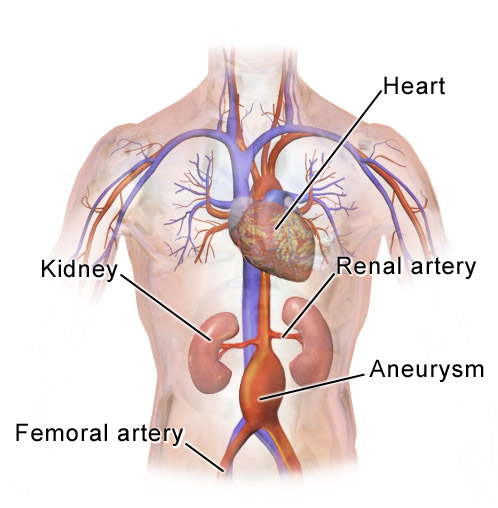
L'aorte est le principal vaisseau sanguin de l'abdomen, descendant du cœur. Elle a généralement un diamètre équivalent à celui d'un tuyau d'arrosage. Chez les personnes âgées, en particulier celles qui fument, une partie peut s'élargir et former une bosse. On appelle cela une anévrisme de l'aorte abdominale (souvent abrégé en AAA, prononcé 'triple-A'). Cela ne provoque aucun symptôme et la personne ignore généralement qu'elle en a un, jusqu'à ce qu'il se mette à fuir ou à éclater. Le terme médical pour cela est rupture. Si l'anévrisme se rompt, cela peut être fatal. Au Royaume-Uni, il existe un programme de dépistage pour les hommes de plus de 65 ans, afin de vérifier s'ils ont un AAA. Une opération pour réparer l'anévrisme peut être recommandée s'il dépasse 5,5 cm, car au-delà de cette taille, le risque de rupture augmente considérablement.
par Dr Doug McKechnie, MRCGP
Questions fréquemment posées
Puis-je prévenir les spasmes des artères coronaires ?
Oui, vous pouvez prendre des mesures pour réduire le risque. Éviter les déclencheurs connus des spasmes est important, tout comme réduire généralement votre risque de maladie cardiaque. Cela inclut des changements de mode de vie tels que l'arrêt du tabac, une alimentation saine, l'exercice régulier et le maintien d'un poids santé. Des médicaments pour contrôler l'hypertension artérielle ou le cholestérol élevé peuvent également être prescrits.
Quel type de spécialiste du cœur devrais-je consulter pour cette condition ?
Si l'on soupçonne que vous souffrez de douleurs thoraciques cardiaques (angine de poitrine) et potentiellement de spasme des artères coronaires, vous serez généralement orienté vers un spécialiste du cœur. Ce spécialiste, souvent un cardiologue, effectuera des investigations supplémentaires et déterminera le plan de traitement approprié pour votre condition spécifique.
Y a-t-il des médicaments que je devrais éviter si j'ai un spasme de l'artère coronaire ?
Oui, si vous avez un spasme des artères coronaires, les bêta-bloquants doivent généralement être évités car ils peuvent aggraver cette condition. Votre professionnel de santé vous guidera sur les médicaments appropriés pour votre traitement.
Le spasme de l'artère coronaire est-il une condition temporaire ou permanente ?
Le spasme de l'artère coronaire est considéré comme une affection à long terme. Bien qu'il ne s'agisse pas d'un problème temporaire, le traitement est généralement efficace pour contrôler les symptômes. Le pronostic est généralement bon pour les personnes qui suivent les recommandations de traitement et évitent les déclencheurs.
Si j'ai un spasme de l'artère coronaire, cela signifie-t-il que j'aurai certainement une crise cardiaque ?
Pas nécessairement. Cependant, un spasme des artères coronaires peut être un signe que vous avez un risque accru de crise cardiaque (infarctus du myocarde) ou d'arythmies cardiaques potentiellement mortelles. Suivre les recommandations de traitement et éviter les déclencheurs sont cruciaux pour réduire ces risques.
Lectures complémentaires et références
- Swarup S, Patibandla S, Grossman SA; Coronary Artery Vasospasm.
- Matta A, Bouisset F, Lhermusier T, et al; Coronary Artery Spasm: New Insights. J Interv Cardiol. 2020 May 14;2020:5894586. doi: 10.1155/2020/5894586. eCollection 2020.
- Teragawa H, Oshita C, Ueda T; Coronary spasm: It's common, but it's still unsolved. World J Cardiol. 2018 Nov 26;10(11):201-209. doi: 10.4330/wjc.v10.i11.201.
- Évaluer l'aptitude à conduire : guide pour les professionnels de santé; Agence des licences de conducteur et de véhicule
À propos de l'auteurVoir la biographie complète

Dr Hayley Willacy, FRCGP
Médecin généraliste, Auteur médical
MBChB (1992), DRCOG, DFFP, MRCOG (Part 1) MRCGP (2007), DFSRH (2013), MSc - medical education (2020)
Le Dr Hayley Willacy était médecin généraliste au NHS travaillant dans le nord-ouest de l'Angleterre, qui a pris sa retraite de la pratique clinique en 2022 après 30 ans.
À propos du critiqueVoir la biographie complète

Dr Colin Tidy, MRCGP
Médecin généraliste, Auteur médical
MBBS, MRCGP, MRCP (Paediatrics), DCH
Le Dr Colin Tidy est un médecin du NHS, basé dans l'Oxfordshire.
Historique de l'article
Les informations sur cette page sont rédigées et examinées par des cliniciens qualifiés.
Article également disponible en Anglais, Allemand, Espagnol, Français, Italien, Portugais, Hindi, Hébreu, Arabe, and Suédois.
Prochaine révision prévue : 16 nov. 2027
17 nov. 2024 | Dernière version

Demandez, partagez, connectez-vous.
Parcourez les discussions, posez des questions et partagez vos expériences sur des centaines de sujets de santé.

Vous ne vous sentez pas bien ?
Évaluez vos symptômes en ligne gratuitement
Inscrivez-vous à la newsletter Patient
Votre dose hebdomadaire de conseils de santé clairs et fiables - rédigés pour vous aider à vous sentir informé, confiant et maître de la situation.
En vous abonnant, vous acceptez notre Politique de confidentialité. Vous pouvez vous désabonner à tout moment. Nous ne vendons jamais vos données.
Plus sur la santé cardiaque et les vaisseaux sanguins
- Inhibiteurs de l'ECA
- Aspirine et autres médicaments antiplaquettaires
- Fibrillation auriculaire
- Communication interauriculaire
- Bêta-bloquants
- Évaluation du risque pour la santé cardiovasculaire
- Angiographie coronarienne
- Test d'effort
- Surcharge hydrique
- Récupération après une crise cardiaque
- Hypertension artérielle
- Hyperlipidémie
- Endocardite infectieuse
- Vivre avec l'hypertension
- Hypotension
- Médicament pour l'hypertension
- Angine microvasculaire
- Syndrome d'Osler-Weber-Rendu
- Varices
- Ulcères veineux de la jambe