Quels sont les bienfaits pour la santé d'un régime végétalien ?
Revu par Dr Sarah JarvisDernière mise à jour par Emily Jane BashforthDernière mise à jour 7 Dec 2021
Respecte les directives éditoriales
- TéléchargerTélécharger
- Partager
- Language
- Discussion
- Version audio
- Ajouter aux sources préférées sur Google
Veganism is on the rise, and one survey conducted in 2016 found that the number of vegans rose a whopping 360% in the previous decade. Plant-based diets also gained popularity worldwide last year, as awareness was brought to the connections between disease and meat consumption. Since 2020 there has been a 40% increase in vegans in Britain, with the estimated total being 1.5 million people.
With the number of people exploring veganism growing, and more people just feeling generally curious about what a régime végétalien entails, let's explore the benefits of going vegan.
What is a vegan diet?
A vegan diet is void of any animal products, such as meat, eggs, milk and honey. It consists exclusively of plant-based products, but there are plant-based alternatives for many non-vegan foods. For some, veganism is not just their diet, but a lifestyle. In this case, they may avoid beauty products that have been tested on animals, avoid wearing real fur or leather, and consider whether something had a detrimental impact on animals before buying it.
Dr Sunni Patel is a gut health coach and he says 'plant-based vegans', who do not necessarily incorporate veganism into all aspects of their lives, often eat:
Fruits.
Légumes.
Whole grains.
Noix et graines.
Légumineuses.
Légumineuses.
Spices.
Herbs.
Reasons why people go vegan
Dr Patel says there are a number of reasons why people go vegan or embrace a plant-based diet. Most have different goals and motivators for their diet and lifestyle choices.
Ethical
"Many people turn végétalien due to the poor treatment of animals on factory farms, where they live in conditions that are widely condemned," he says.
Those who go vegan for ethical reasons believe the production of animal products causes animals to have suffering or premature death. In this case, someone may live a fully vegan lifestyle shaped by their desire to avoid cruelty to animals at all costs. While there are other benefits of veganism, preventing suffering for animals is the main motivator for ethical vegans.
Environmental
Veganism also has environmental benefits for those who believe the way animals are mass-produced is bad for the environment.
Dr Patel says the intensive animal agriculture industry has a wide variety of environmental impacts, such as carbon emissions and its role in water pollution and deforestation. Factory farming is actually one of the biggest causes of pollution on a global scale from manure runoff, soil destruction and poisoning of the water table.
Antibiotic use
"The efficacy of antibiotics decreases when they are over-used on farm animals, as the pathogens they are designed to fight off begin to develop resistance. Antibiotic resistance is considered one of the most dangerous threats the world currently faces," shares Dr Patel.
Health
"A vegan diet can provide many important benefits, from improving heart health to decreasing the risk of diabète et les cancers, while providing essential vitamins and nutrients required for a long, healthy life," says Dr Patel.
What are the benefits of a vegan diet?
"Science doesn't lie when it comes to the health benefits of a plant-based diet. It benefits various aspects of life in a number of positive ways, whether that's opening your mind to new recipes, or fighting for the greater cause of animal rights," Dr Patel says.
Improved gut function
Vegan diets provide rich sources of fibre and micronutrients that support gut function. Dr Patel stresses the importance of good gut health à aid digestion and other critical functions, like immunity, skincare, hair health, libido and sommeil, as well as humeur.
Selon multiple studies, animal products can worsen types of inflammatory bowel disease (IBD) - maladie de Crohn, for example. They can also worsen irritable bowel syndrome (SII). While different conditions are triggered by different foods, the lower amount of sulphur in plant protein can provide relief for those who struggle with bowel issues.
Reduces the risk of cancer
A plant-based diet has been shown to reduce people's risk of various cancers.
Soy milk is a vegan alternative to cow's milk, and it has many health benefits, being naturally lactose-free and low in cholestérol. Soy products are also associated with a reduced risk of cancer du sein. Research in Shanghai shows women with breast cancer, who consume 11 g of soy protein each day, can reduce their mortality and risk of recurrence by 30%.
A vegan diet can also reduce the risk of breast cancer, since it does not involve dairy. High-fat dairy products, when consumed regularly, have been linked by studies to an increased risk of breast and prostate cancer. Recherche from the National Cancer Institute, the National Institutes of Health, and the World Cancer Research Fund found that one cup of cow's milk per day increased women's risk of developing breast cancer by 50%.
Additionally, grilled meat releases carcinogens (agents with the capacity to cause cancer in humans). Therefore, not eating grilled meat reduces the risk of these carcinogens interacting with cell DNA and inducing genetic mutations.
Finally, a plant-based diet tends to be more colourful, thanks to fruit and vegetables. The pigments in these foods contain cancer-fighting compounds. For example, the pigment giving sweet potatoes their bright colour (which is known as beta carotene) can help fight cancer. Vegetables like broccoli, kale and cabbage have been linked to reducing the risk of colorectal, lung and stomach cancers.
Fibre increase
"It is recommended that we get 30 g of fibres each day, which we generally lack in the UK. So, going plant-based provides an easier way to hit our daily fibre goal," says Dr Patel.
He highlights how important fibre is for our daily needs. For example, insoluble sources of fibre help to bulk up our stools, and soluble fibre allows our stools to absorb water. This makes it easier to avoid constipation.
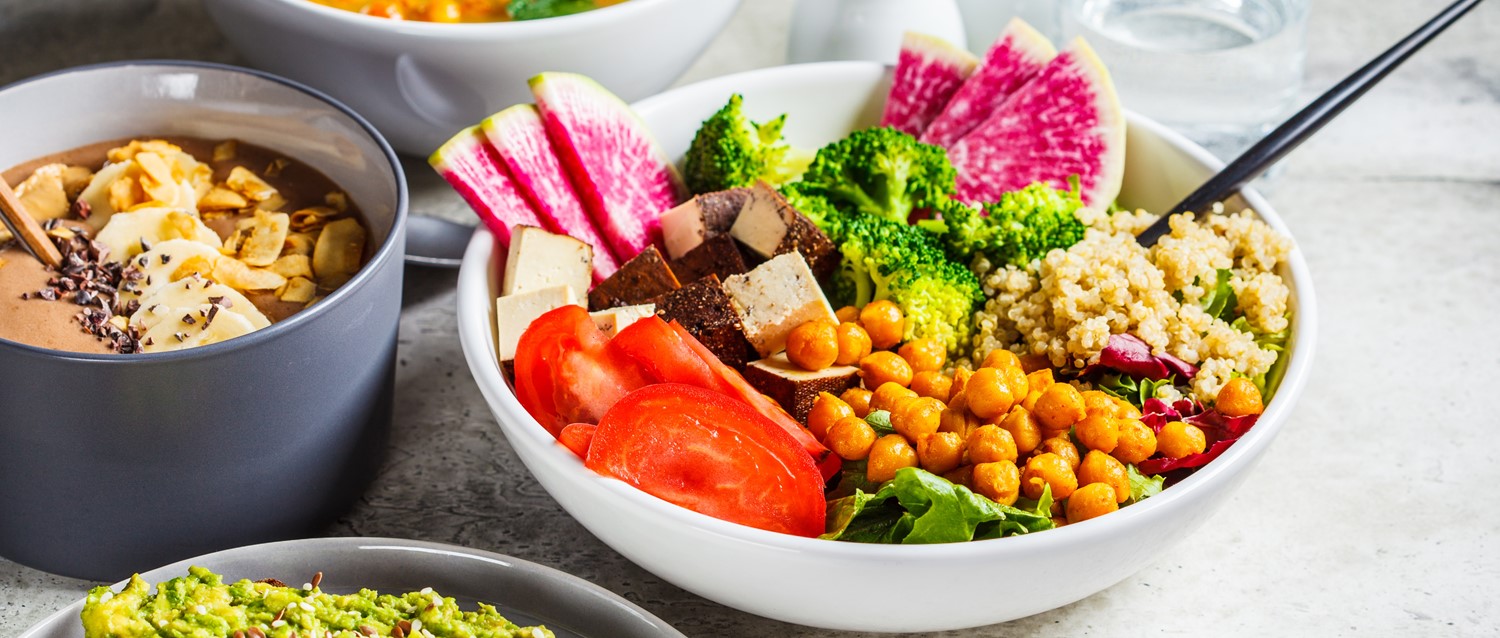
A vegan diet includes fibre with whole grains (oats, quinoa, brown rice), legumes (split peas, lentils, black beans, chickpeas), and nuts and seeds (chia seeds, almonds, pumpkin seeds).
Other benefits of a high-fibre diet include:
A lower risk of une maladie cardiaque.
A lower risk of a AVC.
A lower risk of developing diabète de type 2 by keeping blood sugars in check.
A lower risk of bowel cancer.
Helping with digestion.
Autres conditions
Furthermore, Dr Patel says adding more plants into your diet has been shown to reduce (and in cases eliminate or reverse) symptoms associated with:
A vegan diet has been shown to improve brain health by providing a rich source of antioxidants and polyphenols, which play a protective role. They also promote the production of short chain fatty acids, like butyrate. These benefit gut health, inflammation and brain health.
Is a vegan diet for everyone, and who might not be suited?
Dr Patel says there are some occasions where a vegan diet wouldn't be recommended. While health conditions do not necessarily make veganism impossible, they can make it much more difficult.
Sévère IBS and IBD can be worsened with a vegan diet if it triggers symptoms. However, while those with gut issues might need to limit certain foods, Dr Patel says it doesn't necessarily mean they can't eat a vegan diet.
Sévère l'anémie or conditions that require a specific diet to support the body's needs, might make veganism an unsafe approach.
A vegan diet may also not be safe for those in recovery from restrictive troubles alimentaires. This may be something for someone to gradually work towards while rebuilding their relationship with food.
A vegan diet is naturally low in lysine and high in arginine, which those with herpès are advised to eat less of. Eating a diet high in those things can cause outbreaks.
If someone has kidney failure and is on dialyse, it might be hard to manage a vegan diet alongside specific dietary requirements. Protein intake often needs to be high in order to replace what's been lost via dialysis.
Allergies et intolérances can also prevent someone from going totally vegan. These might include a soy allergy, gluten intolerance or nut allergy.
Vegan diets are often low in calcium, which is essential to stave off osteoporosis. This can be remedied by opting for calcium-rich alternatives such as calcium-set tofu and calcium-fortified vegan products.
Ultimately, a plant-based diet is the choice of the individual.
Are there any cons to a vegan diet - if so, how can these be resolved?
Dr Patel says the cons surrounding veganism often derive from myths or misunderstandings around vegan diets.
"For example, many people assume a vegan diet doesn't give you enough protéines. However, plant-based diets provide an adequate amount of protein and all non-essential amino acids needed to maintain muscle and provide energy. These sources of protein include legumes, tofu, soy, textured vegan protein and vital wheat gluten. Their protein levels can actually be higher than that of some meat products," he shares.
People also assume a vegan diet will make them feel léthargique. Dr Patel says there are certain nutrients you can't get from plant items (such as vitam B12, vitamin D3, and iron), hence why people say going vegan made them less energised. However, there are supplements you can take.
"We have to remember that vitamin B comes from naturally produced bacteria, so it would be common to add a vitamin B supplement. The same can be said for vitamin D, whereby sunshine is our main source. It is known that all of us in the UK should consider a complément de vitamine D anyway from late autumn to spring."
To boost other nutrients that a vegan diet might not provide, Dr Patel suggests trying iodised salt and seaweed for iodine, as well as spinach, nuts and seeds and apricots for iron.
Moreover, a vegan diet can be more expensive.
"People frequently compare the prices of processed plant-based foods with meat. Plant-based produce tends to carry a more premium price in supermarkets because there is less demand for it compared to meat products. However, incorporating more plant-based meals into your diet needn't be expensive. You can buy and cook with any fruit and vegetables, which can be your best friend from reduced-price sections, farmers markets, or even the cheaper odd-shaped [produce] boxes in supermarkets," Dr Patel says. And lentils and pulses are high in nutrients and flavour as well as much more cost-effective than most meats.
"Essentially, ensure you are taking the time to listen to your body and are getting adequate supplementation. Make sure your meals are well-rounded and balanced to get the full benefits of a plant-based diet."
Where can you find advice if you want help turning vegan?
Dr Patel says, if you need assistance with curating a plant-based diet, you should seek advice from qualified dieticians and coaches who can help you come up with meal plans that are well balanced and nutrient-dense.
You can also find help and inspiration at:
Sélections des patients pour Végétalien et végétarien

Régime et nutrition
Comment développer ses muscles avec un régime végétalien
Avec 3,1 % des adultes suivant désormais des régimes à base de plantes, le véganisme en Grande-Bretagne est en hausse. Un nombre croissant de personnes s'intéressent à réaliser des 'gains véganes' - développer des muscles avec un régime végan. Avec une planification minutieuse, il est possible de maximiser la croissance musculaire avec un régime à base de plantes.
par Lynn Stephen
Régime et nutrition
Comment grignoter sainement quand on est végétalien
Un nombre croissant de personnes se détournent de la viande et des produits laitiers pour adopter un régime à base de plantes. Les supermarchés offrent une large gamme de substituts végétaliens, tels que les laits d'avoine et d'amande, les substituts de viande à base de soja et plus encore. Cependant, suivre un régime végétalien peut être délicat - surtout si vous êtes novice dans un mode de vie entièrement à base de plantes.
par Lydia Smith
À propos de l'auteurVoir la biographie complète

Emily Jane Bashforth
Auteur de chroniques
NCTJ
Emily est rédactrice spécialisée chez Patient, écrivant des articles sur une variété de sujets liés à la santé et au bien-être.
À propos du critiqueVoir la biographie complète

Dr Sarah Jarvis
Consultant Clinique
MA (Cantab), BM, BCh (Oxon), DRCOG, FRCGP, MBE
Après avoir suivi une formation en médecine à Cambridge et Oxford, le Dr Sarah Jarvis MBE est devenue médecin généraliste.
Historique de l'article
Les informations sur cette page sont examinées par des cliniciens qualifiés.
Article également disponible en Anglais, Allemand, Espagnol, Français, Italien, Portugais, Hindi, Hébreu, Arabe, and Suédois.
7 Dec 2021 | Dernière version
7 Dec 2021 | Publié à l'origine

Demandez, partagez, connectez-vous.
Parcourez les discussions, posez des questions et partagez vos expériences sur des centaines de sujets de santé.

Vous ne vous sentez pas bien ?
Évaluez vos symptômes en ligne gratuitement
Inscrivez-vous à la newsletter Patient
Votre dose hebdomadaire de conseils de santé clairs et fiables - rédigés pour vous aider à vous sentir informé, confiant et maître de la situation.
En vous abonnant, vous acceptez notre Politique de confidentialité. Vous pouvez vous désabonner à tout moment. Nous ne vendons jamais vos données.
Plus sur l'alimentation et la nutrition
- 7 bienfaits du cacao : le chocolat cru est-il le meilleur ?
- Les suppléments d'huile de poisson oméga-3 ont-ils un bénéfice prouvé pour la santé ?
- Le jus d'aloe vera aide-t-il vraiment à la santé intestinale ?
- Fibres, régime pauvre en FODMAP et bactéries intestinales
- Quelle est la santé de l'eau aromatisée ?
- Comment bien manger quand il est difficile de faire les courses et de cuisiner
- Comment maintenir une alimentation saine pour votre enfant au collège
- Comment faire des choix plus sains sans se priver
- Comment préparer des mince pies sains
- Comment préparer une farce saine
- Comment arrêter de manger compulsivement
- Le sel est-il bon ou mauvais pour vous ?
- Votre enfant consomme-t-il trop de sucre ?
- Recette : Pains briochés sans gluten
- Faire les courses au supermarché pour des aliments qui aident les articulations raides et douloureuses
- Les meilleurs aliments pour la santé intestinale - et pourquoi vous en avez besoin
- Les aliments riches en vitamine A pourraient protéger contre le cancer de la peau
- Quels sont les bienfaits de la vitamine A ?
- Qu'est-ce que manger sainement et comment commencer ?
- Quels aliments ultra-transformés sont sûrs - et lesquels devons-nous éviter ?